
Oral cavity, throat and ENT
Browse the topics:
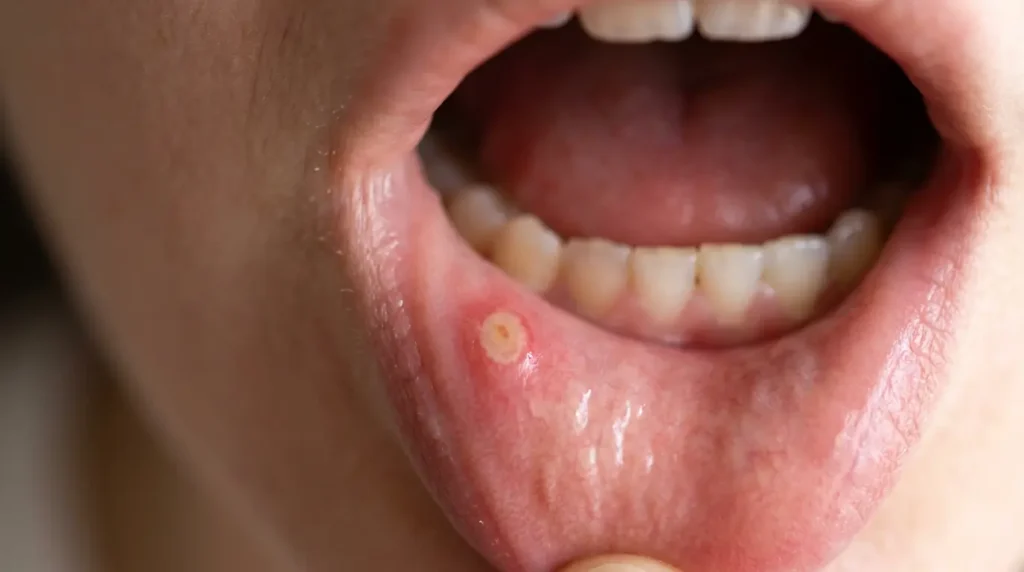
Mouth ulcers – what helps, why they occur and when to see a doctor
Mouth ulcers are small, painful sores of the oral mucosa that most commonly appear on the inside of the lips and cheeks, beside the tongue or underneath it. They are not contagious, and most minor mouth ulcers heal on their own within one to two weeks. A few simple measures can help reduce irritation and pain, while long-lasting, very large or frequently recurring ulcers may…
Gingivitis – what helps with bleeding and swollen gums
Gingivitis most commonly develops due to dental plaque along the gum line. The gums may bleed during brushing, become swollen or sensitive, while pain is not necessarily present. The most important measures are thorough cleaning of the teeth and interdental spaces and, if needed, professional removal of tartar; if the gums are receding, pus is present or teeth become loose, a dental examination is needed.
Cold sore on the lip – what helps, how it progresses and when it is contagious
A cold sore on the lip often begins with tingling, itching or a burning sensation, followed by small blisters and then a scab. It is most commonly caused by the HSV-1 virus, which remains in the body after infection and can become reactivated. Most recurrent outbreaks heal within about one to two weeks, but it is also important to know when a cold sore is contagious,…
Sore throat – what helps, causes and when to see a doctor
A sore throat most commonly accompanies a viral infection, but it can also be associated with a bacterial infection or irritation of the mucous membrane. Most acute symptoms improve within about a week. It is important to know what may help with pain and swallowing, and which signs mean that medical assessment is advisable.