
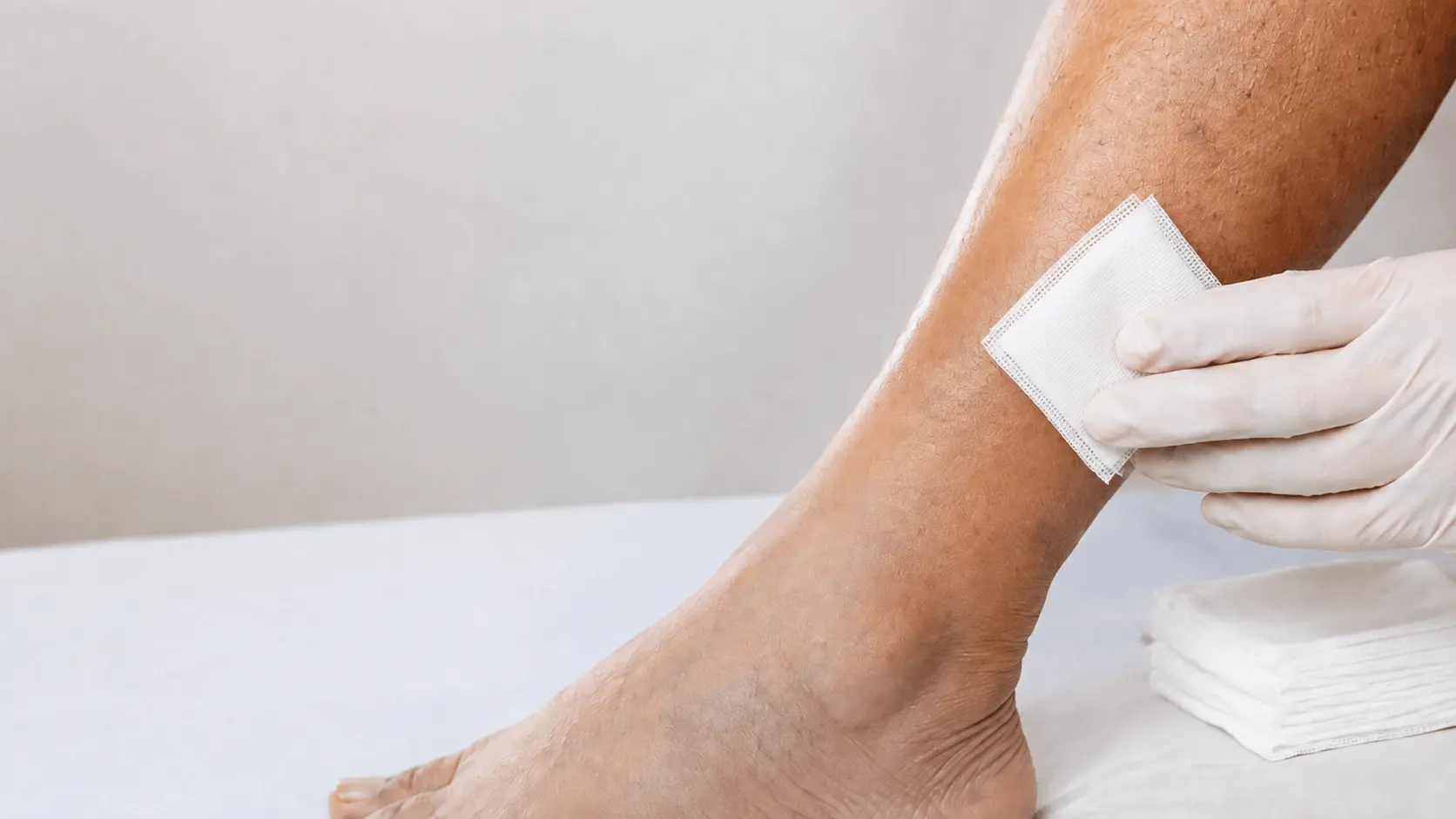
How to help yourself with an open wound on the leg?
With an open wound on the leg, appropriate local wound care is important. For wounds that heal slowly, it is also important to identify factors that may delay healing.
- Protect the wound with sterile material and monitor its progress.
- Pay attention to whether the wound is getting smaller and whether redness is spreading, marked discharge, an unpleasant odour or other signs of deterioration appear.
- With a chronic or slow-healing wound, it is also important to consider leg swelling, venous or heart failure, diabetes and impaired circulation, as these can significantly affect the course of healing.
- If the wound is large or deep, the condition is worsening, redness is spreading, or there is suspicion of infection or a significant circulation problem, medical assessment is needed.
What you will learn (causes and examples)
With the use of spruce ointment, we have documented numerous successful healing cases over the past 35 years, as every open wound on the leg has healed with proper use of these products, including diabetic foot, provided that gangrene was not present. The only contraindication is an allergy to conifer resin. Below we present documented cases showing how open wounds on the leg are treated with Smrekovit products.
Venous and heart failure and wound healing on the legs
Venous and heart failure can significantly affect the course of wound healing on the legs. With venous insufficiency, blood has more difficulty returning from the lower limbs, which increases pressure in the veins and surrounding tissues. This can lead to swelling, skin changes and a greater tendency to develop venous ulcers.
With heart failure, the tendency for fluid retention and swelling of the legs can be especially important. Marked oedema can further complicate local wound care and slow wound closure.
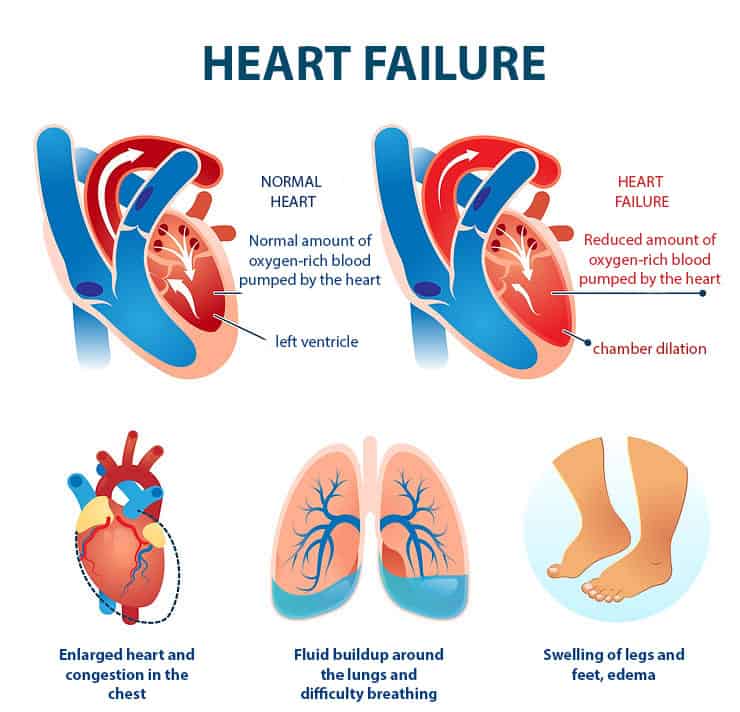
Why is the wound healing more slowly?
- Increased pressure in the veins: with venous insufficiency, blood has more difficulty returning from the lower limbs, causing pressure to rise in the veins and surrounding tissues.
- Swelling or oedema: fluid retention causes tissue tension and can significantly impair the healing of an open wound.
- Changes in the skin and tissues: long-term venous insufficiency can cause changes in skin colour and structure and make the skin more vulnerable.
Signs that may accompany venous insufficiency
- swelling of the ankles and lower legs,
- a feeling of heavy or painful legs,
- varicose veins,
- brownish, reddened or otherwise discoloured skin,
- hardening, itching or flaking of the skin,
- a long-lasting open wound or ulcer, especially in the lower leg area.
Oedema as an important factor delaying healing
In chronic wounds on the legs, pronounced swelling or oedema can be one of the key reasons why a wound heals slowly. Because of fluid retention, the tissues become tense, and more fluid may drain from the wound or the surrounding skin.
In practice, it is very important to consider how much fluid soaks through the dressing. If the gauze is constantly wet or fluid also passes through the bandage, sock or footwear, this is a sign of marked oedema and can make it much more difficult to maintain suitable conditions for healing.
In such cases, it is not enough to treat only the wound itself. It is also important to identify the cause of the swelling, such as venous or heart failure, and to address fluid retention appropriately.
Depending on the cause and the person's health status, measures may include reducing salt intake, elevating the legs, physical activity and appropriately selected compression therapy. In cases of pronounced or long-lasting oedema, medical assessment is advisable, as treatment of the underlying cause or adjustment of medication may also be necessary.
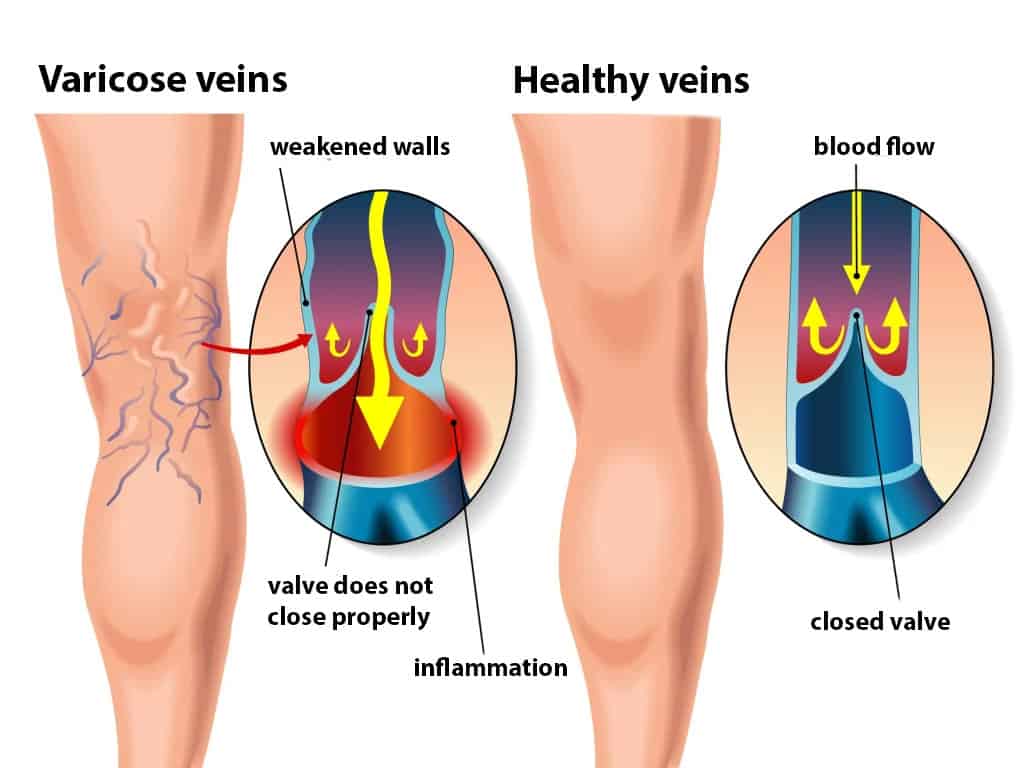
How to help yourself with leg swelling (oedema) and plasma seepage through the skin?
- A low-salt diet with sufficient, but not excessive, water intake: The first and most important measure is to reduce both salt and fluid intake. Salt intake should be limited to less than 5 g per day (one teaspoon captures more than 17 g of salt), and care should be taken to avoid hidden sources of salt, such as ice cream, commercial juices, canned vegetables... The recommended fluid intake for people with oedema is between 1.5 and 2 L per day to maintain good renal function. As water is also present in other foods, we can roughly say that a person should consume at least 1 litre of water a day, but not all at once. (4)
- Compression bandaging: in such cases, where the open leg wound does not heal as effectively as it would without this complicating factor, due to plasma seepage through the skin, we recommend the use of an elastic compression bandage to wrap the leg. Wrap the bandage over the wound, first covering it with sterile gauze to which Smrekovit Klasik ointment has been applied. Also cover the parts where the skin is red. Bandage the legs in the morning before you get up. You will need 1–2 bandages to wrap from the foot to the knee and 3–4 bandages to wrap up to the groin.
- start the winding behind the fingers and wind from the bottom up
- Each subsequent turn should overlap the previous one by 2–2.5 cm.
- roll over the heel at least three times
- apply the bandage with even, moderate tension, laying it flat on the skin in a figure-of-eight pattern
- The spacing should be uniform and the pressure even across the lower leg. (5)
- the compression bandage must be removed while the patient is resting (lying down) for more than half an hour
- as little standing and sitting as possible, and as much walking as possible: to improve blood circulation in the leg, we recommend walking as much as possible and avoiding standing and sitting
- lifting the leg: when resting (lying down), raise your leg above the level of your heart for a few minutes several times a day. If possible, keep your leg at least slightly elevated even when sleeping at night.
- diuretics: If the above measures do not help, and if you have a good blood count in terms of electrolytes, especially in the summer months, you should also consider consulting your doctor about the use of diuretics.
Our experience shows that once water retention and plasma seepage from the leg wound and the surrounding area are successfully dealt with, wound healing can be completed very quickly, so we really strongly recommend that you approach this problem seriously in such cases.
Documented cases of open wounds on the leg
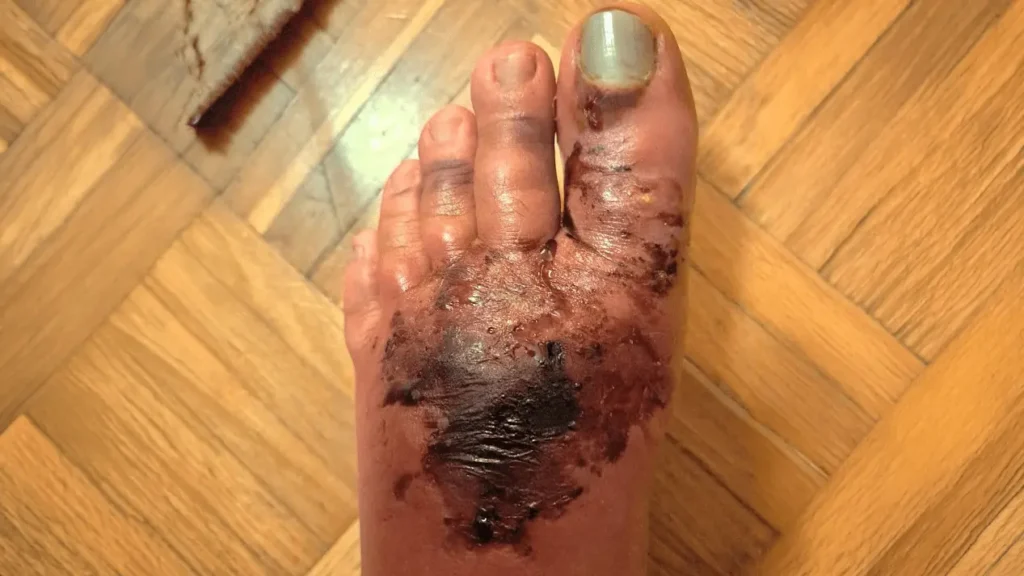
Over the years, we have followed various cases of open wounds on the legs associated with different injuries and health conditions. Below are documented cases with photographic follow-up; for some, measurements, medical documentation or a more detailed report of the course are also available.
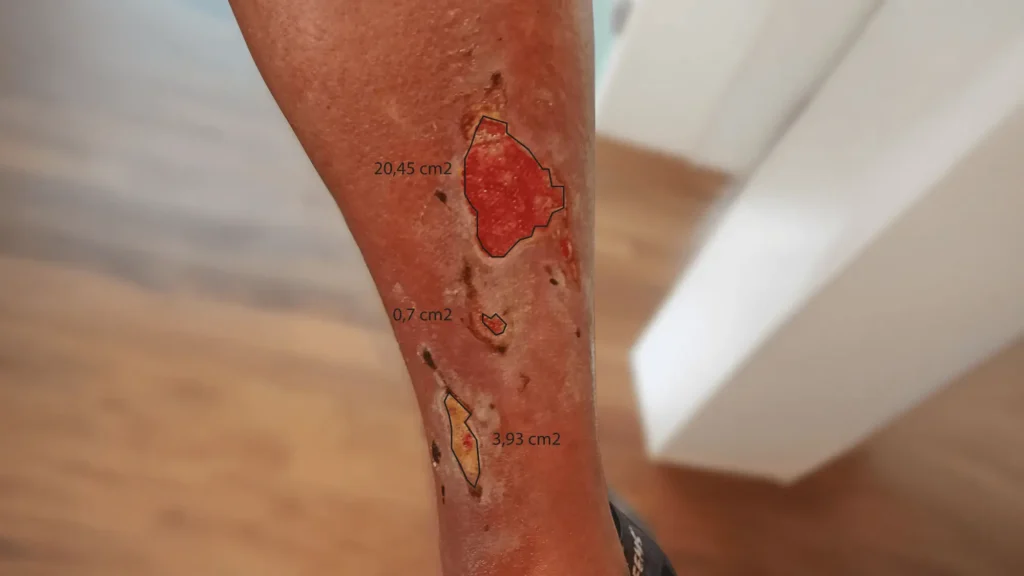
Quick jump to a specific example:
Chronic wound in diabetes and heart failure
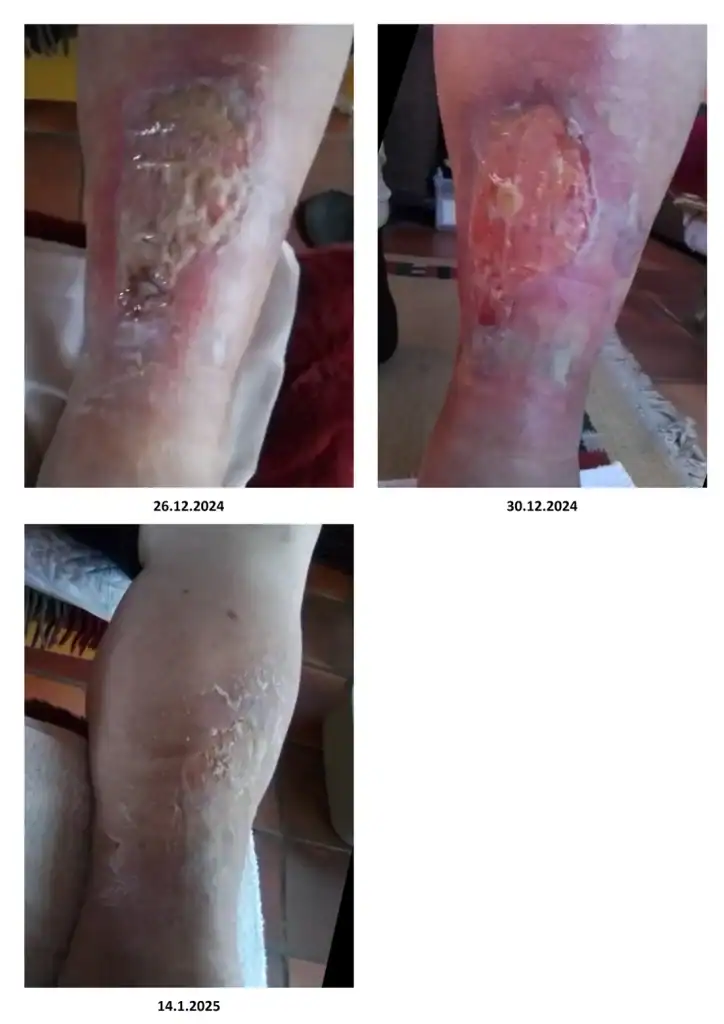
In a 73-year-old patient with type 2 diabetes and heart failure, an open wound developed on the leg and had already been present for more than a month at the beginning of documented monitoring. Swelling, marked discharge and areas of necrotic tissue were present.
At the end of December 2024, photographic monitoring began alongside regular use of Smrekovit Klasik on sterile gauze. Over the following 19 days, the appearance of the wound changed markedly: there were fewer necrotic areas, granulation tissue developed, and the open wound surface gradually decreased.
Diabetic foot and open wounds
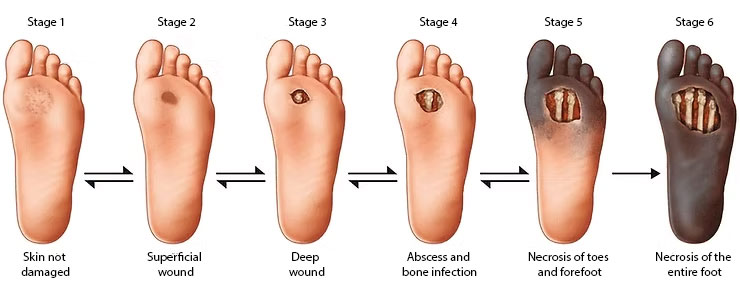
Diabetic foot is a serious complication of diabetes in which nerve damage and impaired circulation play an important role. Because sensation may be reduced, a minor injury can go unnoticed, while poor circulation can further impair healing.
As a result, even a callus, blister or small wound can progress to a deeper ulcer, infection or tissue necrosis. For any open wound on the foot in a person with diabetes, early and appropriate medical assessment is therefore important.
Why do foot wounds develop in people with diabetes?
In diabetes, the risk of developing foot wounds increases mainly because of a combination of reduced sensation and impaired circulation.
- Diabetic neuropathy: reduced sensitivity to pain, pressure or temperature means that a callus, blister or minor injury can remain unnoticed for a long time.
- Poor circulation: vascular changes can reduce the supply of oxygen and nutrients to the tissues and thereby make healing more difficult.
- Infections: an open wound on a diabetic foot carries a higher risk of complications, so it is important to recognise redness, swelling, discharge or other signs of deterioration in time.
- Pressure and foot deformities: changes in foot shape or unsuitable footwear can create areas of repeated pressure where ulcers may develop.
How to recognise diabetic foot?
- Presence of foot ulcers that do not heal or even worsen.
- Pale, cold skin due to poor circulation.
- Loss of sensation of pain, pressure or temperature.
- Foot deformities and gait changes.
- Signs of infection such as redness, swelling and pus secretion.
How can you recognise diabetic foot?
In diabetes, changes in the feet are especially important because reduced sensation may mean that they go unnoticed for a long time. It is therefore advisable to inspect the feet regularly, even when there is no pain.
- Reduced sensation: tingling, numbness or reduced sensitivity to pain, pressure and temperature.
- Wounds, blisters or cracks: injuries that do not heal, or that were not noticed because of neuropathy, are particularly important.
- Skin changes: redness, swelling, or a change in the colour or temperature of part of the foot.
- Discharge or an unpleasant odour: these may indicate a complication or infection of an open wound.
- Changes in foot shape: deformities and areas of increased pressure can raise the risk of ulcer formation.
In a person with diabetes, a new open wound, ulcer or marked change on the foot should be assessed early. The absence of pain does not in itself mean that the injury is not serious.
How can you reduce the risk of wounds developing on a diabetic foot?
- Inspect your feet every day: look for blisters, calluses, cracks, redness, changes in skin colour and minor injuries, even if they are not painful.
- Avoid repeated pressure: suitable footwear and relieving pressure on areas where calluses or other injuries develop can help reduce the risk of ulcers.
- Use Smrekovit 365 Prima regularly: for a diabetic foot without an open wound, we recommend applying it at least once daily, especially to the soles and other problematic areas.
- Use the daily application as an opportunity to inspect the foot: because reduced sensation may allow a minor injury to go unnoticed, routine inspection is particularly important.
- Manage your diabetes: good control of the condition is an important part of reducing the risk of foot complications.
A more detailed procedure for a diabetic foot without an open wound can be found in the instructions for a diabetic foot without a wound .
If an open wound is already present on the diabetic foot, a different wound-care procedure is used. In that case, see the instructions for an open wound on a diabetic foot .
Documented case: diabetic foot with an open wound
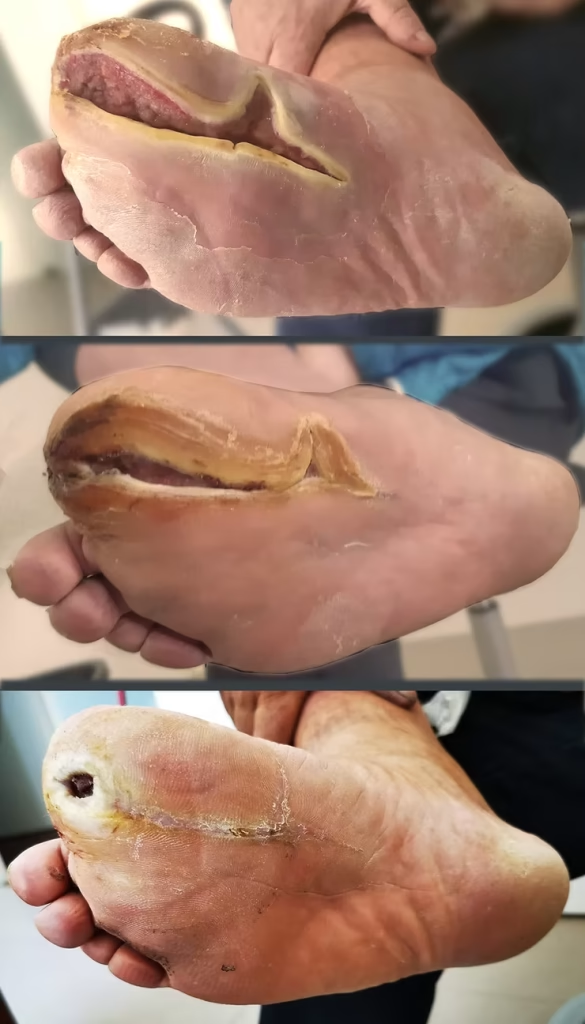
In a 56-year-old patient with diabetes, necrosis led to amputation of the big toe. After surgical removal of the dead tissue, an open wound remained on the foot and healed slowly.
The wound was treated daily with Smrekovit Klasik on sterile gauze. Photographic monitoring over the following months showed a gradual reduction in the open wound area; after approximately five months, the area was almost completely closed.
After the open wound had closed, Smrekovit 365 was used on the closed skin.
Thyroid disorders and slower wound healing
In the case of a long-lasting wound or a wound that is healing slowly, it is also reasonable to consider thyroid disorders and the person's overall health status. Thyroid dysfunction does not in itself explain every chronic wound, but it may be one of the factors influencing its course.
Therefore, when a wound remains open for a prolonged period, in addition to local wound care we also consider other possible factors that may delay healing, particularly diabetes, venous or heart failure, marked oedema and other coexisting conditions.
Documented case: long-lasting wound with hypothyroidism
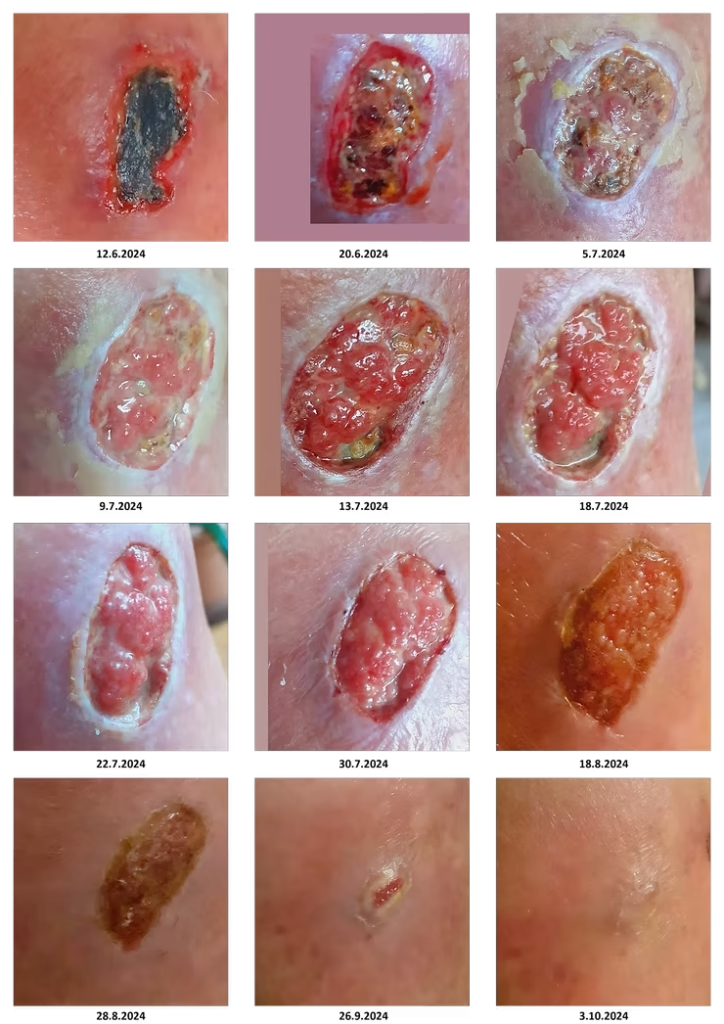
In a 78-year-old patient with hypothyroidism, a wound developed on the leg after a bicycle fall. At the beginning of monitoring, it measured approximately 2 × 3 cm and had previously been healing slowly for an extended period.
The wound was then treated daily with Smrekovit Klasik on sterile gauze. According to the record from that time, after approximately two weeks it was in the epithelialisation phase, and after about one month the open wound surface was almost completely closed.
Kidney disease, dialysis and wound healing
In advanced kidney disease and dialysis, wound healing can be more challenging, especially when anaemia, heart failure, swelling or nutritional problems are also present. In such a patient, it is usually not a single factor but rather a combination of several health burdens that affects the course of healing.
Chronic kidney disease can affect metabolism, immune response and nutritional status, while patients on dialysis may also experience protein losses and disturbances in mineral and electrolyte balance. All of these factors should be considered when a wound is healing slowly.
Documented case: extensive wound in a patient on dialysis
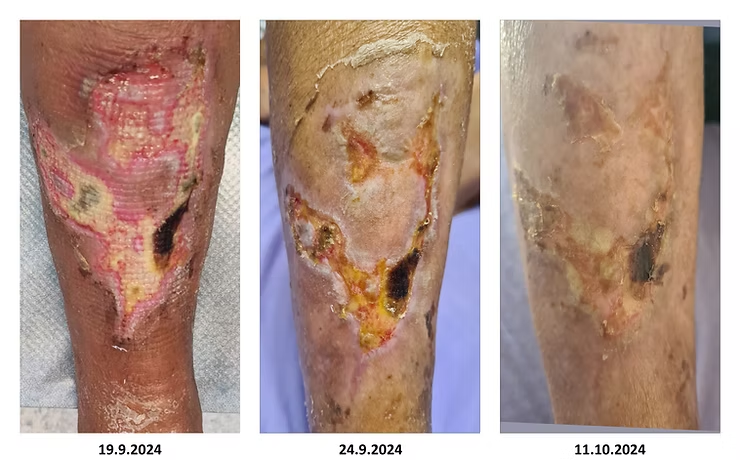
In a 60-year-old patient on dialysis with anaemia and heart failure, a large open wound on the leg was documented, measuring approximately 16 × 8 cm, which had already been present for some time.
The wound was regularly treated with Smrekovit Klasik. During the documented 22-day period, the photographic course showed a marked reduction in the open wound area and almost complete wound closure.
Do you need help monitoring a wound?
For more complex or long-lasting wounds, we can also help with monitoring the course of the wound and the practical use of Smrekovit products. You can send us photographs of the wound approximately once a week so that we can more easily follow changes over time.
For comparison, it is best to photograph the wound from a similar distance, at a similar angle and in similar lighting each time. It is also useful to include how long the wound has been present, whether the leg is swollen and how much discharge soaks through the dressing.
Call us:
040 745 453
Write to us:
info@smrekovit.si
In-person consultation and remote consultation are both available – photographs can be sent via MMS, email, WhatsApp or Viber.
Advice on the use of products does not replace medical care.