
What helps with osteoarthritis?
There is no single measure that works for everyone with osteoarthritis. The greatest benefit usually comes from a combination of regular physical activity and muscle strengthening, adapting loads, managing body weight when it is elevated, and, when needed, medications and other methods of relieving symptoms.
Key points at a glance
- Physical activity is part of treatment, not something to avoid. Appropriate exercise helps maintain mobility, muscle strength and joint function.
- It is generally not advisable to completely unload the joint. It is more useful to adapt activities and reduce loads that clearly worsen symptoms, while still maintaining regular movement.
- If body weight is elevated, reducing it can help. This is especially important in osteoarthritis of the knee and hip, where the joints bear body weight.
- Medicines can also be used to relieve pain. In knee osteoarthritis, topical non-steroidal anti-inflammatory drugs have an important role; for other medicines, it is sensible to consider the benefits, risks and the individual’s health status.
- Other options are available in more advanced cases. If pain and loss of function continue to have a major impact on quality of life despite non-surgical treatment, specialist assessment may be appropriate and, for some people, joint replacement may be considered.
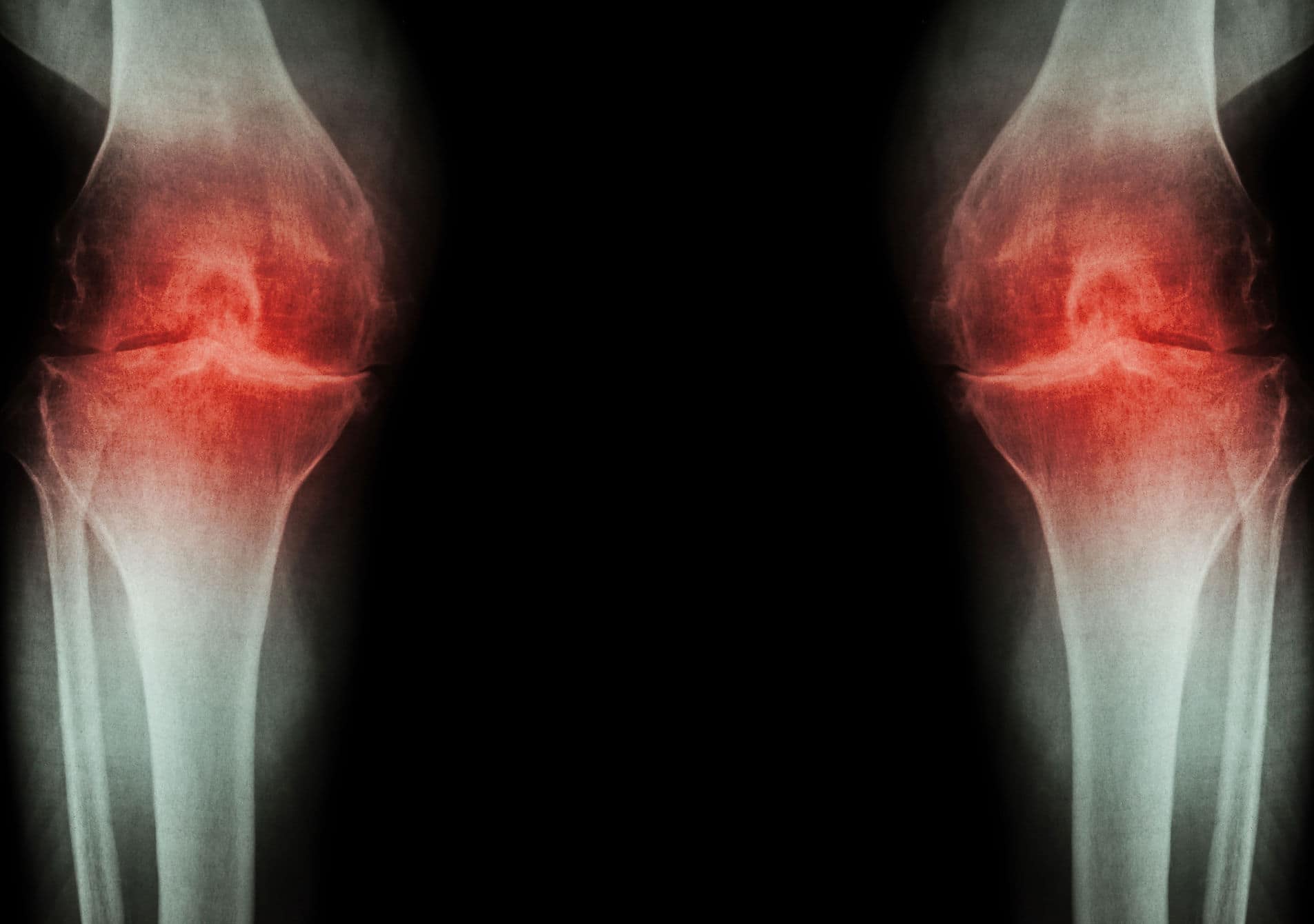
It is also important to note that the degree of change seen on an X-ray does not always correspond to the level of pain. Some people may have pronounced changes with relatively few symptoms, while others may experience considerable symptoms despite less marked imaging findings. Treatment decisions are therefore based not only on the appearance of the joint, but especially on pain, mobility and the impact of symptoms on everyday life.
Table of contents
What is osteoarthritis and what happens in the joint?
Osteoarthritis is a chronic joint disease in which several joint tissues change over time. The best-known changes affect the articular cartilage, but osteoarthritis does not affect cartilage alone – changes can also involve the bone beneath it, the joint capsule, ligaments and other tissues within the joint.
Osteoarthritis is not just “worn cartilage”
Cartilage covers the joint surfaces and allows smooth movement. In osteoarthritis, its structure gradually changes and it may become thinner, while the bone beneath the cartilage also changes. Bone spurs, or osteophytes, may develop along the edges of the joint, and the joint capsule may also become inflamed or irritated from time to time.
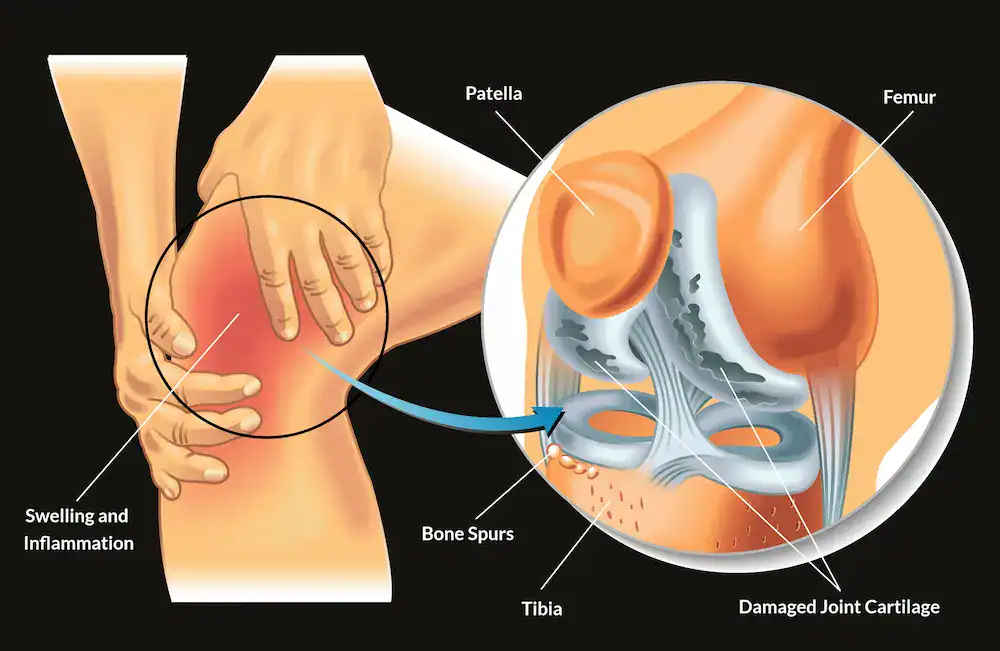
Osteoarthritis is therefore better understood as a disease of the entire joint rather than simply as “wear and tear from use”. The fact that we use a joint is not in itself a reason to protect it from movement as much as possible.
Why can osteoarthritis be painful?
Articular cartilage itself has no nerves, so pain does not arise simply because the “cartilage rubs”. Changes in the bone, joint capsule and other tissues around the joint, overloading of individual structures, and reduced muscle strength and joint function can all contribute to pain.
This also helps explain why X-ray findings and pain intensity do not always correspond. Some people may have pronounced structural changes with relatively few symptoms, while others may have significant symptoms despite less marked changes on imaging.
Does osteoarthritis always progress?
Osteoarthritis is a long-term condition, but its course is not the same for everyone. In some people, changes and symptoms vary only slightly over the years, while in others they progress more quickly. Periods of more pronounced symptoms can also alternate with periods when the joint is much calmer.
For this reason, when assessing osteoarthritis, the X-ray finding is not the only important factor. What matters most is how much the joint hurts, how mobile it is, and how much the symptoms affect everyday activities.
How can you recognise osteoarthritis?
Osteoarthritis often develops gradually. The most characteristic symptoms are joint pain during activity and stiffness after rest, although symptoms can vary considerably between individuals. Some people have pronounced changes in the joint with few symptoms, while others experience significant pain and limited mobility.
Typical symptoms of osteoarthritis
- pain when using the joint, for example when walking, climbing stairs, standing up or gripping,
- stiffness after rest, especially in the morning or after prolonged sitting,
- reduced mobility of the affected joint,
- tenderness or swelling around the joint,
- cracking, creaking or a grinding sensation during movement,
- in some joints, also changes in shape or bony enlargement.
A typical feature of osteoarthritis is that pain is related to use of the joint. Morning stiffness is usually shorter; in the clinical diagnosis of osteoarthritis, morning stiffness lasting no more than about 30 minutes is considered a characteristic pattern.
Does osteoarthritis always cause pain?
No. Structural changes of osteoarthritis may also be present without pronounced symptoms. Symptoms can also change over time – periods of pain and stiffness may alternate with periods when the joint is much calmer.
Is the pain really coming from the joint?
Pain around a joint does not necessarily mean osteoarthritis. In the knee, for example, pain may also come from muscles, tendons, ligaments, bursae or other structures above or below the joint.
It is therefore useful first to determine whether the pain is most pronounced in the joint itself or slightly beside it. This is especially important when osteoarthritis has not yet been confirmed or when the nature of the pain suddenly changes.
Osteoarthritis or arthritis – what is the difference?
The terms are often used as if they were synonymous, but they are not quite the same. Osteoarthritis is a chronic joint disease with degenerative and structural changes. Arthritis, on the other hand, means inflammation of a joint and can result from various diseases, such as rheumatoid arthritis, gout or infection.
Inflammatory activity can also occur in osteoarthritis, so the joint may occasionally become more painful, swollen or warmer. This does not necessarily mean that another type of arthritis is present.
If a joint suddenly becomes markedly swollen, hot and very painful, especially if fever or general malaise is also present, it should not simply be attributed to osteoarthritis and medical assessment is needed.
What does joint space narrowing in the knee or hip mean?
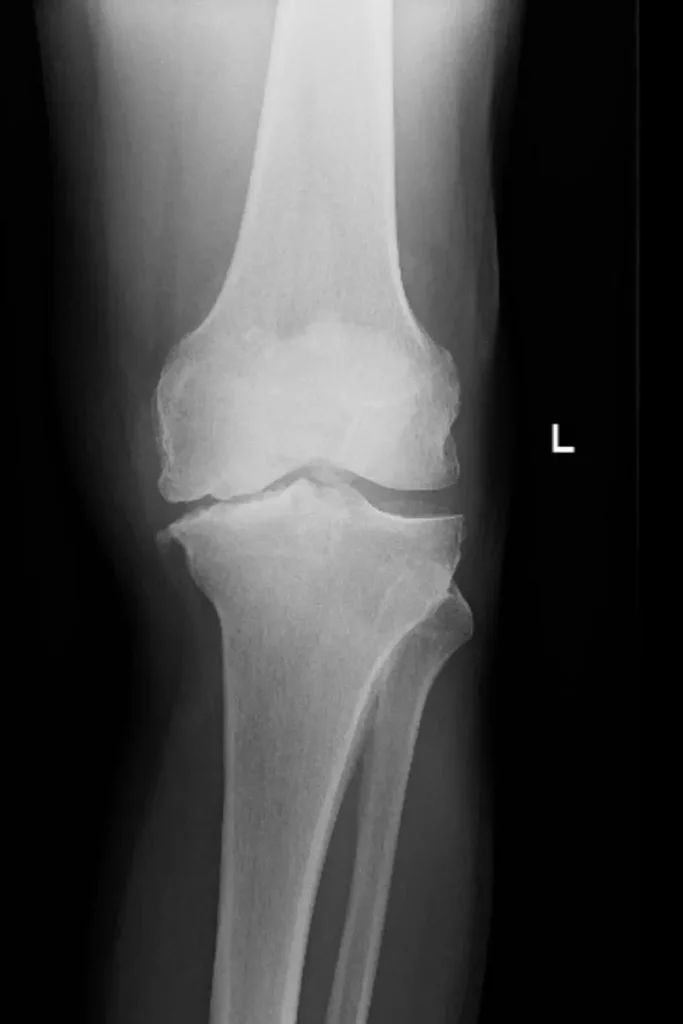
The term joint space narrowing often appears in X-ray reports of the knee or hip. It does not mean that the joint has literally “closed”, but describes a smaller gap between the bony surfaces on the X-ray image.
What is the joint space?
Articular cartilage is not directly visible on a standard X-ray. What we therefore see between the bones is a lighter or empty space known as the joint space. Its width indirectly reflects the condition of the articular cartilage and other structures within the joint.
When cartilage and other joint tissues change in osteoarthritis, this space may appear narrower on the X-ray. Joint space narrowing is therefore one of the characteristic radiological signs of osteoarthritis, together with bone spurs and other bony changes.
What does joint space narrowing in the knee mean?
In the knee, narrowing is often not uniform across the entire joint. The report may, for example, describe more pronounced narrowing on the inner or outer side of the knee, or in the part of the joint between the kneecap and the femur.
Such a finding helps describe where the structural changes are most pronounced, but on its own it does not indicate how much knee pain a person will have or how limited they will be when walking.
What does joint space narrowing in the hip mean?
The same applies to the hip. Joint space narrowing may indicate changes characteristic of hip osteoarthritis, but the X-ray finding should always be considered together with symptoms such as pain in the groin or hip, stiffness and reduced mobility.
Does joint space narrowing mean severe osteoarthritis?
Not necessarily. The degree of narrowing is one of the findings used to assess structural changes in the joint, but X-ray findings and the severity of symptoms are not always proportional. A person may have fairly pronounced changes with relatively little pain, or significant symptoms with less marked structural changes.
Treatment decisions are therefore not based solely on the phrase “joint space narrowing”, but on the overall clinical picture – pain, mobility, joint function and the impact of symptoms on everyday life.
Does joint space narrowing mean that the joint has run out of synovial fluid?
No. Joint space narrowing is not a term for a lack of synovial fluid or “joint lubrication”. It is primarily a radiological sign of structural changes in the joint, especially changes in the cartilage.
For this reason, the joint space also cannot simply be “opened” by adding more synovial fluid to the joint. In osteoarthritis, it is more important to address symptoms and joint function than to try to change a single finding described in an X-ray report.
Which joints are most commonly affected?
Osteoarthritis can occur in almost any joint, but it most commonly causes problems in the knees, hips and small joints of the hands. Degenerative changes are also common in the cervical and lumbar spine.
Knee osteoarthritis
The knee is one of the most commonly affected joints. Pain is usually more pronounced when walking, standing up, squatting and using stairs. Stiffness, swelling, cracking and a feeling that the knee is no longer as stable as before may also occur.
X-rays may show joint space narrowing, bone spurs and other changes characteristic of osteoarthritis. If the pain is mainly in the knee but the cause is unclear, see also the overview of other common causes of knee pain.
Hip osteoarthritis
Hip osteoarthritis often causes pain in the groin, but it may also be felt at the side of the hip, in the buttock or even in the thigh or knee. A gradual loss of mobility is typical and can make putting on socks and shoes, getting into a car or standing up from a low seat more difficult.
Osteoarthritis of the fingers and hands
In the hands, osteoarthritis often affects the joints at the ends and middle of the fingers, as well as the joint at the base of the thumb. The fingers may become stiffer, painful or thickened, and visible bony enlargements may develop over time.
With hand osteoarthritis, pain does not necessarily become progressively worse over time. Structural changes may remain visible, while pain decreases in some people.
Spinal osteoarthritis
Degenerative changes can also affect the joints of the spine, especially in the neck and lower back. They can cause local pain and stiffness, although not every change seen on imaging is necessarily the cause of symptoms.
If lower back pain radiates down the leg and is accompanied by tingling or numbness, irritation of a nerve root or sciatica should also be considered, not just osteoarthritis.
What about the shoulder, ankle and other joints?
Osteoarthritis can also occur in the shoulders, ankles, feet and other joints, although these areas are less typical than the knees, hips and hands. With pain in these joints, it is therefore especially important to determine whether the cause is truly osteoarthritis or a problem involving tendons, ligaments, muscles or other structures around the joint.
Why does osteoarthritis develop?
Osteoarthritis usually does not have a single cause. It develops through an interaction of age, inherited traits, previous injuries, joint structure, body weight and long-term mechanical loading. In an individual person, some factors may be considerably more important than others.
Age increases the risk, but it is not the only cause
Osteoarthritis becomes more common with increasing age, but it is not an inevitable consequence of ageing. Over time, the ability of joint tissues to adapt to loads changes, as do the quality of cartilage, bone and other tissues in the joint, making the joint more susceptible to the development of osteoarthritis.
Some people have few problems even at an advanced age, while in others osteoarthritis develops much earlier. Age alone therefore cannot be regarded as an explanation for every case of joint pain.
Previous joint injuries
Injuries can significantly increase the risk of later osteoarthritis. In the knee, for example, this includes injuries to the meniscus or cruciate ligaments, especially if they alter joint stability and the distribution of loads within the joint.
Post-traumatic osteoarthritis may develop only many years after the original injury, so the connection is not always immediately obvious.
Body weight and joint loading
Increased body weight is an important risk factor particularly for knee osteoarthritis. Greater loading of the joint with each step is part of the explanation, but mechanical factors are probably not the only ones involved – metabolic and inflammatory processes associated with obesity may also affect joint tissues.
Joint structure and alignment
The development of osteoarthritis can also be influenced by congenital or acquired anatomical features that cause loads to be distributed unevenly across the joint. Examples include certain developmental changes of the hip or more pronounced axial malalignment of the knee.
Heredity
Genetics also plays an important role. A tendency to develop osteoarthritis can run in families, especially in some forms of hand osteoarthritis. Heredity does not, however, mean that the condition will necessarily develop in a particular person.
Long-term repetitive loading
Risk may be higher in activities where the same joint is exposed to very high and repetitive loads over many years. This applies particularly to some physically demanding occupations and to athletes after repeated injuries.
Does movement wear out the joints?
Normal movement and appropriately dosed physical activity do not in themselves mean that we are “using up” the joint. On the contrary, movement and muscle strengthening are an important part of osteoarthritis management.
The situation is different with injuries, marked repetitive overloading or a joint whose biomechanics have already been altered. The goal in osteoarthritis is therefore not to use the joint as little as possible, but to find an appropriate balance between movement, strength and load.
How is osteoarthritis treated?
Treatment of osteoarthritis is aimed primarily at reducing pain, maintaining mobility and muscle strength, and allowing the joint to be used as normally as possible. Osteoarthritis is generally not treated with a single measure, but with a combination of movement, adjustment of loads and, when needed, medications or other procedures.
Movement and therapeutic exercise
Regular exercise tailored to the individual is one of the most important parts of osteoarthritis treatment. Exercises that strengthen the muscles around the affected joint are particularly useful, as is general aerobic activity such as walking, cycling or other forms of movement that the joint tolerates well.
At the beginning, exercise may temporarily cause some discomfort, but this does not in itself mean that the joint is being further damaged. What matters is a gradual increase in load and long-term consistency.
Body weight
In people with increased body weight, reducing it can lessen pain and improve function, especially in osteoarthritis of the knee and hip. Even a moderate reduction in body weight can be beneficial, while a greater loss of excess weight generally produces a greater effect.
If you would like a practical example of gradual weight loss, you can also read about my personal experience of losing weight with a calorie deficit.
Which medicines are used for osteoarthritis?
Medicines are used primarily to manage pain and should complement movement and other non-pharmacological measures rather than replace them.
In knee osteoarthritis, topical non-steroidal anti-inflammatory drugs (NSAIDs) in the form of gels or creams have an important role. They can also be used for other joints. If topical medicines are insufficient or unsuitable, a doctor may consider oral NSAIDs depending on the individual’s health status.
When taking anti-inflammatory medicines by mouth, risks to the stomach, kidneys, heart and blood vessels, as well as possible interactions with other medicines, must be taken into account. They are therefore not suitable for everyone.
Paracetamol is no longer routinely recommended as a long-term solution for osteoarthritis, and long-term use of opioids is also generally discouraged. Pain treatment should therefore be adapted to the individual.
Do joint injections help?
If other measures are insufficient or unsuitable, a doctor may consider a corticosteroid injection into the joint for some patients. Such an injection can temporarily reduce pain, but its effect is generally not long-lasting.
Hyaluronic acid injections are used in some settings, but current NICE guidelines do not recommend them for routine treatment of osteoarthritis because the evidence of benefit is unreliable.
Physiotherapy and aids
A physiotherapist can help select suitable exercises and improve strength, mobility and the way the joint is loaded. In hip or knee osteoarthritis, manual therapy can be used as an addition to therapeutic exercise, but not as a replacement for it.
For walking difficulties, aids such as a walking stick can also help some people. Braces, insoles and other aids are not necessary for every patient and should be chosen according to the specific functional problem.
When is surgery considered?
Joint replacement or other surgical treatment is considered mainly when pain, stiffness and loss of function significantly reduce quality of life and non-surgical treatment does not help enough or is not suitable.
The hip and knee are the joints most commonly replaced with artificial joints. The decision to operate is based primarily on symptoms and the impact of osteoarthritis on everyday life, not only on the appearance of the X-ray.
Can osteoarthritis be stopped, and can cartilage regenerate?
Osteoarthritis is a long-term joint disease, but this does not mean that the condition must continuously worsen in every person. Symptoms can fluctuate over time, and in some people pain and joint function can improve considerably with an appropriate approach.
Does osteoarthritis always progress?
Not necessarily. Structural changes in the joint may develop very slowly over the years, while symptoms often do not directly follow what is seen on an X-ray. Some people may have similar changes for many years with relatively stable symptoms, while in others the condition changes more quickly.
The aim of treatment is therefore not only to “stop wear and tear”, but primarily to reduce pain and preserve muscle strength, mobility and the ability to use the joint normally.
Can worn articular cartilage regenerate?
Articular cartilage has a limited capacity for regeneration. In established osteoarthritis, there is currently no routine treatment, medicine or dietary supplement that has been proven to rebuild lost cartilage and thereby eliminate the disease.
This does not mean that a person’s condition cannot improve. Pain, stiffness and joint function can improve even if the joint does not return to its original appearance on an X-ray.
What about glucosamine, collagen and other supplements for cartilage?
The term “cartilage regeneration” is often used for various dietary supplements, but such claims should be treated with caution. Evidence on the effects of individual supplements on symptoms varies, and there is no reliable evidence that they can restore articular cartilage that has already been lost.
Dietary supplements should therefore not be regarded as a substitute for measures with better-established benefits, such as appropriate exercise, muscle strengthening, weight management and suitable pain treatment.
What can we actually change in osteoarthritis?
We cannot directly change age, genetics or structural changes that have already occurred. We can, however, influence muscle strength, mobility, body weight, the way the joint is loaded, physical fitness and pain management.
For this reason, with osteoarthritis it is often more useful to ask “How can I use the joint better and reduce my symptoms?” than to search for a way to return the joint’s X-ray appearance to its original state.
Smrekovit for osteoarthritis – a practical approach
When using Smrekovit for osteoarthritis, we do not use it with the aim of “rebuilding cartilage” or changing the X-ray appearance of the joint. In our practical approach, we focus primarily on the joint that is currently causing problems – for example pain, stiffness, swelling or reduced mobility.
First check whether the pain is really coming from the joint
This is one of the most important questions in our consultations. If someone says that their knee hurts, we first try to clarify whether the pain is coming from the joint itself or more from the muscles, tendons, ligaments or other structures above or below it.
If osteoarthritis has been confirmed, or the pattern of symptoms is typical of a joint problem, the method of use is different from that used for an acute injury to a muscle, tendon or ligament.
Smrekovit 365 Prima and the Kontakt compress
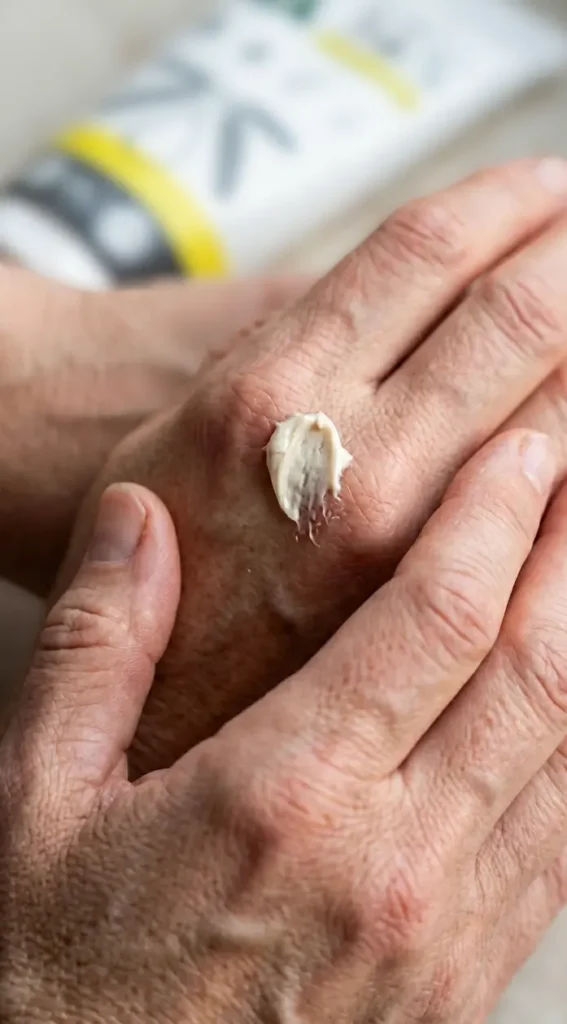
In our practical approach to osteoarthritis, we most often use Smrekovit 365 Prima together with the Smrekovit Kontakt compress. The cream is applied locally to the area of the affected joint or to the Kontakt compress, which allows the product to remain in contact with the skin for longer.
If needed, Smrekovit 365 Alter can also be added to the basic approach. In our experience, however, the foundation for joint-related problems generally remains 365 Prima and the Kontakt compress.
What if the compress cannot be used?
If the Kontakt compress cannot be used, a practical alternative is regular repeated application of the cream. Smrekovit 365 Prima or Smrekovit 365 Ekstra can be used; the latter contains added menthol and camphor and gives a cooling sensation.
Smrekovit 365 Ekstra is used without the Kontakt compress. Smrekovit Klasik can also be used, although its greasier base makes it less practical for frequent application to joints for many people.
When do users usually notice the first difference?
Based on our practical experience, users who apply the products consistently often notice the first difference after about one week. They most commonly describe less pain, reduced swelling or better joint mobility.
This is not a guaranteed timeframe or an expected result for every user. The response depends on the joint involved, the severity of the problems, accompanying inflammation, age and the method of use.
What if several joints hurt at the same time?
If several joints are affected, one practical option is to use the Kontakt compress on the joint causing the most problems, while applying the cream regularly to the other joints. Once the most problematic joint settles, the compress can be moved to another joint.
For the knee, this method is usually particularly easy because of the size and accessibility of the joint. In our many years of consultations, the knee is also the joint for which users most often seek help.
What about long-term use?
Because osteoarthritis is a chronic condition, local use should not be presented as a one-off “course” that eliminates the disease itself. Some users use Smrekovit regularly, while others mainly use it during periods when their symptoms become more pronounced.
We have collected more detailed instructions on application, use of the Kontakt compress on individual joints and practical recommendations in a separate guide.
See the practical instructions for use with osteoarthritis →
Swelling in osteoarthritis and Baker’s cyst
In osteoarthritis, the joint can occasionally become more irritated and swollen. Swelling may result from an increased amount of fluid in the joint or from inflammatory activity in the joint lining, but not every swelling around the knee is caused by osteoarthritis alone.
What does swelling in osteoarthritis mean?
In symptomatic osteoarthritis, periods of increased pain, tenderness and swelling can alternate with calmer periods. Swelling therefore does not necessarily mean that the joint has suddenly become much more “worn”, but may reflect what is currently happening within the joint.
If swelling is the main symptom, is very pronounced or also occurs outside the area of the joint, see our more detailed guide on swelling and possible causes of swelling.
What is a Baker’s cyst?
A Baker’s cyst, or popliteal cyst, is a fluid-filled swelling at the back of the knee. In adults, it often occurs together with another problem in the knee joint, including osteoarthritis, knee injuries, rheumatoid arthritis or gout.
The cyst may be small and barely noticeable, or it may cause a feeling of pressure or tightness behind the knee, pain and difficulty bending the knee.
What is the connection between a Baker’s cyst and osteoarthritis?
If the knee joint produces more synovial fluid, some of this fluid can bulge towards the back of the knee and form a Baker’s cyst. In adults, it is therefore often more important to understand and address what is happening within the knee joint itself than to view the cyst as a completely separate problem.
In our practical consultations, we also consider a Baker’s cyst mainly in relation to the condition of the knee joint. According to user observations, as joint symptoms settle, the feeling of tightness or the size of the cyst may also decrease, although the course is not the same for everyone.
When is medical assessment needed?
A newly developed lump or swelling behind the knee should be medically assessed, especially if the diagnosis of a Baker’s cyst has not yet been confirmed.
If pain or swelling in the calf suddenly increases markedly, or warmth, redness or a change in skin colour develops, prompt medical assessment is needed. A ruptured Baker’s cyst can cause symptoms similar to deep vein thrombosis, so these signs should not be interpreted simply as a usual consequence of osteoarthritis.
When does a painful joint need medical assessment?
With known osteoarthritis, pain, stiffness and swelling may occasionally increase, but it is not appropriate to automatically attribute every new problem to joint wear and tear. A change in the usual pattern of symptoms can be a reason for medical assessment.
When is medical assessment advisable?
Medical assessment is especially advisable if pain or swelling persists, keeps returning or begins to significantly limit walking, sleep, work or other everyday activities.
Other reasons to seek assessment include:
- rapid worsening of symptoms or a noticeable change in the shape of the joint,
- prolonged morning stiffness, especially if it lasts substantially longer than about 30 minutes,
- a new symptom after an injury,
- pain that feels different from the person’s usual osteoarthritis symptoms.
A hot and markedly swollen joint
A suddenly very painful, hot and swollen joint is not typical only of a usual flare-up of osteoarthritis. Gout, another type of joint inflammation or an infection can present in a similar way.
If the joint is hot and swollen, especially if fever, chills or general malaise are also present, prompt medical assessment is needed.
When is urgent medical attention needed?
After an injury, urgent assessment is particularly important in cases of very severe pain, inability to bear weight on the joint, obvious deformity or dislocation, or loss of sensation around the injured area.
With such signs, it is not appropriate to continue only with self-care or local approaches until the cause of the symptoms has been clarified.
Stages of osteoarthritis – what do mild, moderate and severe osteoarthritis mean?
Osteoarthritis can also be described according to the severity of structural changes visible on an X-ray. The assessment mainly considers joint space narrowing, bony outgrowths or osteophytes, and changes in the bone around the joint.
How is the stage of osteoarthritis assessed?
One of the most commonly used classifications is the Kellgren-Lawrence scale from 0 to 4, in which 0 indicates the absence of characteristic radiographic signs of osteoarthritis, while higher grades indicate increasingly pronounced structural changes.
The illustrations below provide a simplified representation of how changes in the knee joint may develop. They do not represent a precise diagnostic Kellgren-Lawrence classification of an individual X-ray image.
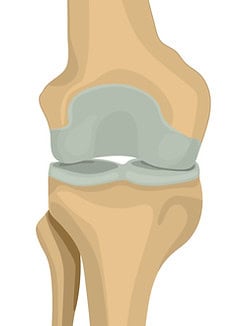
Early changes
The changes are still minor. The joint space is largely preserved, although the first signs of changes may appear along the margins of the joint.
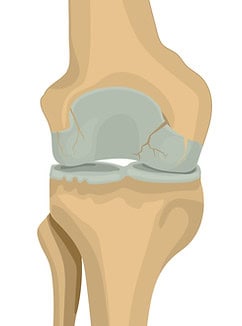
Mild osteoarthritis
Structural changes become more apparent. Bone spurs may develop, along with early narrowing of the joint space.
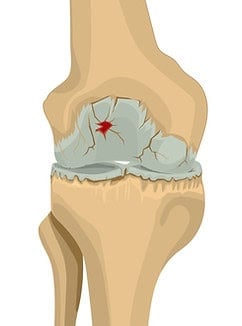
Moderate osteoarthritis
Joint space narrowing is more pronounced, osteophytes are more visible, and additional changes in the bone around the joint may also appear.
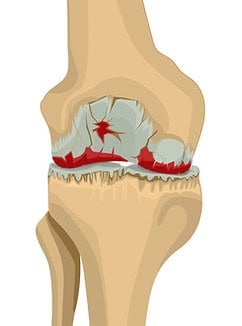
Advanced osteoarthritis
The joint space may be severely narrowed, and bone changes may be pronounced. In advanced osteoarthritis, the shape of the joint may also change.
Does a higher grade of osteoarthritis also mean more pain?
Not necessarily. The grades primarily describe structural changes in the joint. The severity of pain, stiffness and limitation of movement does not always directly correspond to them.
Someone may have pronounced changes on an X-ray and relatively few symptoms, while another person may experience significant pain despite less pronounced radiographic changes. Treatment is therefore not determined solely by the grade of osteoarthritis, but primarily by the symptoms, joint function and the impact of the problems on everyday life.
Animated illustration of changes in knee osteoarthritis
The animated illustration below further shows how the cartilage, joint space and bone may change over time in knee osteoarthritis. The video is in English.
User experiences with osteoarthritis
Below are individual comments from Smrekovit users who described their use of the products for osteoarthritis or worn joints. These are personal experiences of individual users; the course and outcome may not be the same for others.
I use Smrekovit for worn joints. I massage the affected areas with it in the evening and in the morning, and after about a week the problems usually improve quite nicely. Since I am older, however, they do sometimes return.
Jože Kotnik, Mislinja
[22] handwritten feedback received on 9.12.2014, stored in the Smrekovit archive
I use Smrekovit for worn knee joints in hrbtenici, kot posledica vrhunskega športa pred pol stoletja. Omenjene dele mažem po treningih 3x na teden po 2x na dan. Po treh mesecih mazanja s Smrekovitom so bolečine v sklepih toliko popustile, da lahko grem zopet v fitnes in prakticiram jogo, zato sem zelo zadovoljen.
Vojmir, Nova Gorica
[40] handwritten feedback received on 5.1.2015, stored in the Smrekovit archive
I had wear and tear in my knee joints. I applied Smrekovit once a day, without a compress. It started to improve immediately, but it didn't settle completely. When I put the ointment on, the pain in my knee disappears.
Milka, Mokronog
[134] handwritten feedback, received 23.12.2014, stored in the Smrekovit archive
I have arthritis in the small joints of my hands and joint pain due to osteoarthritis. I know that no medicine can cure this, but I relieve the pain with your Smrekovit products, which help me a lot.
Nada, Ajdovscina
[5] handwritten feedback received on 9.1.2016, stored in the Smrekovit archive
Read more user experiences here →
Frequently asked questions about osteoarthritis
What is osteoarthritis?
Osteoarthritis is a chronic joint disease in which the cartilage, bone and other joint tissues change over time. It can cause pain, stiffness and reduced mobility, although the degree of change seen on an X-ray does not always correspond to the severity of symptoms. More is explained in the section What is osteoarthritis and what happens in the joint?.
What helps with osteoarthritis?
The most important measures include regular adapted movement and muscle strengthening, appropriate management of joint loading and weight loss when body weight is increased. Medications and other methods of symptom relief may also be used when needed. More is explained in the section How is osteoarthritis treated?.
Can osteoarthritis be stopped?
Osteoarthritis is a long-term condition, but it does not necessarily worsen continuously in every person. Structural changes may progress slowly, while symptoms can also improve considerably with an appropriate approach. More is explained in the section Can osteoarthritis be stopped, and can cartilage regenerate?.
Can worn cartilage regenerate?
Articular cartilage has a limited capacity for regeneration. There is currently no routine treatment or dietary supplement that has been proven to rebuild articular cartilage that has already been lost and thereby eliminate osteoarthritis. Nevertheless, pain, mobility and joint function can improve significantly.
What does joint space narrowing mean?
Joint space narrowing is a term used in X-ray reports and means that the distance between the bone surfaces appears smaller on the image. Because cartilage is not directly visible on a standard X-ray, joint space narrowing is one of the indirect signs of structural changes in osteoarthritis. However, the width of the joint space alone does not reliably indicate how painful the joint will be. More is explained in the section What does joint space narrowing in the knee or hip mean?.
Does a higher grade of osteoarthritis mean more pain?
Not necessarily. The radiographic grade primarily describes changes visible on an X-ray. Someone may have advanced changes and relatively few symptoms, while another person may have significant symptoms with less pronounced changes. Pain, mobility and joint function are therefore particularly important when determining treatment.
Is movement recommended for osteoarthritis?
Yes. Adapted therapeutic exercise and muscle strengthening are an important part of osteoarthritis treatment. The aim is not to use the joint as little as possible, but to find a level of loading that the joint tolerates well and gradually maintain or improve its function.
Which ointment or cream should be used for osteoarthritis?
Topical products are used primarily to help manage symptoms, not to rebuild lost cartilage. In our practical approach to using Smrekovit for osteoarthritis, we most often use Smrekovit 365 Prima together with the Smrekovit Kontakt compress. If needed, Smrekovit 365 Alter can also be added, while Smrekovit 365 Ekstra is used without the Kontakt compress. More is explained in the section Smrekovit for osteoarthritis – a practical approach.
How quickly can I notice a difference when using Smrekovit?
Based on our practical experience, users who apply Smrekovit consistently often notice the first difference after about one week, for example in pain, swelling or mobility. This is not a guaranteed timeframe and the response is not the same for every user.
When is medical assessment needed for osteoarthritis?
Medical assessment is advisable if pain or swelling persists, worsens rapidly or significantly limits everyday activities. Prompt medical assessment is especially important for a suddenly very painful, hot and markedly swollen joint, in the presence of fever or general malaise, or after an injury if the joint cannot be loaded normally. More is explained in the section When does a painful joint need medical assessment?.