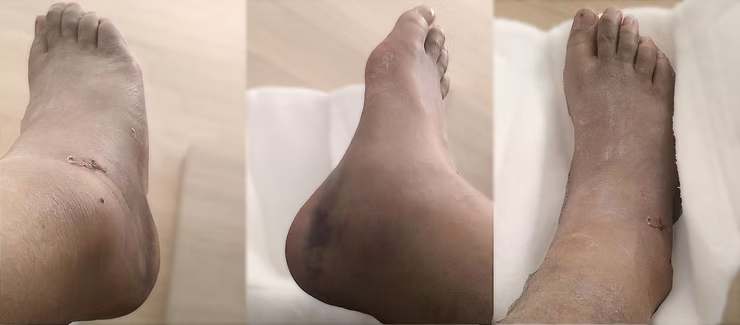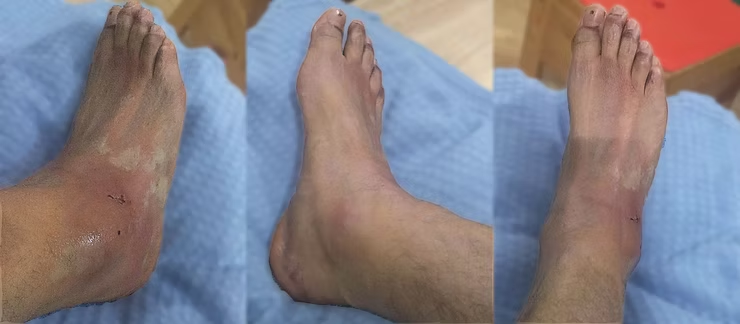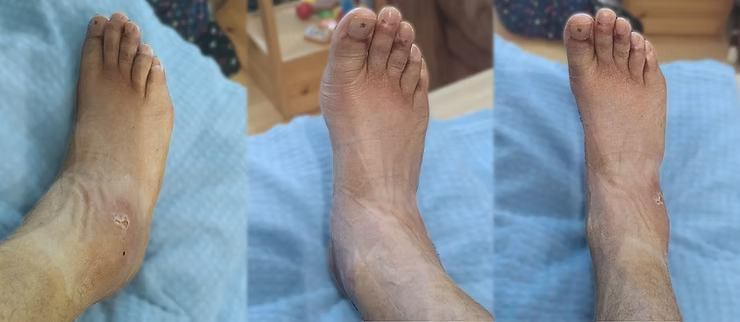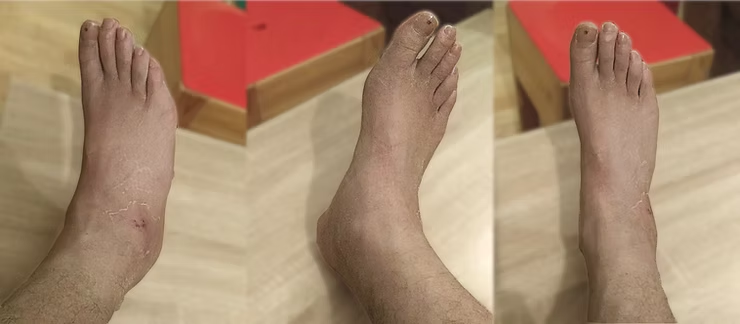
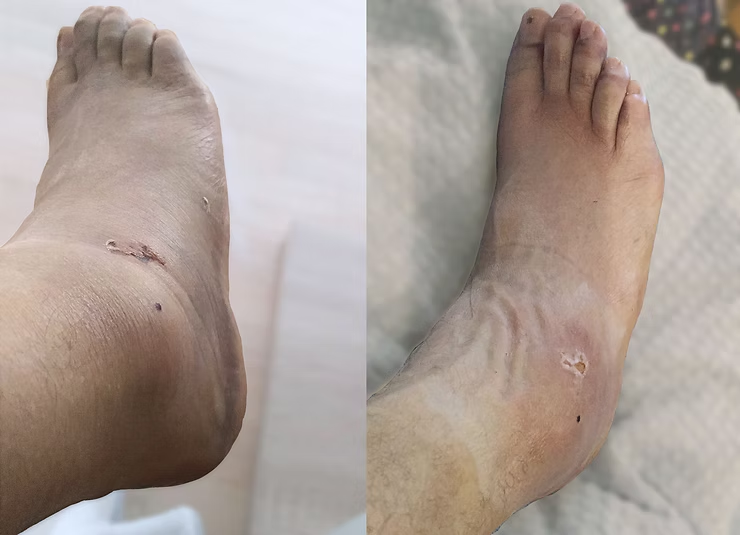
An ankle sprain is a fairly common injury, especially among physically active people. An ankle sprain occurs when the ligaments in the ankle joint are overstretched and damaged due to a forced unnatural position under the weight of the body. A rarer but much more serious injury of the ankle joint is an ankle dislocation, where the ligaments are stretched so severely that they can no longer hold the joint in its anatomical position. In this case, the ankle joint becomes visibly deformed. Such a joint must be returned to its natural position either manually or surgically, and accompanying fractures often occur. If only the ligaments are injured, and the joint is repositioned back into its anatomical alignment, it is classified as a third-degree ankle sprain. Such an injury occurred in a 44-year-old man, whose treatment with Smrekovit products is documented below. Although recovery from this type of injury usually takes several months, this person, by using Smrekovit products, was able to put weight on his leg after just one week, walk 1500 meters without limping after two weeks, and after one month walk several kilometers a day with intermittent jogging intervals (more below).
Ankle sprain and injury severity levels
The most common type is a lateral ankle sprain, where the ankle joint turns inward and, under the body’s weight, the outer ligaments of the ankle joint become strained and injured.
A much rarer form is the medial ankle sprain, where the ankle joint turns outward, causing injury to the inner ligaments of the ankle joint.
Depending on the severity of the injury, an ankle sprain can be divided into several stages:
- first-degree ankle sprain: a mild stretch of the ligaments without tearing, accompanied by slight pain, swelling, and tension without bruising. The ankle joint is stable, and the person can put weight on the leg immediately. Full recovery, even without using Smrekovit, takes 1–3 weeks.
- second-degree ankle sprain: partially torn ligaments, accompanied by moderate pain and swelling, with mild to moderate instability of the joint. Weight-bearing and walking are possible but very painful. Recovery at this stage takes about 3–6 weeks without Smrekovit.
- third-degree ankle sprain: severely stretched or completely torn ligament, accompanied by severe pain, swelling, and hematoma. The ankle joint is unstable and non-functional. Weight-bearing and walking are not possible. Recovery without Smrekovit may take several months. If the ligament is completely torn, surgery is necessary. A third-degree ankle sprain can also occur in the case of an ankle dislocation, if it is not accompanied by a fracture and the doctor repositions the dislocated ankle back into its anatomical position.
Under extreme stress on the ankle joint, an ankle dislocation can occur, where the ligaments are stretched so much that the ankle joint shifts out of its anatomical position. An ankle dislocation is often accompanied by a fracture of one or more parts of the ankle bones. If no fracture occurs, and the joint is repositioned back into its anatomical position, it is classified as a third-degree ankle sprain.
Some time ago, in this article we found that when treating injuries, the doctrinal approach following the RICE method (rest, ice, compression, elevation) is not a good idea, and the same applies to ankle sprains. Spruce resin, on the other hand, works in a completely opposite way to cooling. Cooling with ice actually slows down the healing process because it reduces the permeability of blood vessel walls and thereby prevents the inflammatory process that is essential for healing the injury. The swelling that accompanies an ankle sprain is therefore smaller in this case, but the healing time is significantly longer. Spruce resin, on the other hand, stimulates the migration of immune cells to the site of injury and significantly shortens the healing process. For this reason, a reaction in the form of stronger pain sometimes occurs during the first few days, as the inflammation reaches its peak more quickly and then begins to subside.
-

Smrekovit 365 spruce resin cream
14,00 € -
Smrekovit Klasik spruce resin ointment
Price range: 6,00 € through 35,00 € -
Smrekovit compress
3,00 €
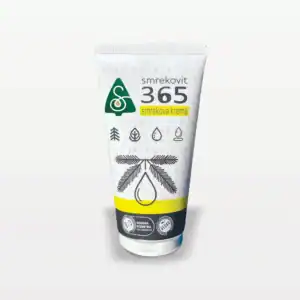

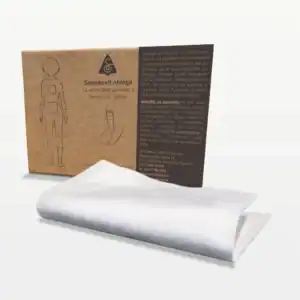
Example of ankle dislocation treatment with Smrekovit Klasik after repositioning
In the case described below, an ankle dislocation occurred in a 44-year-old physically active man. In November 2018, the man jumped and injured his right ankle upon landing. He was brought to the emergency department by ambulance. Upon admission, the ankle joint was visibly deformed and significantly out of its anatomical position (diagnosis: luxatio ATC dex.). In the emergency room, the ankle joint was mechanically repositioned by traction and prepared for surgery (such injuries often also involve minor fractures). Since X-ray images showed no fractures, surgery was abandoned, and a non-weight-bearing plaster splint was applied. Upon discharge from the emergency department, the patient replaced the non-weight-bearing plaster splint with a Vacoped immobilization boot, under which he could apply a Smrekovit compress coated with Smrekovit Klasik.
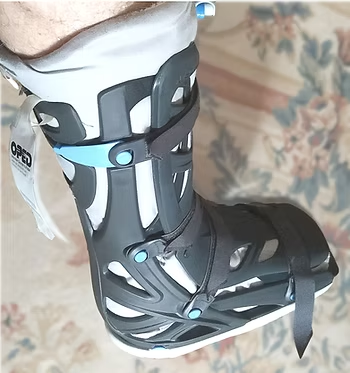
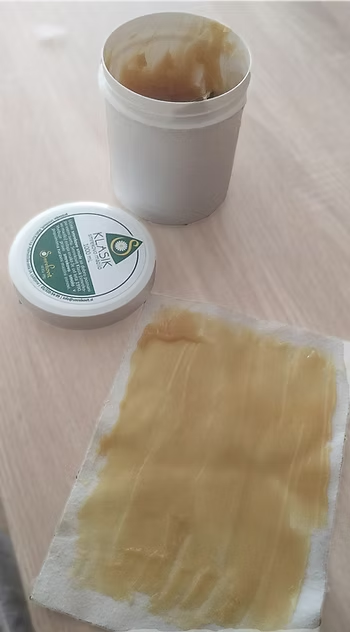
He applies a Smrekovit compress under the immobilization boot on his ankle every day, coated with Smrekovit Klasik (note: the same or even stronger effect could be achieved with Smrekovit 365 spruce cream). He keeps it on continuously and reapplies the ointment twice a day.
The course of recovery during treatment with Smrekovit compress and Smrekovit Klasik is as follows:
- after one week, he carefully puts weight on his leg without the brace and takes a few steps around the apartment
- walk without limping 1500 m on the 14th day after the injury.
- After one month, he walks without difficulty several kilometers a day with short jogging intervals of a few dozen meters. several kilometres a day with intervals of a few metres
Full recovery process