
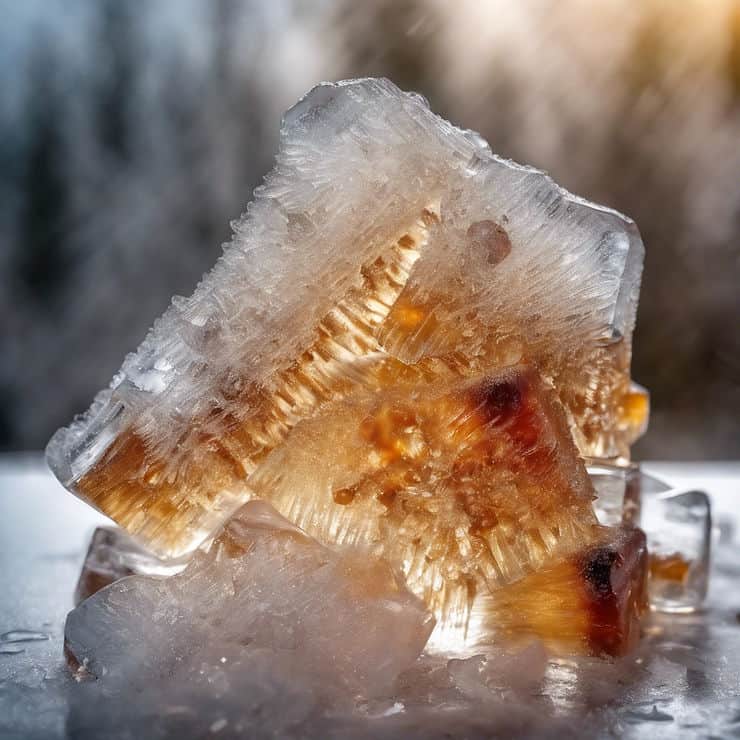
Ice cooling has long been considered the standard method for treating injuries, but new findings show that this approach can actually slow down recovery. Spruce resin, with its bioactive properties, is a natural alternative that promotes faster healing.
Since 1990, when Ivo Konc started making spruce resin products (Smrekovit Klasik), he strongly advised against cooling injuries with ice, based on his experience as a sports trainer and his knowledge of the natural mechanisms of healing sports injuries. In 2015, even Dr Gabe Mirkin, the author of the RICE (Rest, Ice, Compression, Elevation) concept, retracted his original theory and admitted that ice and rest can increase healing time.
Ivo Konc expressed his opposition to ice cooling in the following way: "Why do you store your steaks in the fridge and not at room temperature? To slow down physiological processes and keep the steak fresher for longer. Do the same with an injury if you refrigerate it with ice: slow down the physiological processes and the injury stays much longer."
"Why do you store your steaks in the fridge and not at room temperature? To slow down physiological processes and keep the steak fresher for longer. Do the same with an injury if you refrigerate it with ice: slow down the physiological processes and the injury stays much longer." (Ivo Konc)
Why ice cooling is not good
Ice cooling slows down physiological processes that are crucial for natural healing. Injury causes an increase in the permeability of the vascular walls, allowing inflammatory cells and proteins to reach the site of injury. This process is essential for the removal of damaged cells and tissue regeneration. Cooling constricts the capillaries and prevents the migration of these cells, which prolongs the recovery time.
Research supports this thesis. A systematic review (Bleakley et al., 2004) found that treating injuries with ice and compression is ineffective in improving the condition in the long term. Moreover, cooling can cause prolonged capillary constriction, which impairs normal immune function (Khoshnevis et al., 2015).
Cooling makes the capillary walls less permeable again, which reduces swelling but significantly prolongs healing time. Spruce resin does the opposite, stimulating the body's defence mechanisms and significantly shortening healing time. It is clear, therefore, that cooling and the use of resin products are contradictory. (Matic Konc)
Dr Gabe Mirkin also notes that both ice and complete rest can prolong healing time. Although cooling with ice reduces swelling, it has no effect on the injury itself. Dr. Gabe Mirkin cites a summary of 22 scientific papers (1), in which researchers conclude that treating the injury with ice and compression is completely ineffective, while on the other hand they conclude that ice combined with decompression can have some positive effect on the treatment of ankle sprains.
How pine resin speeds up healing
Spruce resin works in the opposite way to cooling. The bioactive compounds in the resin, including more than 80 organic compounds, stimulate the migration of immune cells (e.g. neutrophils) to the site of injury. Research (Simbirtsev et al., 2002) shows that the use of spruce resin increases the activity of macrophages, which are crucial for tissue regeneration.
The resin also accelerates the progression through the inflammation and regeneration phases, thereby shortening healing time. In addition, it helps prevent the development of chronic inflammation by stimulating the body's natural defence mechanisms.
When I wrote the Sportsmedicine book and coined the term RICE (Rest, Ice, Compression, Elevation) for the treatment of sports injuries, ice was the standard treatment for injuries because it helped relieve pain. For decades, athletes have followed the RICE principle, but now it has been shown that ice and rest prolong healing time and do not contribute to recovery" (Dr. Gabe Mirkin)
-

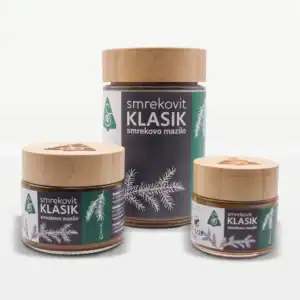
Smrekovit Klasik spruce resin ointment
Price range: 6,00 € through 35,00 € -
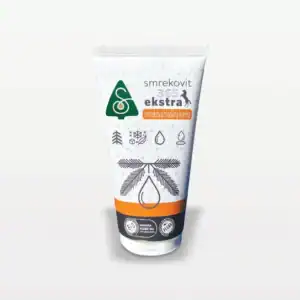
Smrekovit 365 Ekstra – spruce cream with a cooling effect
14,00 € -
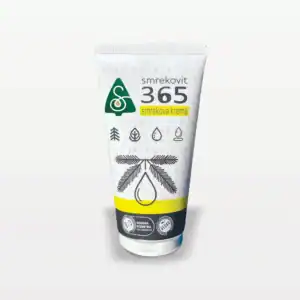
Smrekovit 365 spruce resin cream
14,00 €
To heal the injury, the inflammation process is essential
When tissue is damaged, it is repaired by an immune response (the same immune system that also fights micro-organisms, but in a different way). This response is called inflammation. When harmful micro-organisms enter the body, your immune system sends immune cells and inflammatory proteins to the site to allow the harmful micro-organism to be eliminated. The same happens when various tissues are damaged. The same cells and inflammatory proteins arrive at the site of injury to start healing the damage.
Inflammatory cells, known as macrophages, already present in the tissue release chemical substances (cytokines) that attract more and more inflammatory cells to the surrounding area, allowing them to pass to the site of inflammation by increasing the permeability of the capillaries.

Practical tips for injuries
In the event of an injury, we advise avoiding ice cooling and instead using products based on spruce resin, such as Smrekovit 365 in combination with the Smrekovit compress or Smrekovit 365 Extra. If you are allergic to spruce resin, boswellia resin and Smrekovit 365 Alter have a similar effect. The resin quickly establishes optimal conditions for healing and reduces the need for long-term treatment.
While Dr. Mirkin does not rule out the short-term use of ice to relieve pain, the long-term effects of resin are more beneficial.
Conclusion
Cooling injuries with ice is an outdated practice that prolongs recovery. Spruce resin, which naturally stimulates regeneration and immune function, is a safe and effective alternative.
Want to know more? Visit our blog and try out Smrekovit products based on more than 30 years of experience and research.
The literature and resources used can be found on this page.
2 comments
Alexander Jak?a
Thank you for your advice!
I also found that cooling with ice slows down and prolongs recovery. During my first meniscus surgery (1997), I regularly cooled my knee with ice, which resulted in two instances of water drainage from my knee, and my recovery took much longer than after my second meniscus surgery (2025) on the same knee without cooling. In both cases, the doctors strongly recommended icing, which is interesting...
Smrekovit
Thank you very much for sharing your experience, Mr Aleksander. Your observation is very valuable for the discussion! ????❄