

Abdominal pain in brief
- The abdomen is not the same as the stomach. Pain may come from the stomach or intestines, but also from the gallbladder, pancreas, urinary tract, reproductive organs or other structures within the abdomen.
- The location of the pain is an important clue. Pain in the upper middle abdomen, around the navel, under the right ribs or in the lower abdomen may have very different causes.
- The character of the pain also matters. Cramping, burning, sharp or dull pain, and whether it is constant or comes in waves, can help narrow down possible causes.
- Pain after eating does not necessarily mean a stomach problem. It is important to consider where the pain occurs, how long after a meal it begins and whether it is accompanied by bloating, diarrhoea, heartburn, nausea or other symptoms.
- What helps depends on the cause. Simple measures are often enough for mild, temporary digestive problems, while other causes should not be treated with self-care alone.
- Pain intensity alone does not show how serious the cause is. Sudden or very severe pain, a rigid and very tender abdomen, blood in vomit or stool, or difficulty breathing require prompt medical assessment.
Table of contents
Where in the abdomen does it hurt?
The location of abdominal pain is one of the first clues that can help narrow down possible causes. For orientation, the abdomen can be divided into several regions, although the boundaries are not exact. Pain may also spread or be felt away from its actual source.
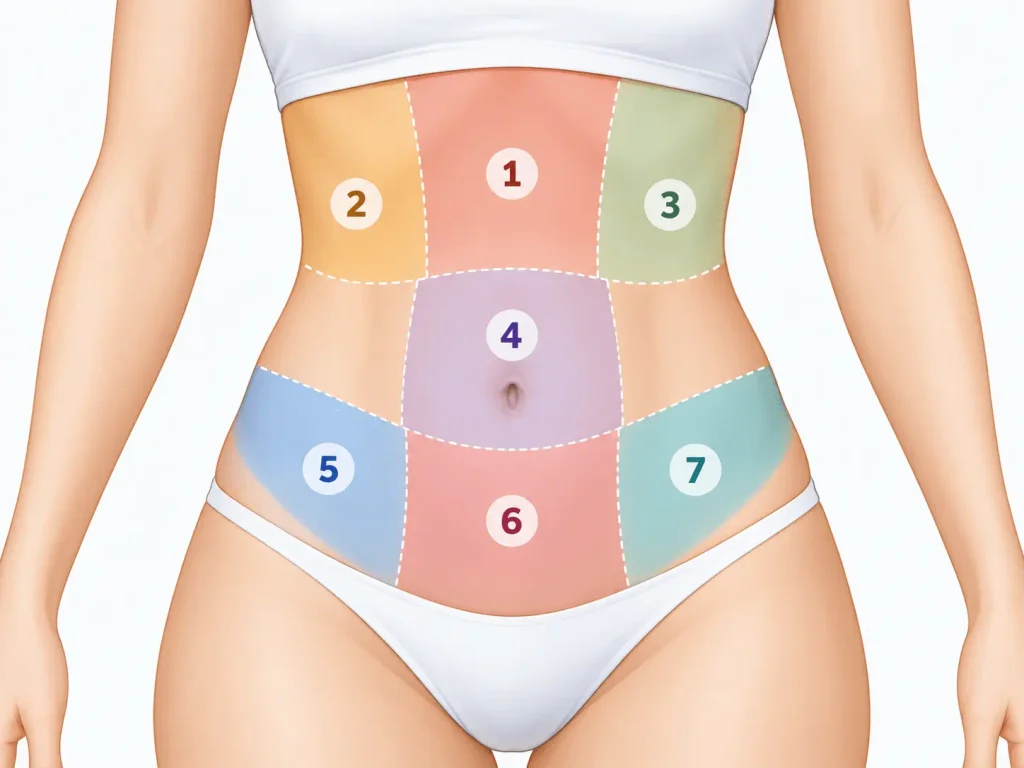
1. Pain in the upper middle abdomen
Pain below the breastbone and between the ribs is often associated with the stomach or duodenum, although it may also originate from other organs in the upper abdomen. If the main symptoms are burning pain, nausea, early fullness, heartburn or a clear relationship with meals, see our detailed guide to stomach pain and its possible causes.
2. Pain in the upper right abdomen
The upper right abdomen contains the liver, gallbladder and bile ducts, among other structures. Pain in this area may therefore be related to the gallbladder or bile ducts, particularly when it occurs after eating and spreads towards the back or right shoulder blade. Other causes are also possible.
3. Pain in the upper left abdomen
The upper left abdomen contains part of the stomach, spleen, pancreas and bowel. Location alone therefore cannot identify the cause. It is also important to note whether pain occurs after meals, radiates to the back, or is accompanied by nausea, bloating or changes in bowel movements.
4. Pain around the navel
Pain around the navel may be associated with the bowel and various digestive problems. In some conditions the location changes over time. Appendicitis is a well-known example: pain may begin around the navel and later move to the lower right abdomen.
5. Pain in the lower right abdomen
With new or worsening pain in the lower right abdomen, appendicitis is one important possibility. In women, pain in this area may also originate from the reproductive organs, while bowel and other causes are possible as well. Severe or rapidly worsening pain requires medical assessment.
6. Pain in the lower abdomen
Pain above the pubic bone or across the lower abdomen may arise from the bowel, urinary tract or reproductive organs. Relevant accompanying information includes urinary symptoms, bowel changes, the menstrual cycle, possible pregnancy, and unusual discharge or bleeding.
7. Pain in the lower left abdomen
Pain in the lower left abdomen may be associated with the large bowel, including constipation or diverticular disease. In women it may also originate from the reproductive organs. Age, duration, bowel changes, fever and other accompanying symptoms help distinguish between causes.
Important: location is only one part of the picture. The onset, duration, intensity and character of the pain, together with accompanying symptoms, are also important. Even relatively mild pain can require medical assessment in certain circumstances.
What can the type of pain tell us?
In addition to its location, it is important to consider what the pain feels like and how it changes over time. The character of the pain can help narrow down possible causes, but it cannot establish a diagnosis on its own.
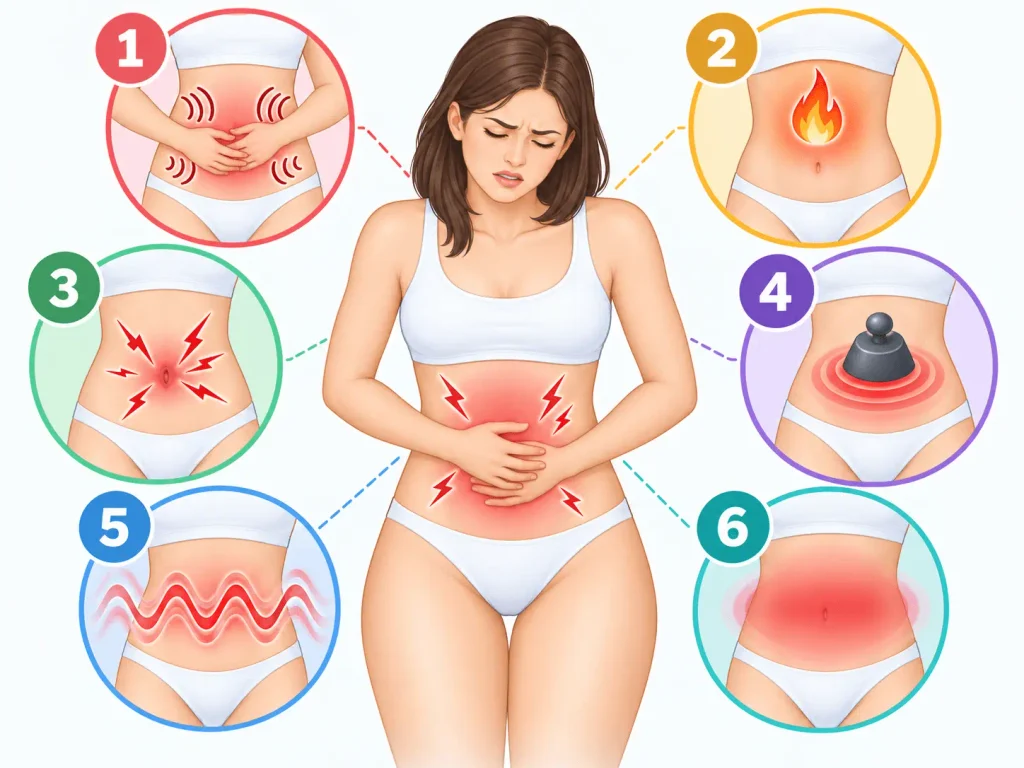
1. Cramping pain
Cramps often come and go and may accompany bloating, diarrhoea or other bowel symptoms. Pain that occurs in pronounced waves may also be related to strong contractions of hollow organs, for example with gallstones or kidney stones.
2. Burning pain
A burning sensation in the upper abdomen may be associated with the stomach or oesophagus, particularly when it occurs with heartburn or in relation to meals. Burning pain is not specific to a single cause, so its location and accompanying symptoms also matter.
3. Sharp or stabbing pain
Sharp pain may be well localised, but its significance depends largely on how suddenly it began, whether it is worsening and what makes it worse. Sudden severe sharp pain requires more caution than a brief, mild stabbing sensation.
4. Dull or pressure-like pain
Dull pain or a feeling of pressure can be more difficult to pinpoint. It may occur with a variety of digestive and other problems, so duration, location and accompanying symptoms are particularly important.
5. Pain that comes in waves
Pain that intensifies, eases and then returns is often described as colicky. This pattern may occur with gallstones or kidney stones and can also be seen with some bowel problems.
6. Constant pain
Pain that does not ease and may gradually worsen needs a different assessment from brief cramps. It is particularly important when accompanied by fever, vomiting, a tender or rigid abdomen, or a general deterioration in how you feel.
Important: neither the type nor the intensity of pain alone shows how serious the cause is. Assessment should also take into account the location, onset, duration, changes over time and accompanying symptoms.
Common causes of abdominal pain
Abdominal pain can have many different causes. It is often related to temporary digestive problems, but pain may also originate from the stomach, bowel, gallbladder, urinary tract or reproductive organs. Assessment therefore depends on the combination of location, character and duration of the pain and any accompanying symptoms.
Indigestion, bloating and constipation
Common and usually less serious causes include bloating, excess gas, indigestion and constipation. Pain may be diffuse or cramp-like and is often accompanied by fullness, abdominal distension or changes in bowel movements.
Gastrointestinal infections and food poisoning
Viral or bacterial gastrointestinal infections and food poisoning can cause abdominal cramps and pain, often together with diarrhoea, nausea, vomiting or fever. Symptoms often begin relatively suddenly.
Stomach and duodenum
When pain is mainly in the upper middle abdomen, possible causes include conditions affecting the stomach or duodenum, such as inflammation of the stomach lining or an ulcer. Burning discomfort and symptoms related to meals may also occur with other upper gastrointestinal conditions.
This is a broad topic, so we cover it in more detail in our guide to stomach pain: possible causes and what may help.
The bowel
Conditions affecting the small or large bowel may also cause pain. These include irritable bowel syndrome, inflammatory bowel disease and diverticular disease. Duration of symptoms, changes in bowel habits, diarrhoea or constipation, blood in the stool, weight loss and other accompanying signs can help distinguish between possible causes.
Gallbladder and pancreas
Upper abdominal pain may also be related to gallstones, inflammation of the gallbladder or pancreatitis. Gallbladder pain is often more pronounced in the upper right abdomen and may radiate to the back or right shoulder blade. Pain from the pancreas may spread from the upper abdomen to the back.
Urinary tract and kidneys
Abdominal or flank pain may also originate from the urinary tract. A urinary tract infection may be accompanied by burning during urination and increased urinary frequency, while kidney stones can cause severe pain that comes in waves and may radiate towards the groin.
Reproductive organs and pregnancy
In women, possible causes also include menstrual cramps, endometriosis, ovarian cysts and pelvic inflammatory disease. Pregnancy should also be considered in lower abdominal pain. Sudden pain when pregnancy is possible requires particular caution because of the possibility of an ectopic pregnancy.
Appendicitis and other important causes
With appendicitis, pain may begin around the navel and then move to the lower right abdomen and become progressively worse. Abdominal pain may also be caused by bowel obstruction, a hernia and other conditions that can require prompt medical assessment.
The full list of possible causes is much longer, so abdominal pain should not be diagnosed from its location or a single accompanying symptom alone. A new, severe or worsening pain should always be considered in the context of the complete clinical picture.
Abdominal pain after eating
If abdominal pain occurs during or after a meal, information about timing, the location of the pain and the type of food eaten can be useful. However, a connection with food does not necessarily mean that the problem originates in the stomach or that a food intolerance is responsible.
Upper abdominal pain or burning
Pain, burning, uncomfortable fullness, nausea or feeling full after only a small amount of food are among the typical symptoms of indigestion or dyspepsia. Similar symptoms may also occur with some conditions affecting the stomach and duodenum.
If the symptoms are mainly in the upper middle abdomen, see also our guide to stomach pain and its possible causes.
Cramps, bloating or diarrhoea after certain foods
If bloating, gas, cramps or diarrhoea repeatedly occur after particular foods, one possibility is difficulty digesting or absorbing certain food components. With lactose intolerance, for example, abdominal pain, bloating, gas and diarrhoea may develop within a few hours of consuming milk or other foods containing lactose.
Similar symptoms can also occur with other conditions, so recurring symptoms should not automatically be attributed to a single food intolerance or lead to unnecessary elimination of several food groups.
Upper right abdominal pain after a large meal
Pain in the upper right abdomen that develops after a large meal and may last for some time or radiate towards the back or right shoulder blade can be related to the gallbladder. Gallstone attacks often occur after heavy meals, although other conditions can cause similar pain.
The pattern matters more than a single meal
With an occasional mild episode, it may be enough to note what you ate and how long after the meal the pain appeared. If symptoms recur, it can be useful to record foods eaten, the timing and location of the pain, bowel movements and other symptoms. A repeated pattern is much more informative than conclusions based on one meal.
If pain after eating keeps returning, becomes more severe or is accompanied by vomiting, blood in the stool or vomit, fever, weight loss or other significant symptoms, medical assessment is appropriate.
What helps with abdominal pain?
There is no single measure that helps with every type of abdominal pain. The best approach depends on the cause. With mild, short-lived symptoms and no warning signs, a few simple measures can be tried while monitoring how the symptoms develop.
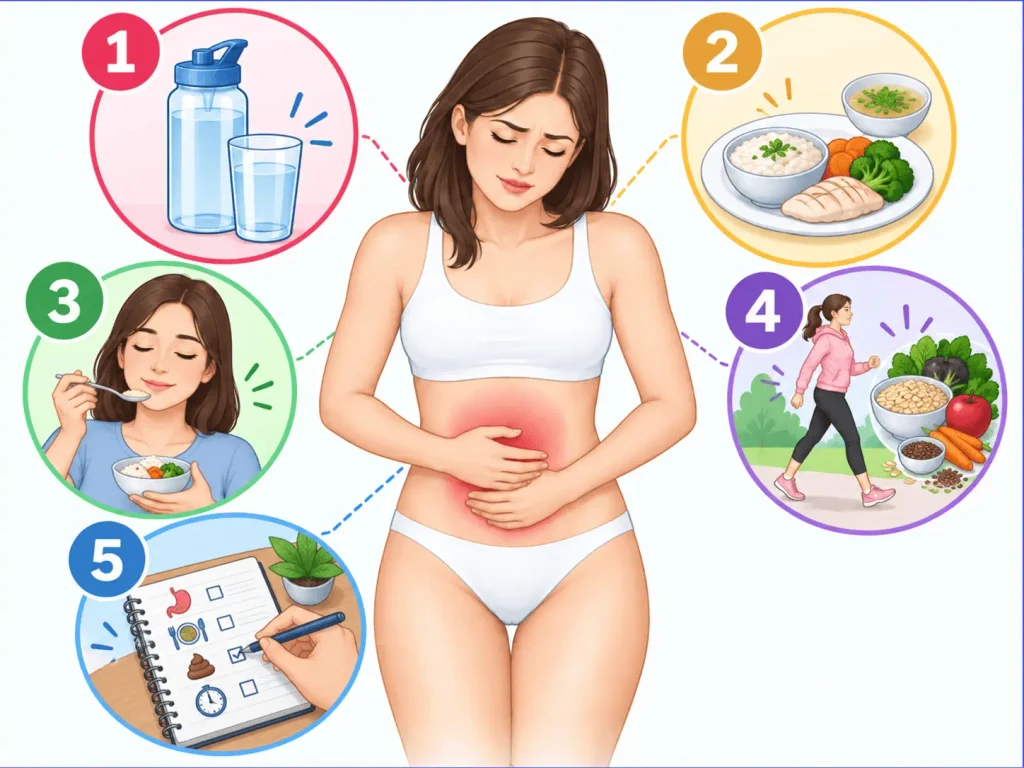
1. Drink enough fluids
With nausea, diarrhoea or vomiting, preventing dehydration is particularly important. Fluids are often easier to tolerate when taken frequently in small sips rather than in a large amount at once. If vomiting persists and you cannot keep fluids down, self-care is no longer an appropriate approach.
2. Temporarily reduce the burden on digestion
With digestive symptoms, smaller and simpler meals may be easier to tolerate. If a particular food clearly makes symptoms worse, it is reasonable to limit it temporarily. With upper abdominal symptoms, very fatty foods, alcohol, caffeine or fizzy drinks may aggravate symptoms in some people.
3. For bloating, eat more slowly and choose smaller meals
If gas and bloating are the main problems, eating more slowly, having smaller meals and limiting habits that cause you to swallow more air may help. It is also useful to notice whether particular foods or fizzy drinks repeatedly trigger symptoms.
4. For constipation, fluids, fibre and activity can help
If constipation is responsible, basic measures include adequate fluids, gradually increasing dietary fibre and regular physical activity. Fibre should be increased gradually because adding too much too quickly may worsen bloating in some people.
This does not apply to sudden severe pain, marked abdominal swelling, vomiting or an inability to pass stool or gas. In that situation, medical assessment should come first.
5. Look for a pattern
With recurring pain, it can be useful to record the location and type of pain, when it occurs, its relationship with meals, bowel movements and accompanying symptoms. This may reveal a recurring pattern and can also be useful when speaking with a doctor.
If the cause is unclear, simply suppressing the pain is not enough
Abdominal pain is a symptom, not a diagnosis. If it keeps returning, does not settle or becomes worse, identifying the cause is more important than repeatedly trying different forms of self-treatment.
Painkillers for abdominal pain – what makes sense?
Choosing medication for abdominal pain is not as straightforward as it may be for a headache or muscle pain. The most appropriate treatment depends mainly on the cause of the pain, so ordinary painkillers are not automatically the right choice for every abdominal pain.
Be cautious with ibuprofen, naproxen and aspirin
Non-steroidal anti-inflammatory drugs (NSAIDs), including ibuprofen, naproxen and aspirin, can cause or worsen digestive symptoms. Their side effects can include indigestion and stomach pain, and they may also increase the risk of stomach or intestinal ulcers and bleeding.
Particular caution is therefore needed with upper abdominal pain, a current or previous stomach or duodenal ulcer, gastrointestinal bleeding, and when taking certain other medicines. If you are unsure whether an NSAID is suitable for you, ask a pharmacist or doctor.
What about paracetamol?
Paracetamol does not carry the same risk of stomach ulcers as NSAIDs and may be a more suitable option for some types of pain. However, paracetamol does not treat the cause of abdominal pain and is not suitable for everyone. Follow the instructions, do not exceed the recommended dose, and take account of liver disease and other medicines that may already contain paracetamol.
Cramping pain may require a different approach
For some conditions characterised mainly by cramps, antispasmodic medicines may be used. The appropriate choice still depends on the cause and the individual’s health, so recurring or unexplained pain should not be treated solely on the basis of the symptom.
Pain relief does not prove that the cause is harmless
If a painkiller reduces the pain, this does not mean that the underlying cause is necessarily harmless. New, severe, sudden or worsening pain, particularly when accompanied by warning signs, requires medical assessment even if medication temporarily reduces the pain.
When should you see a doctor for abdominal pain?
Most short-lived abdominal pain is not an emergency, but the same symptom can also occur with more serious conditions. Assessment therefore depends not only on the intensity of the pain but also on a sudden onset, rapid worsening and accompanying warning signs.
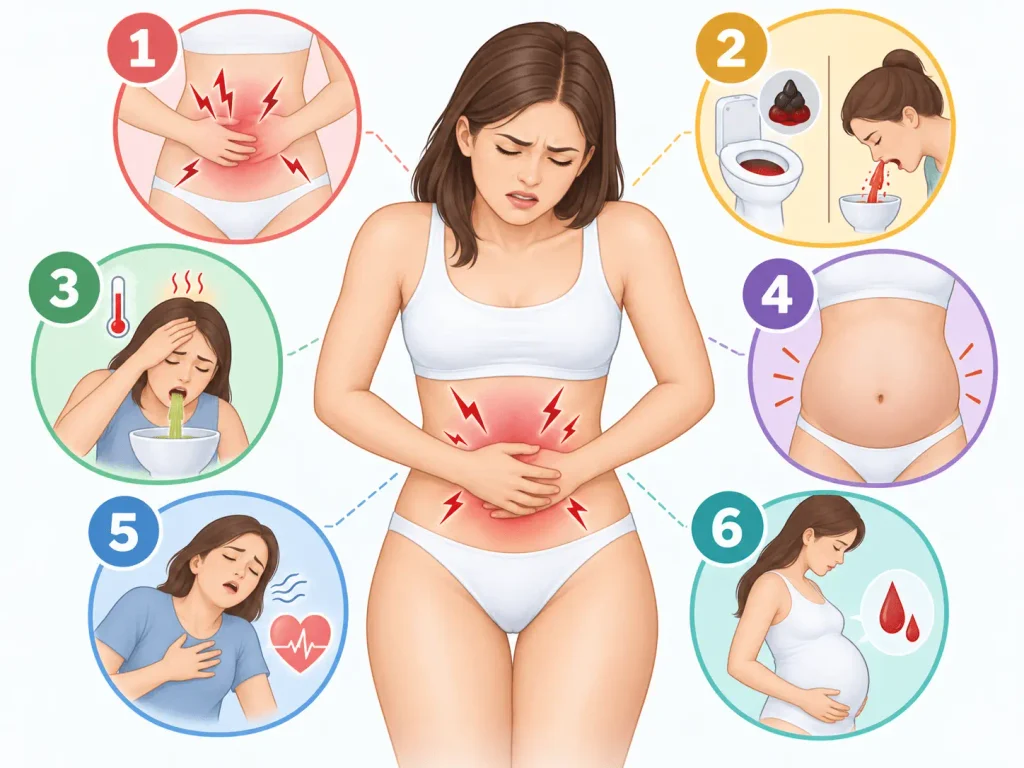
Seek urgent medical help
Prompt medical assessment is particularly important if you notice any of the following warning signs:
- Sudden, very severe or rapidly worsening pain.
- Blood in the stool, black tarry stools or vomiting blood.
- Fever and vomiting, especially if you cannot keep fluids down.
- A very tender, rigid or markedly swollen abdomen.
- Fainting, marked weakness, difficulty breathing or chest pain.
- Pregnancy or possible pregnancy together with abdominal pain, especially if there is also bleeding.
With these warning signs, it is not appropriate to wait and see whether the pain settles on its own or to try to manage the problem at home for an extended period.
Arrange a medical assessment for persistent or recurring pain
Medical advice is also appropriate when the pain is not severe but does not settle, keeps returning or gradually becomes worse. Assessment is particularly important if you also have:
- repeated vomiting or an inability to keep fluids down;
- fever together with abdominal pain;
- blood in the stool or persistent changes in bowel habits;
- unexplained weight loss or a prolonged loss of appetite;
- prolonged diarrhoea or constipation;
- burning or painful urination or marked changes in urination;
- pain that regularly wakes you from sleep or significantly interferes with daily activities.
Pain intensity alone is not a reliable measure of how serious the cause is. Some important conditions may initially cause relatively mild symptoms, while very unpleasant pain can sometimes have a less serious cause. The overall pattern of symptoms matters.
Smrekovit and digestive problems – practical experiences and limits of use
With this topic, it is important to distinguish general information about abdominal pain from the practical use of Smrekovit products. For internal use, there is Smrekovit Intus – a food supplement containing spruce resin in soft capsules. The recommended daily dose contains 825 mg of spruce resin.
On this page, Intus is not presented as a treatment for abdominal pain, gastritis, reflux or other digestive diseases. With new, severe or unexplained abdominal pain, identifying the cause comes first.

What have we learnt from many years of advising users?
Our practical experience has led to one particularly simple rule: there is little sense in continuing indefinitely simply because you have already started using a product.
When users themselves report a clear difference, our practical observations suggest that they usually notice it relatively quickly – often within a few days and generally within about a week. If there is no clear change after one pack, in our experience there is usually little reason to continue.
This is an observation based on many years of user feedback, not proof of effectiveness and not a prediction of how any individual will respond.
If you use it, follow the recommended dose
The recommended use is 2 capsules in the morning and 2 capsules in the evening. In conversations with users, we sometimes find that people start with a substantially smaller amount and then assess the experience very quickly.
In our practical experience, there is no important difference between taking the capsules with or without food. If taking them on an empty stomach does not suit you, taking them with a meal is a reasonable option.
When is Smrekovit not enough?
A food supplement is not a substitute for establishing the cause of unexplained pain or for prescribed treatment. Sudden or severe pain, warning signs, recurring symptoms without a clear cause or gradual worsening require medical assessment.
We also do not advise users to stop medicines prescribed by their doctor because they are using Smrekovit.
For more detail on practical use, dosage and how to assess the course of use, see our practical instructions for the stomach, bowel and digestive problems. Information about the composition and product itself is available on the Smrekovit Intus page.
Smrekovit Intus users’ experiences with digestive problems
Over more than three decades, we have received a large amount of feedback from Smrekovit users. Below are three summaries of genuine individual experiences relating to digestive problems and the internal use of Smrekovit.
These are individual experiences, so the same course or result cannot be expected for every user. Older accounts refer to Smrekovit capsules; the product is now called Smrekovit Intus.
Summary of a user experience: Igor from Bled used Smrekovit capsules for digestive problems. He reported easier bowel movements and softer stools, as well as less pronounced abdominal pain.
Igor, Bled
[145] user feedback received on 9 January 2018, retained in the Smrekovit archive
Summary of a user experience: a user with gastritis described severe stomach pain following a rotavirus infection. He reported noticing an improvement after seven days of using Smrekovit capsules.
Anonymous user
[146] user feedback received on 11 February 2018, retained in the Smrekovit archive
Summary of a user experience: a user with chronic gastritis took 2 capsules in the morning and 2 capsules in the evening during the first week. She reported noticing a marked improvement very quickly and later gradually reduced the amount. She also specifically noted that the gastritis had not disappeared and that she still needed to follow an appropriate diet.
Anonymous user
[164] user feedback received on 28 February 2025, retained in the Smrekovit archive
Frequently asked questions about abdominal pain
What helps with abdominal pain?
It depends on the cause. With mild, short-lived digestive symptoms, adequate fluids, smaller and simpler meals and temporarily avoiding foods that clearly make symptoms worse may help. With recurring, severe or unexplained pain, identifying the cause is more important than simply suppressing the symptom.
Why does my abdomen hurt after eating?
Pain after eating can have several causes. It may be associated with indigestion, bloating, intolerance to certain foods, problems involving the stomach or duodenum and, in some cases, the gallbladder. The location of the pain, the food eaten, timing and accompanying symptoms are all important.
What do abdominal cramps mean?
Cramping pain is often associated with contractions of the bowel and can occur with gas, diarrhoea, constipation, gastrointestinal infections or some functional digestive disorders. The type of pain alone is not enough to determine its cause.
What does burning abdominal pain mean?
A burning sensation is particularly common with symptoms in the upper abdomen, but it is not specific to a single condition. If the pain is mainly in the upper middle abdomen, possible causes include dyspepsia, reflux or problems involving the stomach or duodenum.
What can upper abdominal pain radiating to the back mean?
Pain in the upper abdomen can sometimes spread towards the back. Possible causes include conditions involving the stomach or duodenum, gallbladder or pancreas. New, pronounced or persistent pain with this pattern deserves broader medical assessment.
Can stress cause abdominal pain?
Stress can influence gastrointestinal movement, gut sensitivity and pain perception and can aggravate some functional digestive symptoms. This does not mean that the pain is “only psychological”. Persistent or new symptoms may still have other causes.
Which painkillers can I take for abdominal pain?
The appropriate medicine depends on the cause. Ibuprofen, naproxen and aspirin can irritate the digestive tract and increase the risk of ulcers and bleeding. Paracetamol has a different risk profile, but it also does not treat the cause of abdominal pain. For unexplained or recurring pain, it is sensible to ask a doctor or pharmacist which medicine is appropriate.
When should abdominal pain be medically assessed?
Prompt medical help is particularly important for sudden or very severe pain, a rigid and very tender abdomen, blood in the stool or vomit, black stools, fainting, difficulty breathing or chest pain. Medical assessment is also appropriate if pain persists, keeps returning or gradually becomes worse.
How is Smrekovit Intus used?
The recommended daily dose is 2 capsules in the morning and 2 capsules in the evening. Based on our practical experience, there is no major difference between taking the capsules with or without food. If taking them on an empty stomach does not suit you, they can be taken with a meal. More detail is available in our instructions for digestive problems.
How long does it make sense to try Smrekovit Intus?
Our practical approach is based on the observation that users who notice a clear change generally notice it relatively quickly. One pack is therefore a reasonable initial trial. If no clear difference is noticed, we generally do not recommend continuing indefinitely. This is a practical observation, not a guarantee of effect.