
The most common reasons you come to us for using Sprukovit products are arthrosis and joint pain, back pain and sciatica and a heel spur. The most common reasons people turn to us for Smrekovit products are arthrosis and joint pain, back pain, sciatica, and heel spurs. These degenerative conditions are often linked to being overweight. Over the years I gained excess weight myself, but then decided to slim down to avoid such problems and improve my well-being. At the age of 40, I managed to return to the weight I had at the start of secondary school in just four months. I want to share this personal experience because reaching this goal does not actually require extreme effort, strict diets, or going hungry, while the benefits of achieving it are invaluable.
- Negative effects of being overweight
- Why do we gain weight?
- 1. Food abundance
- 2. The ubiquity of calorie-dense foods
- 3. Changes in working habits and lifestyle
- 4. Food tastes better and is more appealing
- 5. Emotional eating and stress
- 6. Sleep deprivation
- 7. Cultural and social factors
- So how did I manage to lose 16 kg in four months using a calorie deficit?
- 1. What is a calorie deficit and how did I use it?
- How to proceed?
- Frequently asked questions
Negative effects of being overweight
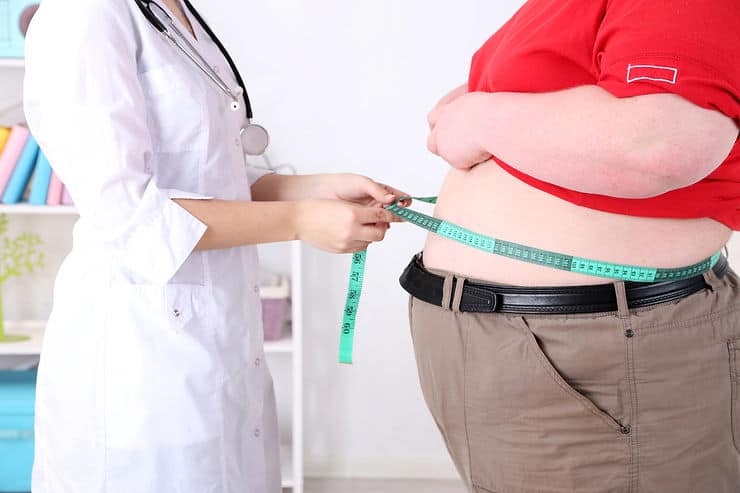
Being overweight has a whole range of negative consequences in the long term:
a) Degenerative joint problems
Excess weight puts a lot of stress on the joints, especially the knees, hips and ankles. Every extra kilo of weight increases the pressure on the joints, leading to faster wear and tear of the cartilage - the protective layer between the bones. This often leads to:
- Osteoarthritis: This is a degenerative joint disease in which cartilage breaks down, causing pain and restricted movement. Excess weight can accelerate the onset of the disease because the load on the joints exceeds their natural ability to regenerate.For example when walking, the knees absorb 1.5 to 2 times your body weight. If you carry an extra 10 kg, that adds an additional 15 to 20 kg of pressure on your joints with every single step.
- Inflammation: Being overweight can cause chronic inflammation in the joints, which further aggravates the condition and leads to joint pain and swelling.
b) Back problems
Weight also affects the spine by increasing pressure on the intervertebral discs, which can lead to:

- Discopathies: Increased body weight causes additional wear and tear on the intervertebral discs, which can lead to disc herniation. This condition causes back pain that can radiate to the limbs, limiting movement and quality of life.
- Lumbar lordosis: Excess weight in the abdominal region pushes the spine forward, leading to excessive curvature of the lumbar spine. This incorrect posture can cause chronic low back pain.
c) Cardiovascular problems
Being overweight makes it harder for the heart to pump blood around the body, which increases the risk of:
- High blood pressure: Increased body mass requires more blood to supply the tissues, which puts more strain on the heart.
- Coronary heart disease: The build-up of fatty deposits in the arteries increases the risk of heart attack and other cardiovascular diseases.
d) Sleep and breathing problems
Overweight people also often suffer from sleep apnoea, a condition where breathing is disrupted or temporarily stops during sleep. This disorder leads to daytime fatigue and increases the risk of high blood pressure, stroke, and type 2 diabetes.
e) Mental health and self-esteem
Being overweight often has a negative impact on self-image and mental health. Weight stigma can lead to depression, anxiety and reduced motivation to change. Feelings of inferiority can also arise, leading to social isolation.
Of course, many of these problems can be alleviated with Smrekovit products, but reducing excess weight will greatly relieve the strain on your spine and joints.
-

Smrekovit 365 spruce resin cream
14,00 € -
Smrekovit Capsules 50+ (food supplement)
10,00 € -
Smrekovit Klasik spruce resin ointment
Price range: 6,00 € through 35,00 €



Why do we gain weight?
The first and sobering truth for those of us who love food is simple: we eat more than we burn. This problem has become very common today, mainly because of changes in modern lifestyles that go against the evolutionary patterns according to which human bodies have evolved. There are several factors contributing to the increase in overweight:
1. Food abundance
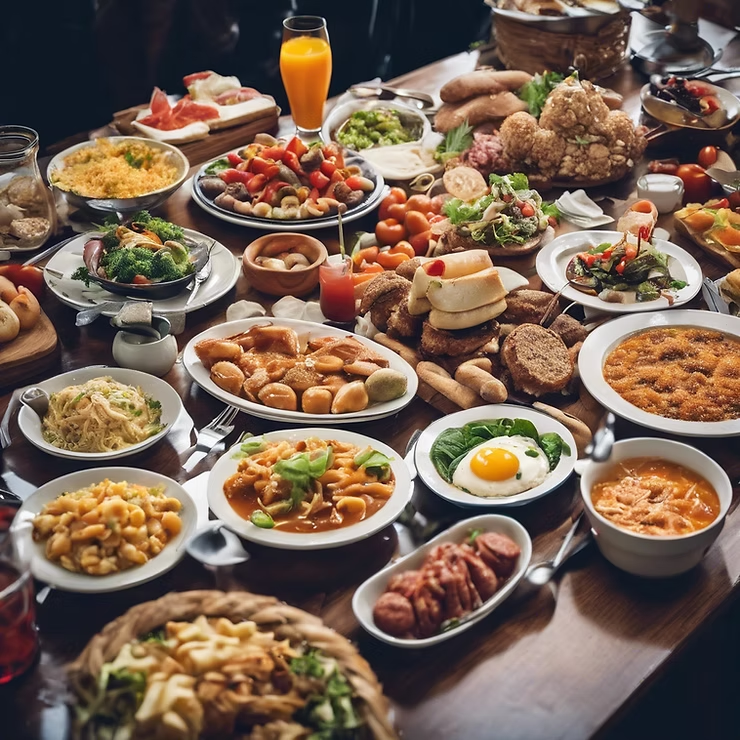
One of the biggest differences between today's world and times past is the abundance of food. Historically, our ancestors were often subject to periods of scarcity, so the human body was naturally inclined to store energy in the form of fat reserves when food was plentiful. Today, we have constant access to food - shops are full of nutritional products, restaurants offer generous portions and delivery is just a click away. This abundance means that we can eat whenever we want, often when we are not hungry.
2. The ubiquity of calorie-dense foods
The modern diet contains many high-calorie foods that are full of sugars, saturated fats and simple carbohydrates. These foods are not only high in calories, but they are also often very tasty, which means they encourage us to overeat. For example, snacks, fast food, sugary drinks and processed products are designed to entice us with their taste, texture and smell, often at the expense of their nutritional value.
In addition, high-calorie foods are often cheaper and more readily available than healthy alternatives, which encourages their increased consumption, especially in urban environments where the pace of life is fast and people are looking for quick meal solutions.
3. Changes in working habits and lifestyle
With the development of technology and industrialisation, life has become much less physically strenuous. Many jobs have moved to offices where people spend most of the day sitting. Even in our free time, we often choose sedentary activities such as watching TV, playing video games or using smartphones. This drastically reduces the number of calories our bodies consume during the day, while our calorie intake remains the same or even increases.
In the past, people spent more energy on physical activities because they had to walk or do physical work, but today, with transport, lifts and other technologies, we avoid many of the daily activities that would otherwise help us burn calories.
4. Food tastes better and is more appealing
The modern food industry focuses on creating foods that are highly palatable and appealing to our brains. The combinations of sugar, salt and fat activate the reward centres of the brain, leading to feelings of pleasure and satisfaction. These foods can become almost addictive as the brain encourages us to eat more, even when we are no longer hungry.
In addition, the food industry invests heavily in marketing and packaging, which further stimulates the desire to eat. Advertisements, promotions and attractive images of food create the feeling that we need certain products even if we do not have a physical need for them.
5. Emotional eating and stress
Today, many people are faced with stress, anxiety and depression, which often leads to emotional overeating. Food becomes a means of coping with negative feelings, often leading to overeating, especially of high-calorie "comfort" foods such as sweets, fast food and snacks. This increases calorie intake, leading to excess weight gain.
In addition, chronic stress releases the hormone cortisol, which can increase appetite, especially for sugary and fatty foods, and at the same time contribute to fat storage in the body.
6. Lack of sleep
Lack of sleep is another factor contributing to excess weight. Sleep plays a key role in regulating the hormones that control appetite. Lack of sleep increases levels of the hormone ghrelin, which stimulates hunger, and lowers levels of leptin, the hormone that signals satiety. As a result, people who sleep too little often consume more calories during the day.
7. Cultural and social factors
Food plays an important role in our culture and social life. Meetings with friends, family celebrations and visits to restaurants often involve large meals. Food is also often a symbol of love, affection and happiness, which means that eating large quantities of food is socially acceptable and sometimes even encouraged.
These factors are the reasons why obesity has become so widespread today. Modern life, which allows constant access to tasty and calorie-rich food, combined with a sedentary lifestyle and emotional eating, has created an environment where it is very easy to gain excess pounds. However, being aware of these factors is the first step towards finding a balance and establishing healthy habits that can help prevent or manage excess weight.
So how did I manage to lose 16 kg in four months using a calorie deficit?

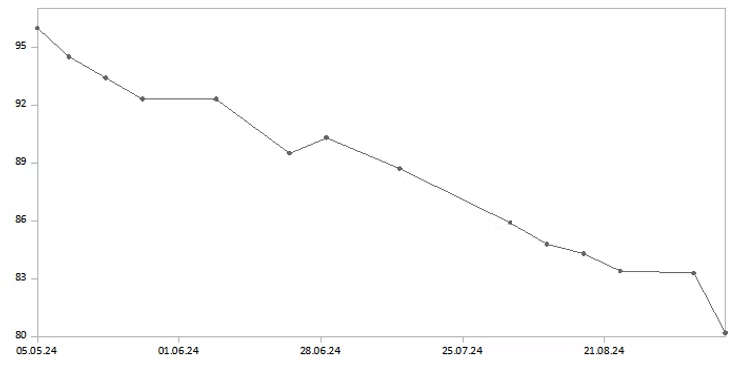
Between May and September, I managed to lose a good 16 kg, from the original 97 kg to just under 81 kg. I followed a simple but effective method: calorie deficit. I didn’t follow any special diet, only carefully tracked the calories I consumed and adjusted my intake according to my daily needs. The best part of this approach is that you don’t have to go hungry or cut out certain foods completely—you just need to eat mindfully, eat only when you are truly hungry, and learn to recognise and avoid eating out of boredom or simple cravings. When you start monitoring your calorie intake, don’t forget about drinks. You’ll quickly realise that the best choice is simply water. The most amazing thing about all this is that the 100% method works mathematically. When taking into account a daily calorie deficit of 1000 kCal per day, I lost exactly 1 kg per week:
Some of my key learnings:
- we don't get fat because of carbs, fats etc., but solely because of too many calories ????????????
- sugary and alcoholic beverages can take up to half of your daily calorie intake, so I swear by water ???? as a source of liquid and I prefer to eat a few more ????????????
- recording your calorie intake is key ????
- Discipline is important, but it should not become excessive. On special occasions and celebrations, it is essential to allow ourselves to enjoy without guilt. Strict dieting at such times is unnecessary, as occasional indulgence in food and drink will not ruin long-term progress. The key is to get back on track afterwards and maintain balance. °????⋆.ೃ????࿔*:・
1. What is a calorie deficit and how did I use it?
A calorie deficit means that we consume fewer calories than our bodies use to function. This leads to the use of our own energy stores - mainly fat. First I had to calculate my Total Daily Energy Expenditure (TDEE), which includes my basal metabolic rate (BMR) and activities throughout the day. Then, to create a deficit, I reduced my calorie intake by about 1000 calories per day, which allowed me to lose about 1 kg per week, which is still the upper limit of healthy weight loss. Here we roughly calculate this target with a simple formula:
Daily calorie deficit = desired weight loss per week * 1000 kCal/day
So to lose 0.5 kg per week, we need to eat 500 kCal per day less than I consume, for 0.75 kg per week 750 kCal per day less, and for 1 kg per week 1000 kCal per day less...
Modern tools and apps on your smartphone can do all these calculations for you, and then track your daily calorie intake. I briefly link to some of them in the next section.
How do I track my calorie intake?
For a rough estimate, the best way to compare is to use a palm or plate size, with a reference value of 200 kCal:

- Meat ???? (chicken, beef): About the size of a hand (without fingers) or a quarter of a plate = 200 kcal.
- Fish ???? (salmon, tuna): A piece the size of your hand (without fingers) = 200 kcal.
- Vegetables ???????????? (boiled or roasted): A full plate of vegetables or 2 handfuls = about 200 kcal (depending on the type of vegetable).
- Rice ???? (cooked) and pasta ????: Approximately one handful or one third of a plate = 200 kcal.
- Nuts ????(almonds, walnuts)One handful of nuts (approx. 30 g) = 200 kcal.
- Fruit ????????(banana, apple, grapes):One large banana or medium apple or handful of grapes = 200 kcal.
- Bread ???? Two slices of bread = 200 kcal.
- Cheese ????: A piece about the size of two fingers = roughly 200 kcal.
- Desserts:
- Cake???? : A piece the size of two fingers (index and middle fingers) or a small piece the size of the palm of your hand = about 200 kcal.
- Cakes/biscuits ????: Two medium sized biscuits (size of a palm without fingers) = approx. 200 kcal.
- Chocolate????: Two bars (cubes) of a standard bar of chocolate = 200 kcal.
- Ice cream ????: One small ball or 2-3 tablespoons = about 200 kcal.
- Doughnuts/rolls ????????Half a medium doughnut or croissant = about 200 kcal.
I used an app to track my calorie intake Samsung Health, which is already on my Samsung Galaxy phone and ChatGPT, the chatbot with artificial intelligence. This is because it estimates calories quite accurately based on the information you provide:
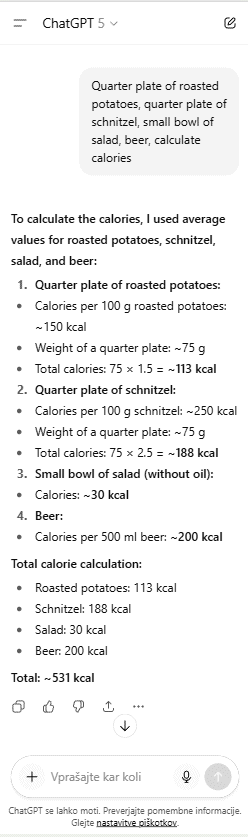
I then entered my calorie intake into the Samsung Health app. Samsung health also calculates how many calories you can consume per day to reach the target weight you set in the app (TDEE or daily energy expenditure).
There are a range of apps that allow you to track calories as well as estimate the calories in the food you eat, even from a photo of the food. For me, apart from Samsung Health, the two apps I liked the most were:
- Lifesum: Focus on monitoring food intake by image, crawler or barcode scanning.
- MyFitnessPal: It allows you to track calories and macronutrients. The app also provides calorie values of food from a search engine or simply scan the barcode on the packaging.
Since I am one of those people who like to know what's behind a number, I naturally wanted to calculate my daily energy requirement (TDEE) myself (and came up with the same result as the Samsung Health app). ????
Calculating basal metabolic rate (BMR)
BMR is the number of calories my body needs to maintain basic functions (breathing, digestion, body temperature) when it is at complete rest. I used the Harris-Benedict formula based on my weight, height, age and gender:
- For men: BMR = 88.36 + (13.4 x weight in kg) + (4.8 x height in cm) - (5.7 x age in years)
- For women: BMR = 447.6 + (9.2 x weight in kg) + (3.1 x height in cm) - (4.3 x age in years)
Of course, in the age of artificial intelligence, we only ask ChatGPT what our BMR is and tell him our data and he will calculate it for us. After this calculation, I figured out how many calories I was consuming without any extra activity and added a physical activity factor to get my Total Daily Energy Expenditure (TDEE). The physical activity factor is a key part of the Total Daily Energy Expenditure (TDEE) calculation, which determines how many calories your body uses in a day. Once you have calculated your Basal Metabolic Rate (BMR), which represents the energy your body uses at rest, you add the Physical Activity Level (PAL) factor to get a more accurate estimate of your total daily energy expenditure.
Physical activity factor
The physical activity factor takes into account how much energy you use in your daily activities, including exercise and other physical activities. Here are the different activity levels used to adjust BMR:
1. Sedentary (Minimal physical activity) - PAL: 1.2
- This factor applies if you spend most of your day sitting and have very little physical activity, for example when working in an office.
2. Slightly active (Light physical activity) - PAL: 1.375
- This factor applies if you do light physical activity or moderate exercise 1-3 days a week.
3. Moderately active (Moderate physical activity) - PAL: 1.55
- This factor applies if you have moderate activity, such as exercise or work 3-5 days a week.
4. Very active (Intense physical activity) - PAL: 1.725
- This factor is for people who do physically demanding training or physical work on a daily basis.
5. Extremely active (Very high physical activity) - PAL: 1.9
- This factor applies to people who have an extremely high level of physical activity, such as professional athletes or people who work in a very physically demanding occupation.
Example of a daily energy demand (TDEE) calculation:
If yours is BMR 1800 calories and you are moderately active (PAL: 1.55), your daily energy expenditure would be:
- TDEE = BMR x PAL
- TDEE = 1800 x 1.55 = 2790 calories/day
In the latter case, he would therefore have to pay for the loss half a kilo a week to be consumed 2290 calories/day (2790 - 500 calories)
How to proceed?
Although I have lost almost 16 kg, I have realised that maintaining a healthy weight is a long-term process that requires ongoing attention. Tracking calorie intake is the best way to keep weight in check, because it shows us how much food we actually consume. Without this awareness, it is easy to grab an apple here, finish some of the children’s leftovers there, add a snack or two, and before you know it the calories add up. The key thing for me is that this way of maintaining weight is also sustainable in the long term, because it does not require a lot of sacrifice. It is also no big deal if we get too 'bloated' at a celebration or similar event, as long as we maintain our intake/consumption ratio again over the next few days. This is why the various strict diets do not work, because they are exhausting. Calorie deficit is all about long-term lifestyle.

Frequently asked questions
1. How did you manage to lose 16 kg?
I followed a calorie deficit, tracked my daily intake with the Samsung Health app, and checked the calorie values of my meals using ChatGPT.
2. What is a calorie deficit and how does it work?
A calorie deficit is when you consume fewer calories than your body needs to maintain your current weight. This forces your body to use stored fat for energy, which eventually leads to weight loss.
3. Can you give examples of meals you have eaten while losing weight?
My meals were the same as before, only in smaller portions, and I kept track of them. I didn’t focus on the type of food or its nutritional value, nor did I avoid fast food when the occasion came up. I simply ate when I was hungry, but in smaller amounts.It is worth noting that I drank almost exclusively water, except on special occasions. Sugary and alcoholic drinks are very high in calories—for example, one beer contains around 200 kcal.
4. How did you stay motivated throughout the process?
Regularly tracking my progress helped me stay motivated, and it wasn’t difficult because with this approach you never have to go hungry. The key is to keep a close eye on how much you eat, since hunger often leads to overeating—something that is easier to control by tracking your calorie intake.
5. Have you followed any specific diets such as keto or intermittent fasting?
No, I didn't follow any special diet like keto or intermittent fasting. I have only focused on maintaining a calorie deficit. However, I naturally didn’t feel like eating after 5 p.m., which in a way resembled intermittent fasting.
6. How important was exercise in losing weight?
While I later introduced morning jogging as part of my routine, the main basis for weight loss was calorie control. I lost the first 10 kg without any additional exercise. Regular physical activity improved my overall fitness and well-being, but it didn’t change the effectiveness of the method itself. If I burned an extra 500 calories during a run, I could simply eat that many more by the end of the day. That’s all there was to it.
7. What tools have you used to monitor your progress?
I've been using the Samsung Health app to track calories and other health indicators. ChatGPT helped me estimate the calories in different meals, which made it easier to stay within my daily limit.
8. How can others achieve similar results?
The key to success is consistency. If you want to lose weight, start monitoring your calorie intake, pay attention to portion sizes and avoid drinks other than water. It is also important to find an approach that fits your lifestyle, either through meal planning or using tools such as Samsung Health. I also believe it is essential to have days like celebrations and special events when you set weight loss aside and simply enjoy. When it’s time to celebrate, it’s time to celebrate. If you constantly deny yourself these moments, your motivation will quickly fade.
9. What comes after you have reached your weight loss goal?
After reaching my goal, I have focused on maintaining a healthy weight and regular physical activity, which is naturally much easier now that I no longer carry those extra 16 kg. I have developed habits that support long-term health and well-being.
10. Can everyone follow this method?
Yes, anyone can follow this approach if they monitor their calorie intake and make sustainable changes to their diet and lifestyle. However, it is always wise to consult a doctor before starting any weight loss program, especially if you have existing health issues.