

Spruce resin and boswellia resin may look similar at first glance—both are “resins”—but in reality they belong to two different chemical worlds. Conifer resin (spruce/pine) is rich in resin acids and often acts more “on the ground” (the microenvironment, a protective film, local effects). Boswellia resin (Boswellia, frankincense), on the other hand, contains boswellic acids and is more often described in the literature as a resin that affects inflammatory signaling pathways.
One resin is more about “setting the ground”, the other is more about “tuning the communication”.
In plain terms
In the Smrekovit line, this is logically delineated:
- Smrekovit 365 Alter: boswellia resin (boswellic acids)
- Other Smrekovit products: conifer resin (spruce resin)
Table of contents
Quick summary (30 seconds)
If you don’t feel like reading everything: the key points are below. Details and explanations follow further down.
- Spruce resin (conifer resin): works more “on the ground” — it forms a protective film, influences the local microenvironment, and can make life harder for microbes (e.g., via the membrane).
- Boswellia resin (Boswellia): works more “on the signaling level” — the literature often describes it as a regulator of certain inflammatory signals (e.g., pathways involving the 5-LOX enzyme).
- Why the combination: because you cover two levels at the same time — ground + communication.
- The most logical routine: first 365/365 Ekstra, then after a few minutes 365 Alter.
- Routine without layering: 365 in the morning, Alter in the evening.
- If spruce resin causes an allergy: in a smaller share of people, hypersensitivity can occur; in that case, 365 Alter is a sensible alternative.
Definitions (30 seconds)
- Spruce resin (conifer resin): a complex mixture; for the typical mechanisms, resin acids in the solid resin fraction are the key components.
- Boswellia resin (Boswellia, frankincense): contains boswellic acids; the literature often mentions effects on certain inflammatory signaling pathways (e.g., 5-LOX).
- Smrekovit line: 365/365 Ekstra, Klasik = conifer resin; 365 Alter = boswellia resin.
What is the “essence” of spruce resin?
Conifer resin has several fractions. For the mechanisms most often discussed in the literature, the solid resin fraction is particularly important, as it is rich in diterpenic resin acids (e.g., abietic/pimaric types). In pine and spruce, this core chemistry overlaps substantially—what differs mainly are the ratios and accompanying compounds.
This matters because spruce resin is not a single standardized substance. It is a complex mixture of different organic compounds.
Two batches of resin aren’t necessarily the same “cocktail”. That’s why, in practice, one batch can sometimes feel “stronger” or “calmer” than another.
In plain terms
How spruce resin works: 4 layers of action
Physical action: film, adhesion, microenvironment
Conifer resin is hydrophobic, meaning it repels water. That alone changes the local conditions:
- a different moisture dynamic on the surface,
- mechanical protection of micro-cracks,
- a change in the “entry conditions” for external influences.
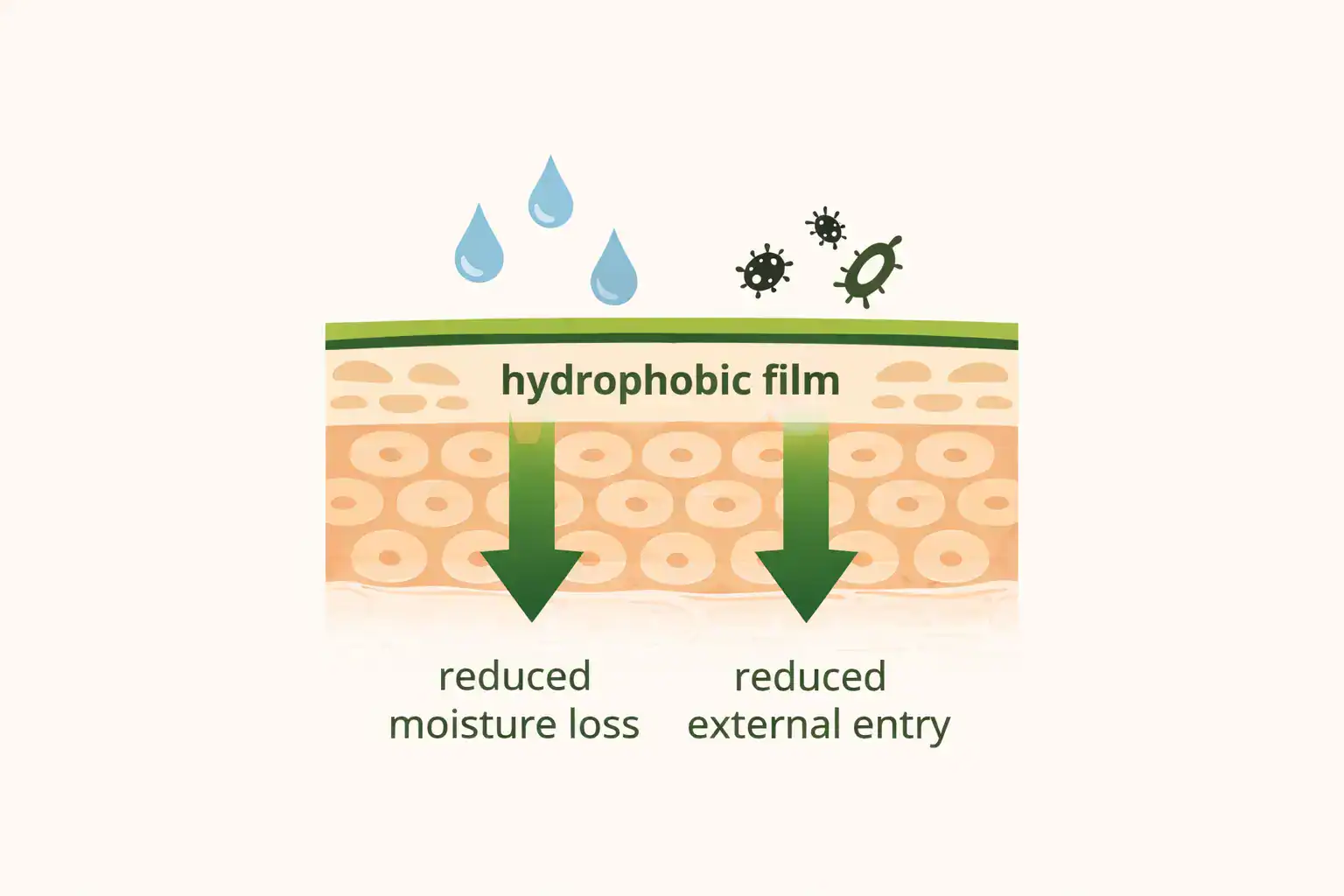
Spruce resin acts like a thin protective layer that makes the environment less “friendly” for problems—even before we get to biochemistry.
In plain terms
Antimicrobial action: membrane and energy (especially in Gram+ bacteria)
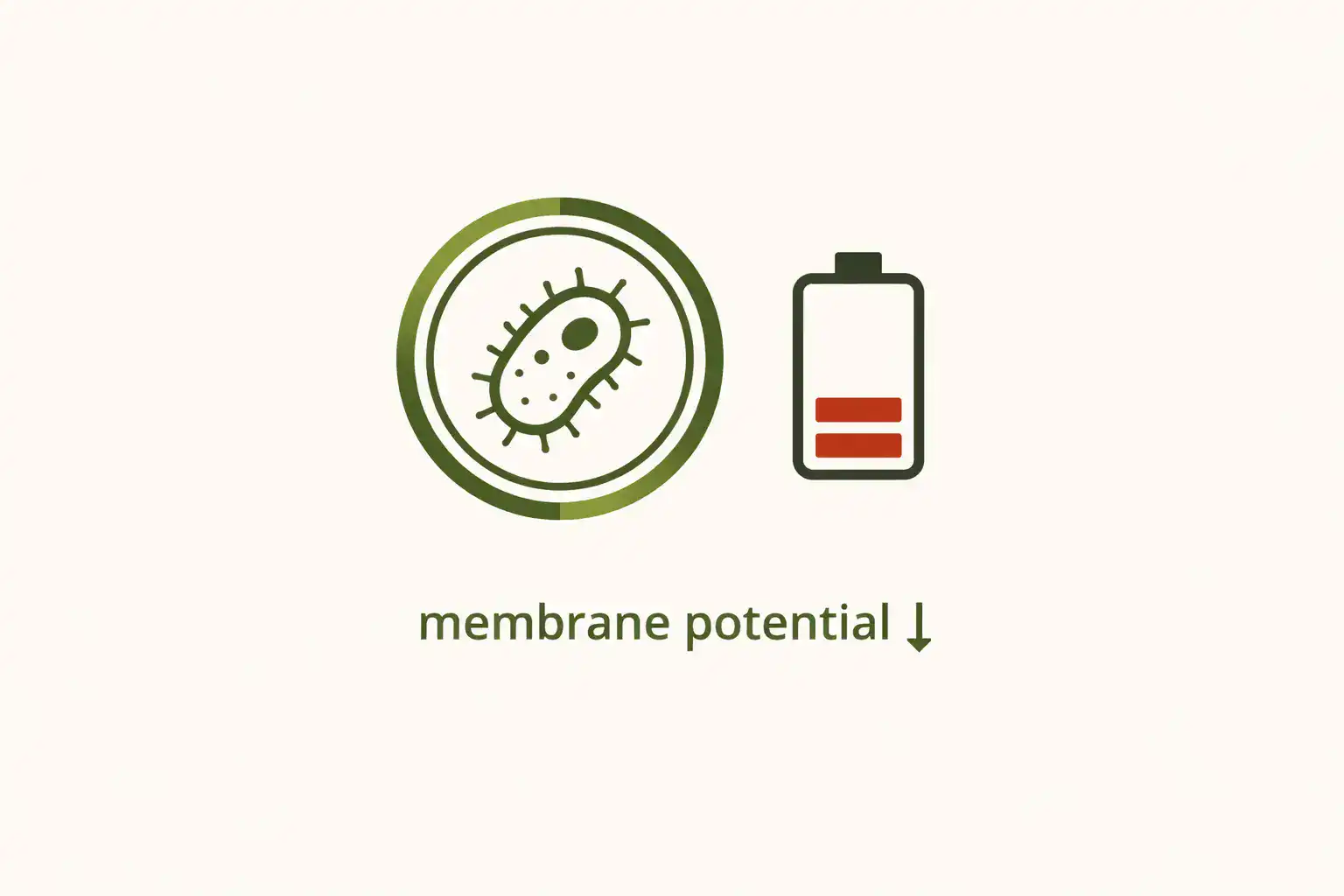
For spruce resin, the mechanism against Staphylococcus aureus is described quite specifically: after exposure, researchers observed changes in the cell wall/membrane and a collapse of the membrane potential (for a bacterium, that’s like its “battery” dying).
In a review article, Jokinen and colleagues also describe measuring the effects of resin and abietic acid on membrane potential using flow cytometry, which further supports this line of explanation.
The bacterium doesn’t die because spruce resin “burns” it, but because it disrupts key membrane functions—and without that, it can’t produce energy properly.
In plain terms
Action on biofilm: the hardest, yet achievable target
A biofilm is like a “fortified settlement” of microbes inside a protective matrix, which is why it’s the toughest nut to crack for any substance. Many substances that work on free-floating bacteria work less well in a biofilm, while resin acids in the literature point to promising anti-biofilm directions.
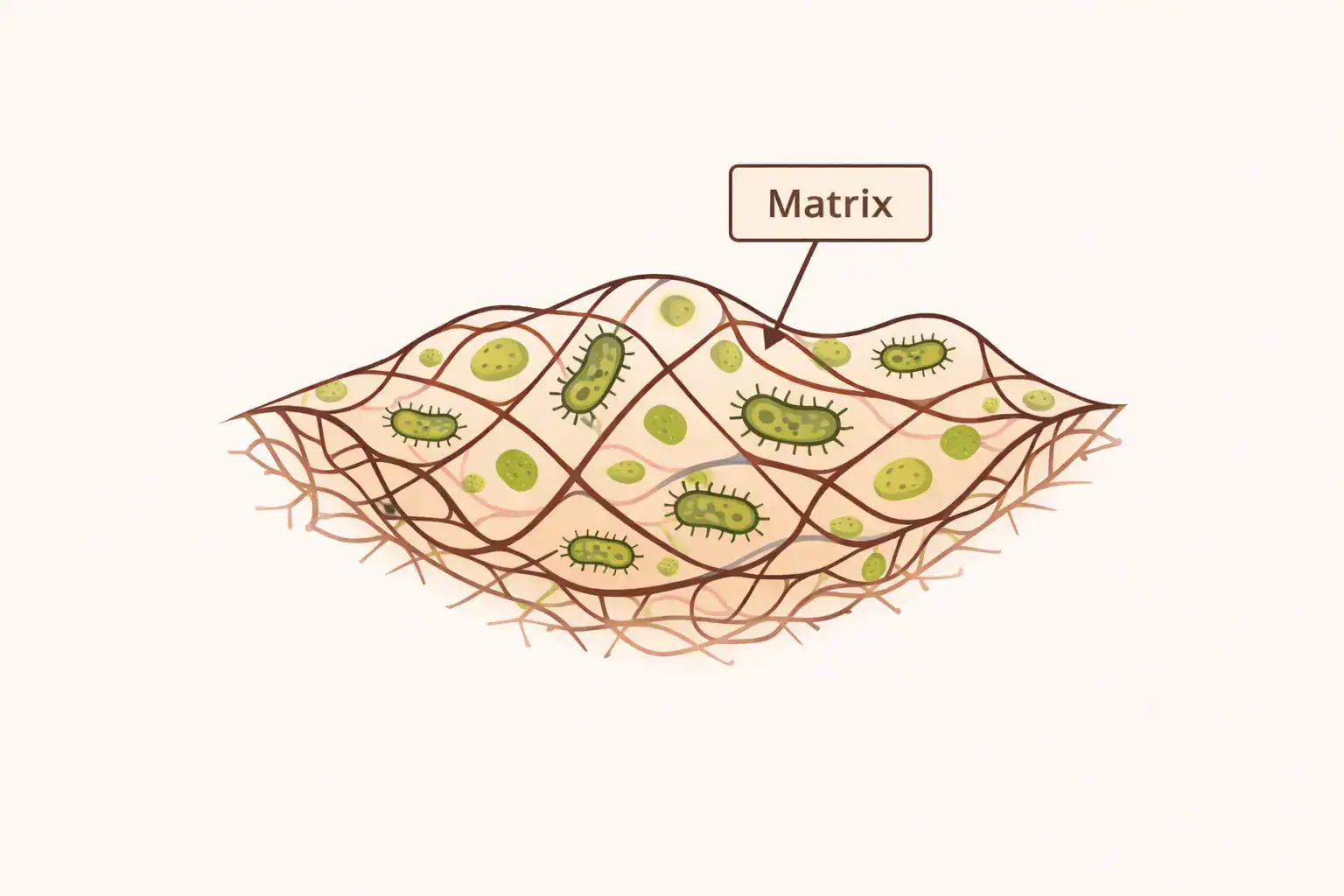
A biofilm isn’t a single bacterium, but a community in “armor”. That’s why even a small shift against biofilm is interesting—and spruce resin can do that.
In plain terms
Signaling effects on inflammatory markers and tissue-remodeling enzymes
In the literature on spruce resin, it’s often highlighted that it may influence inflammatory mediators and tissue-remodeling processes. Jokinen and colleagues (review) summarize research on spruce resin in the context of healing.
Abietic acid (one of the key resin acids in conifers) is discussed as a compound with anti-inflammatory potential via different signaling axes (e.g., NF-κB and related pathways). That matters because it shows resin isn’t just “physical protection”: it can also influence local biochemical signals and tissue responses—most likely not due to a single substance, but to synergy among multiple substances in spruce resin.
Spruce resin doesn’t act only “on the outside.” Some of its components behave like a biochemical “button” that can dampen, boost, or redirect certain signals in the tissue.
In plain terms

Boswellia resin reaches a similar goal via a different route
Boswellia is chemically different: its core components are boswellic acids, pentacyclic triterpenes that the literature links to modulation of inflammatory pathways.
A classic target of boswellic acids are enzymes in the leukotriene-formation pathway, e.g., 5-LOX.
Boswellia contains AKBA (acetyl-11-keto-β-boswellic acid), which inhibits an important enzyme (5-LOX) involved in generating inflammatory signals. It’s not that AKBA simply shuts everything down; it’s more that it binds to the right spot, makes the enzyme’s job harder, and reduces part of the inflammatory process.
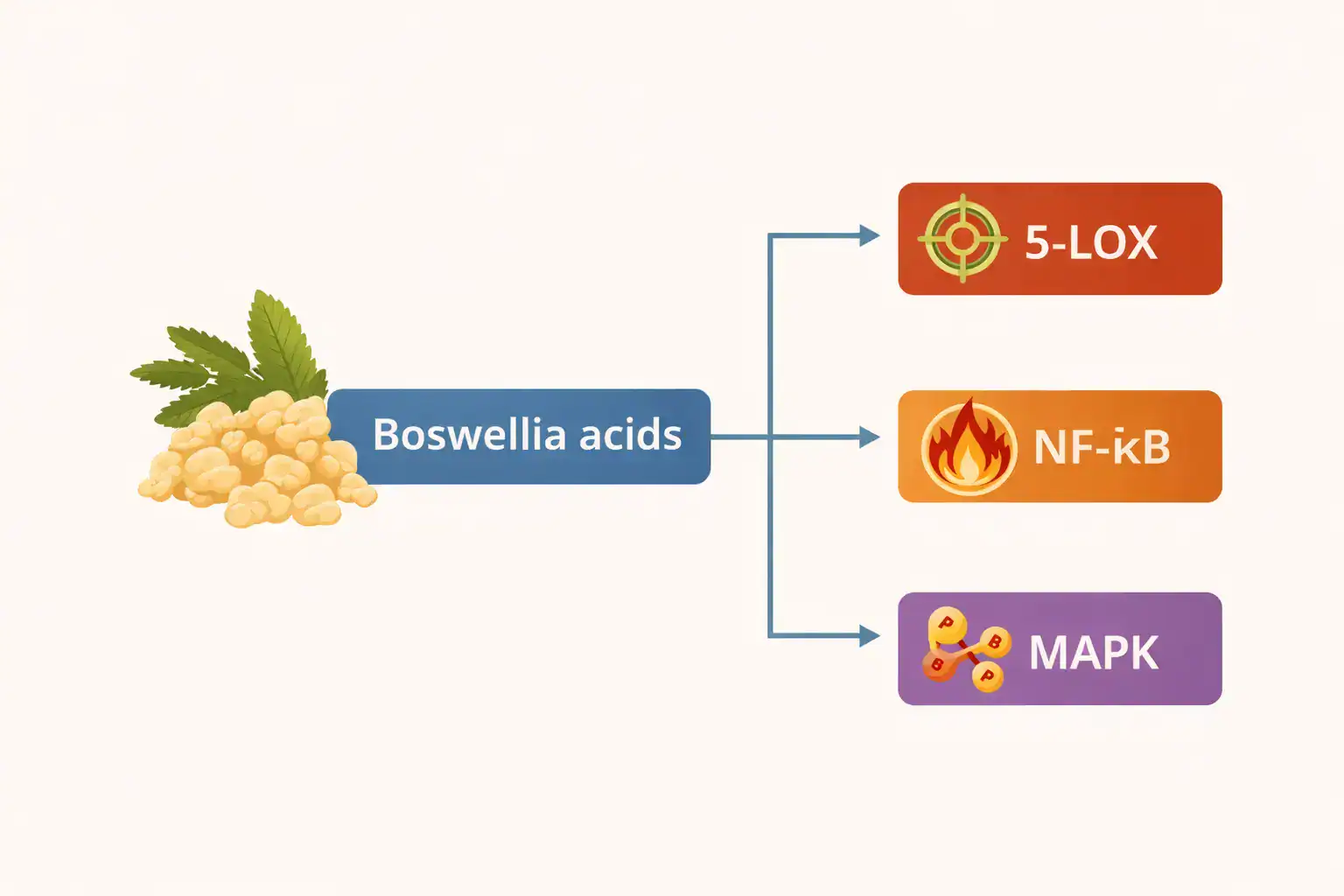
Boswellia resin works less like a “shield” and more like a regulator of signals linked to inflammatory processes.
In plain terms
Broader effects on other inflammatory systems as well (NF-κB, MAPK)
Modern reviews summarize that boswellic acids affect several key inflammatory axes (e.g., NF-κB/MAPK), which helps explain why boswellia is often described in the literature as a resin with “signal-oriented” anti-inflammatory activity.
Spruce resin is more about setting the ground, boswellia resin is about tuning the communication.
In plain terms
Why combining both resins makes sense, and how to use products with spruce resin (Smrekovit 365 and 365 Ekstra) together with boswellia resin (Smrekovit 365 Alter)
If we look only at the chemistry and mechanisms, combining spruce resin and boswellia resin is rational because they cover two levels:
- The surface and local-environment level (spruce resin): film + microbial membrane + local biochemistry
- The signaling-pathway level (boswellia resin): enzymes and inflammatory signaling
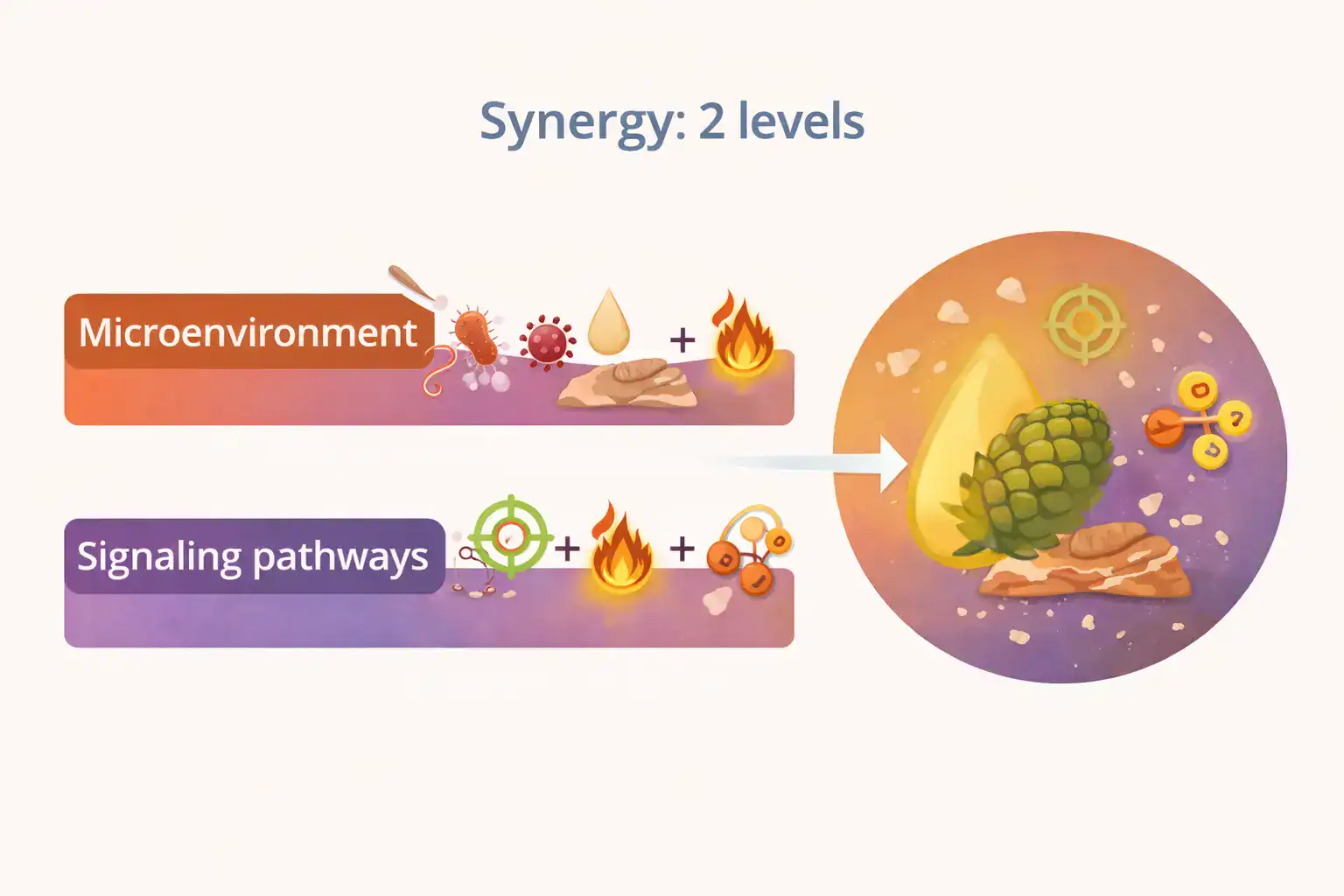
Smrekovit 365 or 365 Ekstra sets the ground. Alter tunes the communication. Together, they work on two fronts.
In plain terms
Best basic regimen: layering (two levels in one application)
Step 1: 365 or 365 Ekstra – a thin layer
First, apply a thin layer of 365 (or Ekstra if you also want a cooling effect).
Step 2: wait a few minutes
Not because it has to “disappear,” but so the layer can settle and you don’t end up applying a thickness that turns into just a greasy film.
Step 3: 365 Alter – a thin layer on top
Then apply 365 Alter as the “signaling level.”
Why this order?
If you apply 365 Alter first and then put a thick layer of 365/Ekstra over it, you can unintentionally create too much of a “barrier,” so 365 Alter comes through less. In practice, it makes more sense to go: ground first, signal second.
First you prep the base. Only then do you add the “regulator”.
In plain terms
-
Smrekovit 365 Alter - cream with boswellia resin
Price range: 9,00 € through 14,00 € -

Smrekovit 365 Ekstra – spruce cream with a cooling effect
14,00 € -
Smrekovit 365 spruce resin cream
14,00 €
An alternative for people who want a routine without layering: morning/evening
If layering doesn’t work for you:
- morning: 365 / 365 Ekstra
- evening: 365 Alter
or the other way around—but if you have to pick one default, the one above is more logical: during the day you often benefit more from the “ground,” and in the evening from “calming the signals.”
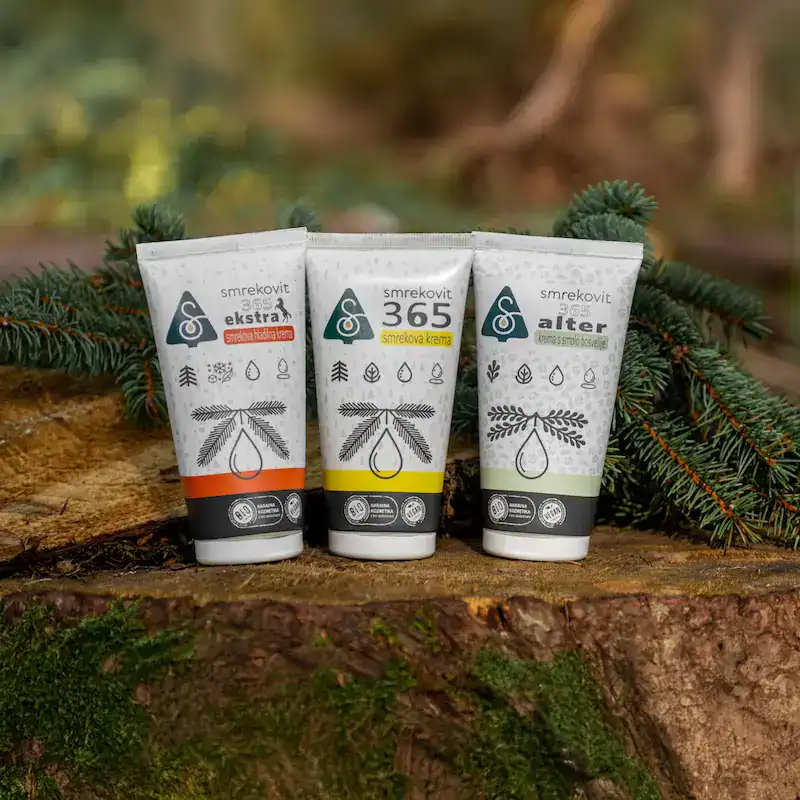
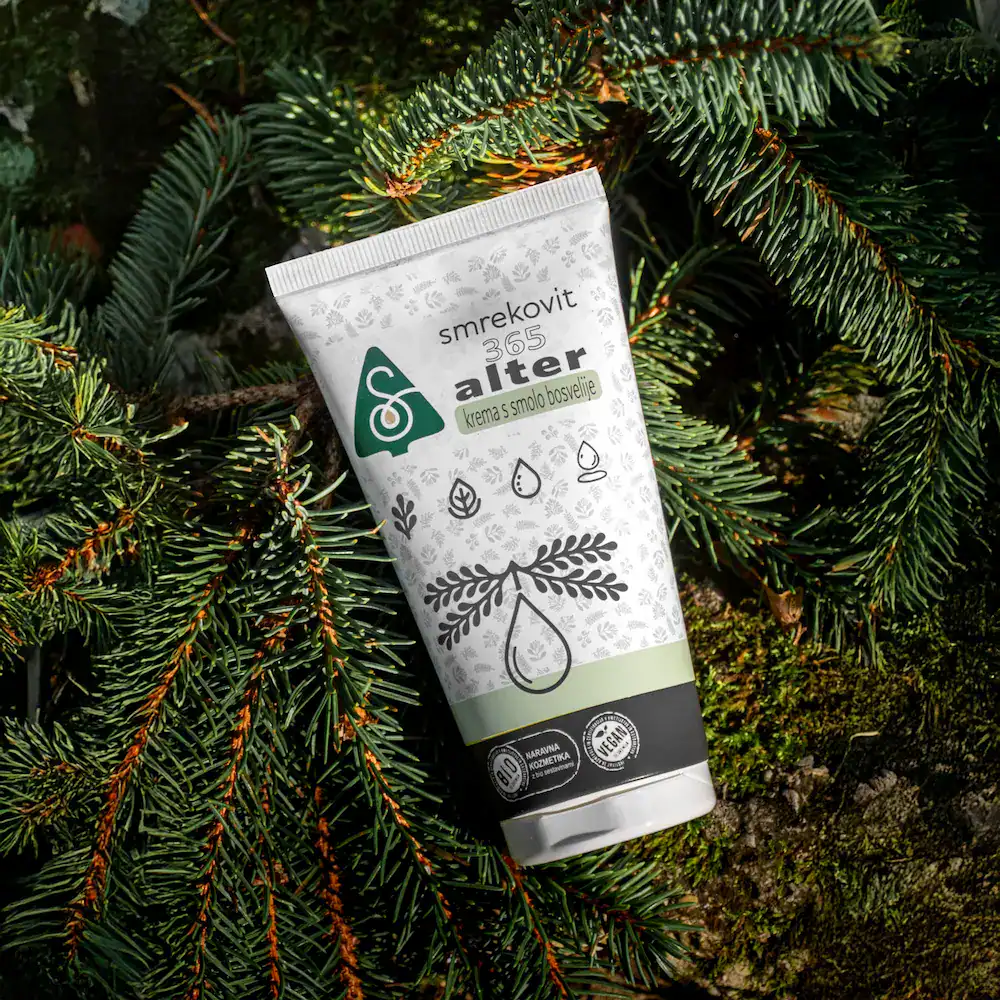
Smrekovit 365 Alter as an alternative in case of an allergy to spruce resin
Contact hypersensitivity to components of spruce resin is well described in the dermatology literature, especially with repeated or long-term exposure. It’s also important that oxidation of certain resin components can increase their sensitizing potential.
If someone is among those whose skin reacts to spruce resin with itching, redness, or eczema, the conclusion is usually very simple: spruce resin isn’t the right choice for them—not because it’s “bad,” but because that’s simply how their skin’s immune response works.
In such cases, it makes sense to choose a different resin with a different chemical “core.” Boswellia resin has a different ingredient profile, so for those sensitive to spruce resin, 365 Alter is a logical choice.
You can find the sources and literature used on this page →
Frequently asked questions
What’s the difference between spruce resin and boswellia resin?
Spruce resin (conifer resin) is a chemically different “cocktail” than boswellia resin. For conifer resin, the literature most often discusses effects on the microenvironment (a protective film), effects on microbes (e.g., the membrane in some Gram+ bacteria), and local biochemical signals. Boswellia resin, on the other hand, is better known for boswellic acids and a “signal-oriented” influence on certain pathways linked to inflammatory processes.
What does 5-LOX mean, and why is it mentioned with boswellia?
5-LOX is an enzyme in the pathway that produces certain inflammatory “messengers” (leukotrienes). Boswellia is often mentioned in the literature because some boswellic acids (e.g., AKBA) can affect this pathway—not by “shutting everything down,” but more by selectively reducing part of the signaling.
What is a biofilm, and why is it important when it comes to resins?
A biofilm is a community of microbes living in a protective matrix—like a “fortified settlement in armor.” That’s why a biofilm is usually harder to reach than individual bacteria. In the literature, resin acids are often discussed in connection with anti-biofilm directions, which is why this area is interesting when explaining resins.
Why does combining spruce resin and boswellia make sense?
Zato što pokrivaju dvije razine odjednom: smola crnogorice više utječe na lokalne uvjete i mikrookruženje, a bosvelija se češće opisuje kao smola koja utječe na signalne putove. Ako razmišljaš “mehanistički”, kombinacija nije udvostručavanje, nego nadopunjavanje.
How should you use Smrekovit 365/365 Ekstra and 365 Alter together?
The most logical basic regimen is layering: first a thin layer of 365 (or 365 Ekstra), then after a few minutes another thin layer of 365 Alter. An alternative is a morning/evening routine: 365/365 Ekstra in the morning, 365 Alter in the evening.
What if spruce resin irritates my skin?
In a smaller share of people, contact hypersensitivity to conifer resin can occur, especially with repeated exposure. If you notice itching, redness, or eczema, it makes sense to stop using spruce resin and choose an alternative with a different chemical profile, such as Smrekovit 365 Alter.
Why is 365 Alter called “Alter”?
Because it’s designed as an alternative within the Smrekovit line: instead of spruce resin, it contains boswellia resin. This makes particular sense for people who want a “signal-oriented” approach or don’t tolerate spruce resin well.