Knee pain is one of the most common problems for runners, whether beginners or experienced athletes. We are often asked about this problem, and while Smrekovit is very helpful for knee pain and can make running easier even without changing technique, one of the main causes is incorrect technique, which is worth correcting. I had to make this switch in my running technique myself and it is because of my own experience that I decided to write this article.
Most people run intuitively, which often means taking long strides, running at a low cadence, and distributing the load incorrectly. This places excessive stress on the knees, hips, and other joints. In this article, we will explain in a simple and easy-to-understand way why incorrect running technique causes knee pain, how it can be avoided, and how Smrekovit helps with knee pain caused by incorrect technique, as well as with muscle soreness (DOMS) when adapting to a new technique.
Why do most people intuitively run the wrong way?
Intuitive running often involves long strides and too low a cadence (number of steps per minute). This means that the runner takes:
Land Landing in front of the body’s center of gravity (with the leg ahead of the body instead of under it).(with the leg in front of the body instead of under it).
It often lands on the heel, which leads to higher impact forces.
This causes prolonged ground contact, forcing the muscles and joints to absorb most of the impact.
Although this way of running seems natural, it is biomechanically less efficient and causes unnecessary stress on the knees. The result is knee pain, known as Runner's knee (iliotibial or patellofemoral pain syndrome).
What is cadence and why is it crucial for healthy running?
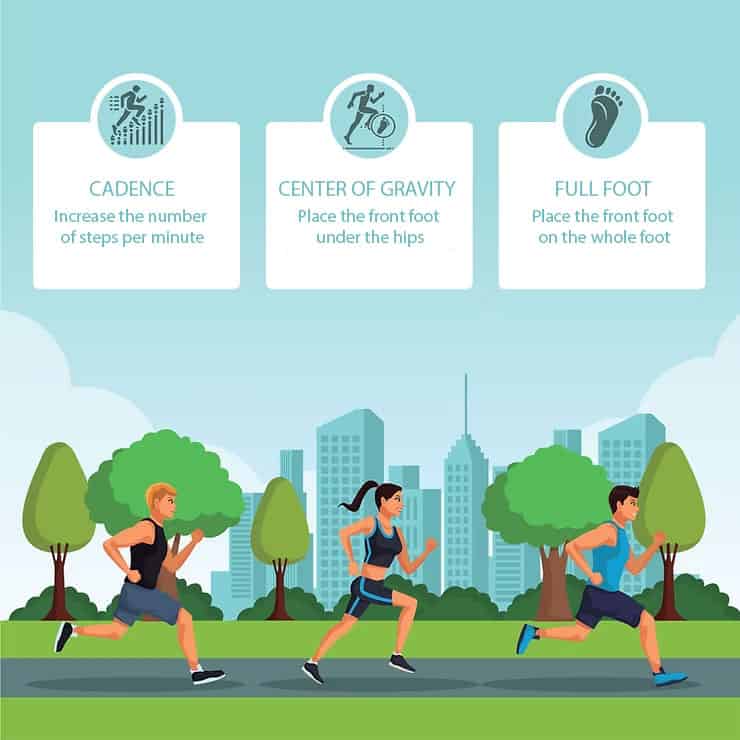
Cadence is the number of steps you take in one minute of running. The ideal cadence for most runners is 170-180 steps per minute. Most people run at a cadence that is too low (150-165 steps per minute), which means longer steps and more stress on the joints.
Higher cadence reduces knee pain because:
Shortens the stride: The leg lands closer to the body's centre of gravity, reducing impact forces.
Reduces vertical movement: Less jumping means less strain on the joints.
Improves elasticity: Short, fast steps make better use of the elasticity of the tendons, which takes the strain off the muscles and joints.
How to increase cadence?
Gradually: If you are currently running at 160, aim for 165-170 and then gradually to 175-180, in other words: shorten your stride, take short, full-foot strides, step directly under your hips, you will feel like you are stumbling at first, but your body will eventually get used to the new technique.
Use a metronome: Set your rhythm to 170 BPM and try to adapt to it.
Focus on the steps: Don't force yourself to run faster, but to take shorter, more frequent steps.
Shorten your stride, land on the whole footdirectly under your hips, and take quick steps. At first you may feel like you’re stumbling, but your body will soon adapt.
Other key elements of correct running technique
Landing on the midfoot:
Instead of landing on your heel, make sure your foot lands more in the middle of your foot. This reduces the impact forces on the knees.
Landing below the centre of gravity:
The foot should land directly under the hips, not in front of the body, when it contacts the ground. This way the centre of gravity bears most of the load, not the knees.
Active core and elastic stiffness:
A stable core minimizes unnecessary movement and relieves strain on the knees.
Elastic stiffness means slightly pulling forward with each step, but the key is to land with the leg under the center of gravity, not in front of the body. Most of the load will shift to the quadriceps and hamstrings, which is correct, though at first you will likely experience some muscle soreness (DOMS).
Slight forward lean:
The body slightly leaning forward (from the ankles, not the waist) helps to transfer energy forward and reduces the strain on the joints.
High cadence:
As mentioned above, a higher cadence is essential to reduce the load on the knees.
Elastic stiffness means pulling slightly forward with each step, with the front leg landing under the hips, not in front of the body. This shifts the main load to the thigh muscles, which is correct, but when adapting to the new technique you will probably experience muscle soreness (DOMS)
Key points to improve your running technique
Forest and asphalt running technique: comparison and adaptations
Running in the forest and on asphalt differ in surface, in the stress they place on the body, and in the running technique required. Both types of running have their advantages and disadvantages, but it is crucial to adapt your running technique to the specific requirements of each surface. In this chapter we will detail how running technique differs between forest paths and tarmac, and what you need to look out for to prevent pain, especially in the knee.
Running in the forest: natural but technically challenging
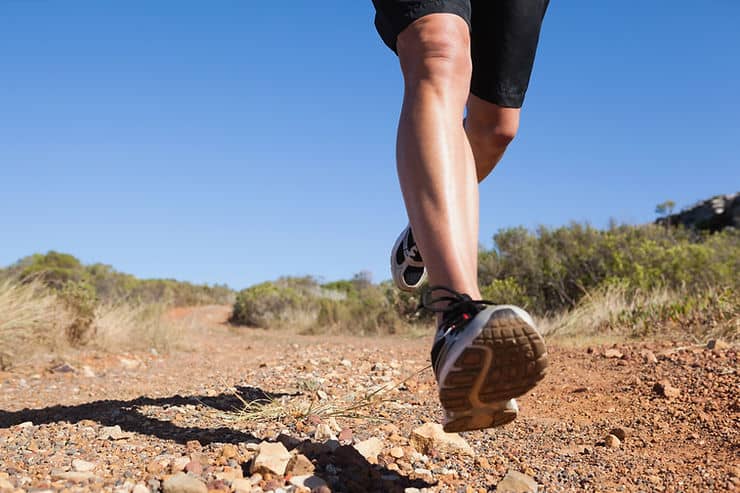
Running in the forest involves soft, uneven and often unpredictable ground, which requires greater flexibility and caution.
Running in the woods
Technique for running in the woods
Short steps:
Forest floors are softer and more unpredictable, so short strides are essential for stability. Longer steps increase the risk of slipping or tripping.
High cadence:
Maintain a higher cadence (170-180 steps/minute) as this reduces ground contact time and improves balance on uneven ground.
Landing on the midfoot:
The midfoot landing helps maintain stability and prevents the foot from slipping on soft or slippery surfaces.
Active core:
Core stability is crucial to adapt to unexpected changes in terrain such as roots, rocks or mud.
Eyes on the move:
Always keep your eyes on the ground a few metres in front of you as you run to adjust to obstacles in time.
Reduced speed:
Running in the woods is more technical, so it makes sense to slow down compared to asphalt. A slower pace reduces the risk of injury.
Benefits of running in the woods
Less stress on joints: the soft ground absorbs impact, reducing strain on the knees.
Natural muscle strengthening: Uneven ground strengthens the smaller stabilising muscles and improves balance.
Psychological benefits: running on asphalt can feel repetitive and less motivating.
The challenges of running in the woods
Increased risk of injury due to uneven ground.
Increased strain on stabilising muscles, which can cause fatigue.
Running on asphalt: Steady but harder on the body
Running on asphalt involves a hard, even surface, which makes running faster and smoother, but also increases stress on the joints.
Running on asphalt
Asphalt running technique
High cadence:
A cadence of 170-180 steps/minute helps to reduce ground contact time and prevents excessive impact forces on the joints.
Landing on the midfoot:
Landing on the midfoot or slightly on the forefoot is important to reduce impact as asphalt does not offer natural cushioning.
Uniform posture:
On a level base, it is important to maintain a relaxed and balanced posture, with the hips aligned with the shoulders.
Controlled step length:
Longer strides cause more impact on landing, so focus on shorter, faster strides.
Appropriate footwear:
A good running shoe with cushioning is essential for running on asphalt as it reduces the stress on the knees and other joints.
Benefits of running on asphalt
Uniform surface: allows for a more consistent running rhythm and pace.
Easier monitoring of technique: It's easier to analyse and adapt your technique on a level playing field.
Less strain on the stabilising muscles: Asphalt does not require constant adjustment to obstacles.
The challenges of running on asphalt
Increased stress on joints: Hard ground increases the risk of knee and other joint pain.
Monotony: running on asphalt can feel less engaging and less motivating.
Comparison of forest and asphalt running technique
Aspect
Running in the woods
Running on asphalt
Background
Soft, bumpy, unpredictable
Hard, even
Cadence
High (170-180 steps/minute)
High (170-180 steps/minute)
Steps
Short, adapted to the terrain
Short, steady
Landing
Midfoot
Mid or slightly forefoot
Load on the knees
Lower due to softer substrate
Higher due to hard ground
Speed
Slower due to obstacles
Faster thanks to a uniform base
Psychological effect
Soothing, stimulating
Routine, more predictable
What's better for knee pain?
Forest: the soft ground absorbs shock, which is helpful for runners with knee pain. However, it also requires greater stability, which can strain muscles and tendons if the technique is poor.
Asphalt: A uniform base allows better analysis of technique and even loading. Proper footwear and a high cadence are key to reducing stress on the knees.
Knee pain prevention:
Gradual adaptation:
If you change your running technique, do it gradually. For example, increase your cadence by just a few steps per minute at first.
Correct footwear:
Choose running shoes that support your running style and absorb some of the impact.
Stretching and strengthening:
Stretch your quadriceps, hamstrings, and calves after running, and strengthen your glutes and core for better stability.
How does Smrekovit help?
Changes in running technique usually cause thigh muscle pain - muscle soreness (DOMS) - because the muscles are not used to moving differently. However, incorrect technique usually leads to knee pain.
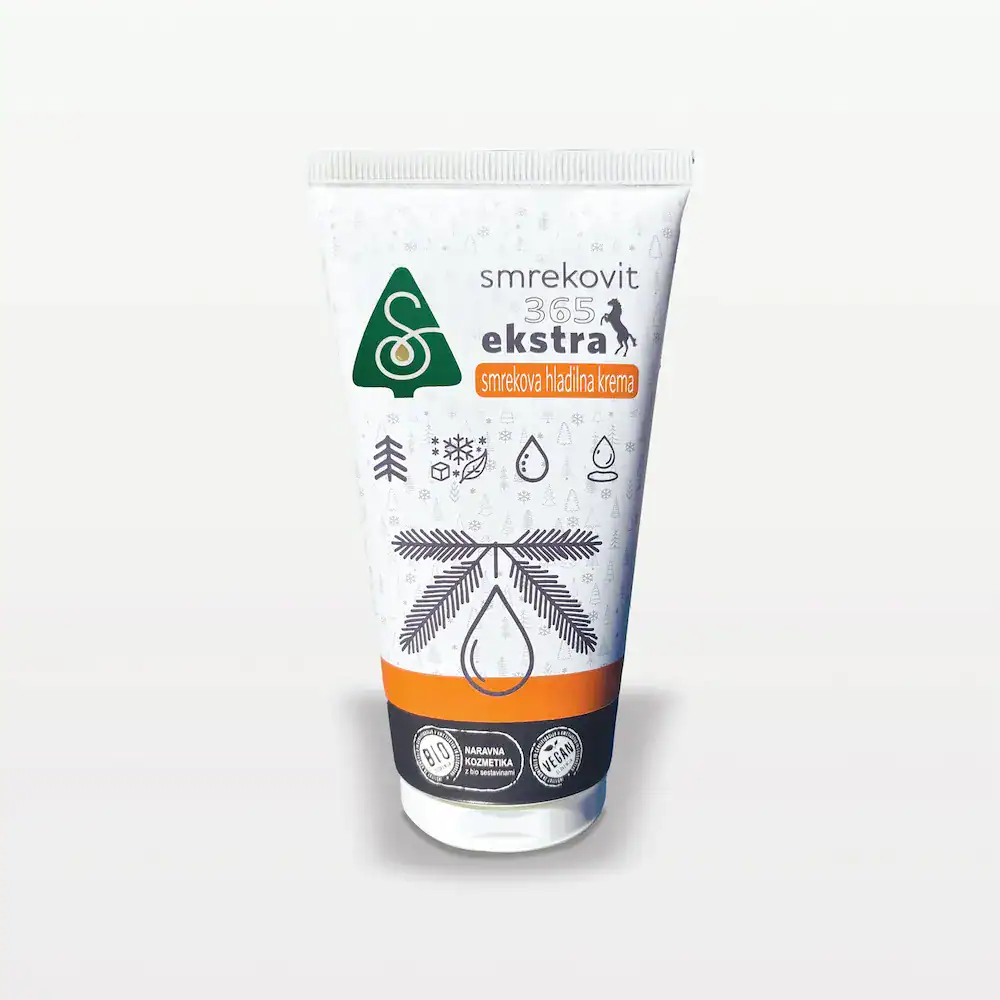
For muscle soreness (DOMS): Smrekovit significantly speeds up recovery and reduces pain. Apply it after a run on tired muscles.
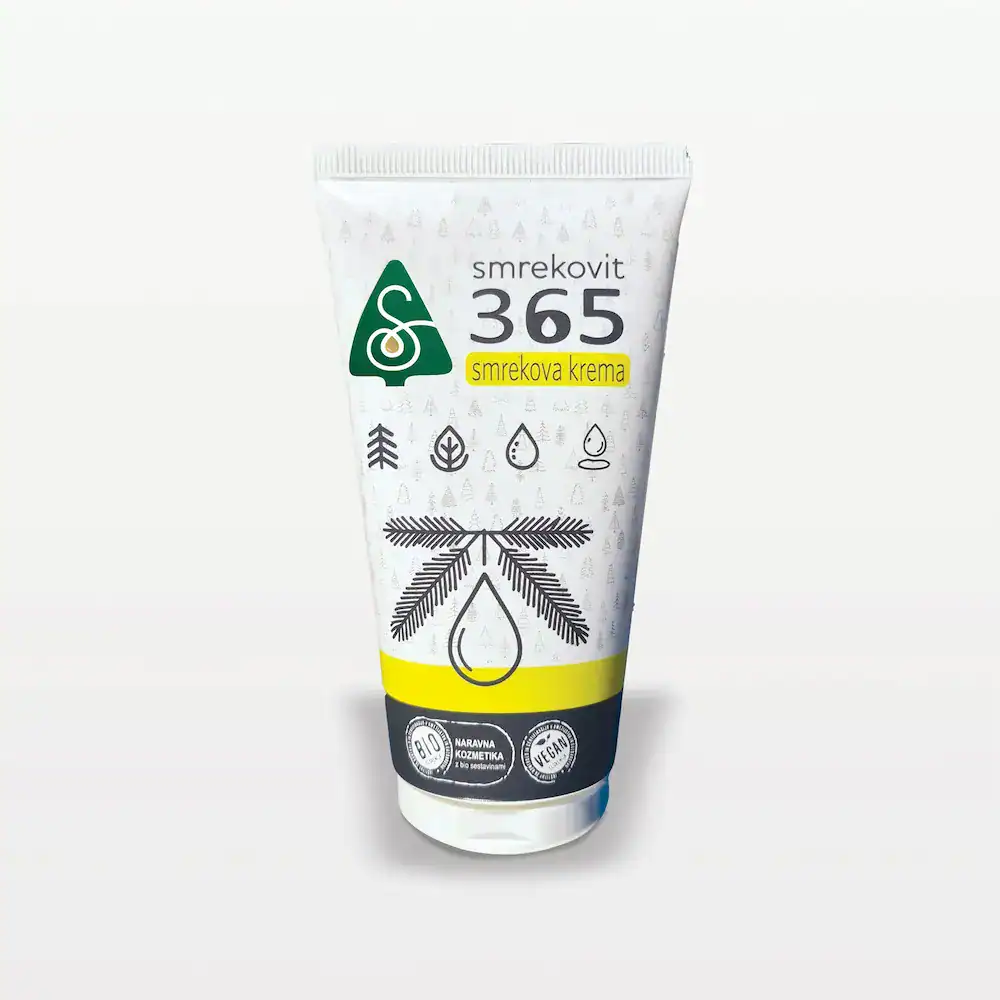
For knee and joint pain: if you are experiencing discomfort from poor technique, Smrekovit helps reduce inflammation and supports better blood circulation.
Why is changing your running technique worth the effort?
Although changing your running technique can be uncomfortable at first as your body adapts to the new stresses, it brings huge benefits in the long run:
Less knee pain and fewer related problems.
Increased running economy: You use less energy for the same speed.
Less fatigue after the run.
Injury prevention.
Conclusion
Knee pain is often a direct result of incorrect running technique. The key to healthy running is understanding that most people intuitively run wrong and consciously improving technique. Adjusting cadence, foot landing, body posture and shifting the load to the thigh muscles (elastic stiffness) are fundamental steps to reduce stress on the knees. At the same time, it is important to give your body time to adapt and use Smrekovit to speed up recovery.
With proper technique and the right care, you’ll not only reduce knee pain but also enjoy running more and run more efficiently!