
Causes, symptoms and experiences of people using Smrekovit products who suffer from stomach or abdominal pain.
Abdominal pain is any pain that occurs between the chest and the pubic area. Abdominal pain may be spasmodic, dull, or sharp.
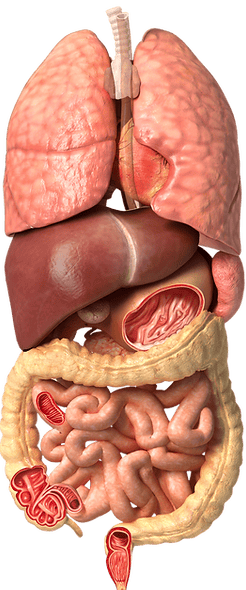
The source of abdominal pain can vary greatly, as the abdominal cavity contains many different organs protected by the peritoneum.
- Stomach
- liver
- gallbladder
- spleen
- pancreas
- small intestine
- kidneys
- colon
- adrenal glands
- What can be the causes of abdominal and stomach pain?
- Chronic inflammation and ulceration of the stomach lining and duodenum
- Reflux oesophageal disease (acid reflux)
- Acute gastroenteritis or acute inflammation of the stomach and intestinal mucosa
- Chronic inflammatory bowel disease
- Irritable bowel syndrome
- Other causes of abdominal pain
- Frequently asked questions and answers
A friend suggested Smrekovit. It's really versatile... I used it for stomach problems and it really helps. Stomach pain and the cramps disappeared, now I use it every time I feel Abdominal pain. I also use it for ankle pain and it has already improved a lot. My daughter started to rub her pimples and after a few days they almost dried up. I am still rubbing the bruises and after two days they are almost gone... We are more than satisfied with the product, so thank you.
Gordy, Senožeče
[3] handwritten feedback received 23.12.2015, stored in the Smrekovit archive
I use Smrekovit for stomach acid. It helps me a lot. I got better after about three weeks, I take it 3-4 times a day and will always have it at home.
Marta, Brestanica
[14] handwritten feedback received on 3.6.2015, stored in the Smrekovit archive
What can be the causes of abdominal and stomach pain?
When we experience abdominal pain, we most often think that the origin of the pain is in the stomach or intestines, which is often true. The most common causes are:
Chronic inflammation and ulceration of the stomach lining and duodenum

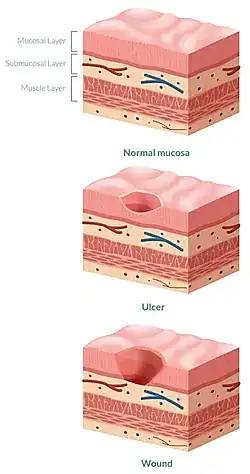
The stomach lining contains glands that produce stomach acid and digestive enzymes. These acids and enzymes are strong enough to damage the stomach lining, but it protects itself by secreting protective mucus. Abdominal pain occurs when the lining of the stomach or duodenum becomes inflamed due to bacteria, excessive alcohol intake, medication, or chronic stress and can no longer produce enough mucus to defend itself from gastric acid. This leads to inflammation and ulcers in the stomach lining. In addition to stomach pain, there may also be an early feeling of fullness after only a few bites.
If chronic inflammation of the stomach lining is not taken seriously, it can eventually lead to ulcers and, later, to precancerous changes in the stomach lining.
Apart from stomach pain, what are the signs of chronic gastritis?
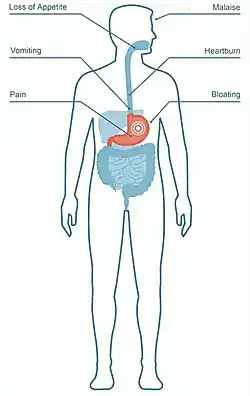
Abdominal pain
People with inflammation of the stomach lining often experience abdominal pain in the upper middle part of the abdomen. The pain is usually most intense in the upper left area of the stomach and may sometimes radiate to the back.
Flatulence and urge to vomit
Abdominal pain is often accompanied by bloating and nausea. When vomiting occurs, the vomit may be clear, yellow, or green. In severe cases of gastritis, it may contain traces of blood , and the condition can also cause shortness of breath, chest pain, and intense stomach pain.
What causes chronic gastritis?
Stomach pain due to chronic inflammation of the stomach lining has various causes:
Autoimmune antibodies
Type A is an autoimmune form of chronic gastritisin which the body’s own antibodies attack the cells of the stomach lining. As the cells are damaged, they cannot secrete enough protective mucus and inflammation occurs. The inflammation is accompanied by stomach pain and impaired absorption of vitamin B12 and iron. The cause of the autoimmune reaction is unknown, but it is more common in people who are already suffering from other autoimmune diseases.
Helicobacter pylori infection (type B)
Helicobacter pylori is the first officially recognised bacterial carcinogen and is one of the most successful human pathogens, as the bacterium infects more than half the world's population, namely more than 80% in underdeveloped countries; and to 40% in the developed world. The source of Helicobacter pylori infection is not yet known, but most infections are likely to occur in childhood through person-to-person transmission.
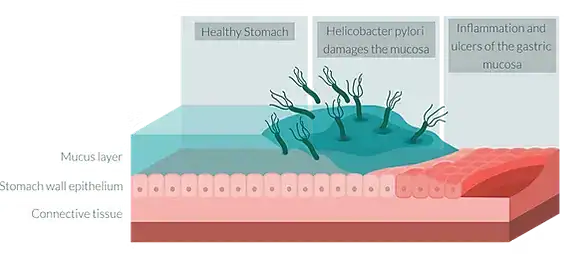
Helicobacter pylori is adapted to live in the otherwise very hostile environment of the stomach lining. Because it can protect itself from the immune response, the bacterium remains in the stomach throughout a person’s life. Helicobacter pylori infection does not cause disease per se, but is a risk factor for various diseases that cause abdominal pain and stomach pain. These are mainly chronic inflammation of the stomach lining, ulcers and wounds of the stomach lining, as well as cancer of the stomach lining. There is a constant battle between the host and the bacteria, which influences whether or not the disease will develop. The individual's immune response, propensity to inflammation and the secretion of stomach acid play a key role in this.
Inflammation is accompanied by pain, ulcers and sores may appear in the stomach and intestines, and eventually precancerous lesions may develop.
Chemical substances
Type C is caused by chemical substances:
- Long-term use of nonsteroidal anti-inflammatory drugs, such as aspirin or ibuprofen, can irritate the stomach lining and cause ulcers and abdominal pain.
- Excessive and chronic alcohol consumption, especially of strong spirits , is also a major risk factor for chronic gastritis and stomach pain, often leading to ulcers and lesions.
- The stomach lining can also be irritated by bile that flows back from the duodenum into the stomach due to what is known as bile reflux.
- a strong risk factor for abdominal pain due to gastritis is also smoking
Food allergies
Eosinophilic gastritis is inflammation of the stomach lining caused by allergies to substances in food. Gastric pain occurs because the immune system reacts to substances in food by infiltrating eosinophil immune cells. The most common cause is milk protein or ingredients in medicines.
Stress-induced abdominal and stomach pain
Stress causes an increased release of the neurotransmitters acetylcholine and histamine, which stimulate the secretion of stomach acid. At the same time , free radicals and reduced blood flow to the stomach weaken the protective ability of the stomach lining. The mucosa becomes inflamed and stomach pain occurs.
I am 80 years old and have oesophageal reflux disease. Due to excessive stomach acid , I was taking various antacid medications, which I believe caused constipation and poor digestion. I have been taking Smrekovit for about two months, initially 3x a day, now as needed. The condition improved immediately after taking it and the burning pain in my stomach has disappeared. Sometimes I still feel abdominal pain, then I take Smrekovit and the situation calms down. Digestion has also improved, and I feel very well. I have also recommended Smrekovit to two acquaintances, and both have spoken very highly of it.
Frančišek, Vrhnika
[19] handwritten feedback received on an unknown date, kept in the Smrekovit archive
I use Smrekovit as needed to alleviate stomach acid and stomach painevery morning and it helps me a lot. It is very effective and I have enjoyed it for many years. Thank you.
Anton Susman, Notranje Gorice
[28] handwritten feedback received on an unknown date, kept in the Smrekovit archive
Reflux oesophageal disease (acid reflux)
Chronic acid reflux, or gastroesophageal reflux disease (GERD), causes a burning sensation and abdominal pain that are sharply felt in the upper abdomen, just below the sternum, and may radiate toward the neck. Heartburn is a common term people use to describe this pain. In the stomach, cells in the lining produce acid and enzymes to break down substances in food. The stomach lining is protected from the stomach acid by mucus, which is also secreted by the cells of the stomach lining. This protection, however, does not extend to the oesophagus, which is not as well shielded from acid as the stomach. The passage of acid from the stomach to the oesophagus (oesophagus) is prevented by the muscular barrier (lower oesophageal sphincter). Reflux occurs when the pressure of the sphincter is less than the pressure of the stomach contents. This can happen even in healthy individuals when eating or when bending forward up to 50 times a day, although only a minority experience oesophageal damage and abdominal pain as a result. Oesophageal reflux disease occurs when:
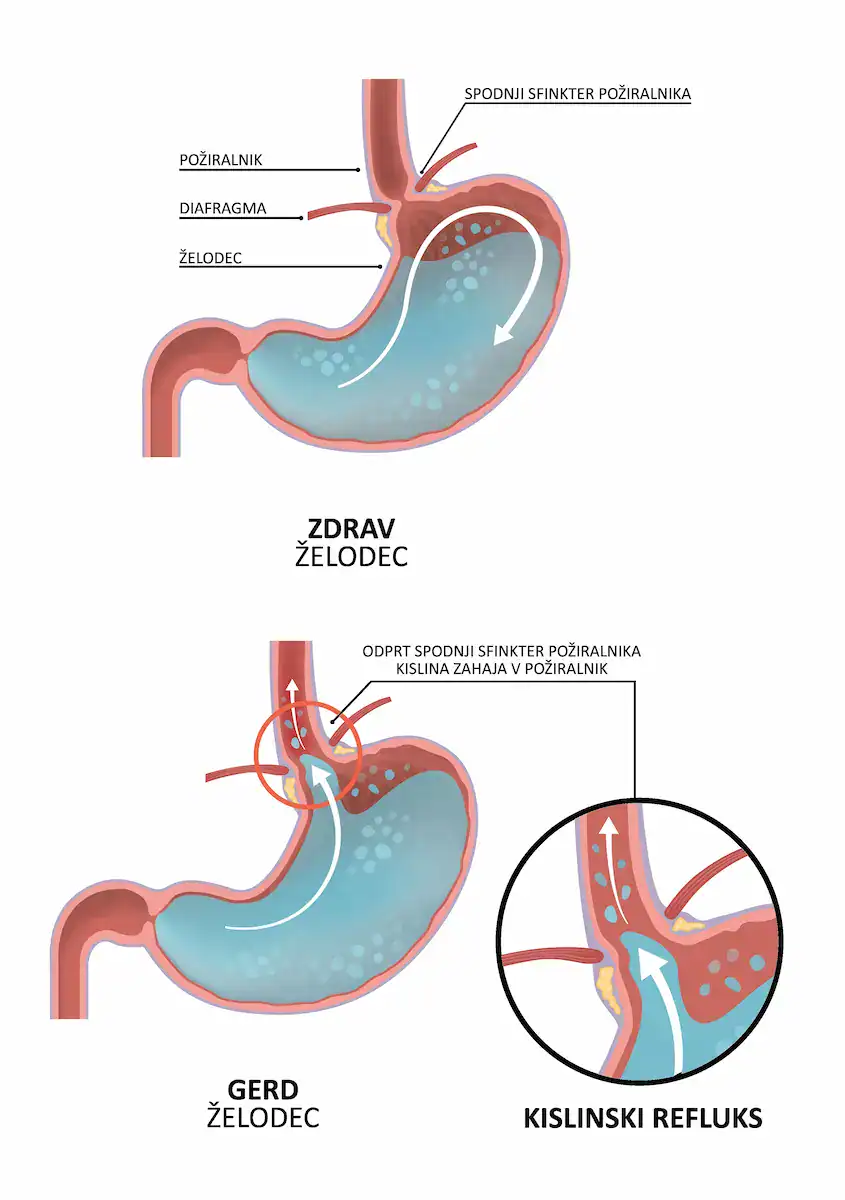
- the oesophageal sphincter is too weak to do its job,
- acid production in the stomach lining is too high or if the stomach is too sensitive or the gastric emptying is too slow and the pressure of the gastric contents on the sphincter is increased
- If oesophageal cleaning is slowed down, the acid stays in the oesophagus for too long, causing problems and pain in the abdomen (under the spoon)
For these reasons, acid leaks back into the oesophagus, causing heartburn and abdominal pain, and damages the lining of the oesophagus.
Oesophageal reflux disease is common in the Western world and occurs in as many as 10 to 20% of the population. Risk factors for oesophageal reflux disease include:
- Genetic predispositions
- Being overweight
- Stomach ulcers
- Hiatal hernia
- Pregnancy
- Smoking
- Excessive alcohol consumption
- unhealthy diet
I use Smrekovit for knee pain. I kept it on for a week and it was already improving, so I kept it on for another fortnight. For stomach pain I was taking medication to suppress the secretion of stomach acid. I stopped the medication and started taking Smrekovit twice a day. I ordered it immediately and used it daily for 14 days. The stomach pain disappeared and since then I have always had your products on hand for other problems as well.
Slavka Godeša, Rakek
[83] handwritten feedback received on 2.11.2015, stored in the Smrekovit archive
I had stomach problems — duodenal inflammation, chronic gastritis, and excessive acidity. I have been taking regular medication, but the stomach pain has not stopped. I also have joint problems (both hips and pelvis). I have been taking painkillers most of the time. On the recommendation of my boss, I started using Smrekovit. I have been using it for more than a year. I no longer use drugs to reduce stomach acid secretion, and only use painkillers on rare occasions when the pain is severe. When I started using Smrekovit, I improved significantly within a week. I am very grateful because I no longer have stomach problems. My mother, who has joint problems, also uses Smrekovit regularly. I will continue to be loyal to your products.
The user wished to remain anonymous
[86] handwritten feedback received on 16.11.2015, stored in the Smrekovit archive
Acute gastroenteritis or acute inflammation of the stomach and intestinal mucosa
Acute bacterial gastroenteritis or food poisoning
If the bacteria cause inflammation and pain in the abdomen, this is called bacterial gastroenteritis, or the more common term for this type of infection: food poisoning. Typical signs are vomiting, diarrhoea, cramps and abdominal pain, especially stomach and intestinal pain.
Infections are most commonly caused by bacteria of the genera Campylobacter, Shigella, Salmonella, Staphylococcus and others. They usually result from eating undercooked poultry or other meat products , or from consuming contaminated water.

Acute viral gastroenteritis

Viral infection of the gastrointestinal tract or viral gastroenteritis is a very common cause of stomach pain accompanied by vomiting and diarrhoea.
People often refer to this condition as “stomach flu,”even though it has nothing to do with the influenza virus. Viral gastroenteritis is characterised by being highly contagious and spreading rapidly from person to person.
The most common pathogens are rotaviruses and noroviruses. Signs of infection include abdominal pain, especially stomach and intestinal pain, vomiting, diarrhoea and fever. The infection usually goes away within a day or two, but can last up to ten days.
Apart from stomach pain, what are the signs of a gastrointestinal infection?
Acute gastritis usually resolves in one to two days, but sometimes abdominal pain can last up to ten days. Acute gastritis is usually accompanied by the following symptoms:

- Watery diarrhoea
- Abdominal pain, cramps and stomach pain
- Forcing and vomiting
- Headache
- Fever
I use Smrekovit for my joints, back and legs. I had severe sciatica and used to apply it three times a day. It helped tremendously. I also use Smrekovit capsules. My digestion has greatly improved , and I no longer need to take medication for my stomach.
Ida, Zasip
[97] handwritten feedback received on an unknown date, kept in the Smrekovit archive
Working in production gave me severe back pain. My GP referred me to an orthopaedic surgeon, who referred me for an MRI. As the scan showed nothing, I was on painkillers all this time, and this completely ruined my stomach and I was prescribed medication for stomach pain, which also didn't help. At the moment, my spinal condition is stable, thanks to the help of your father Ivo Konc. I have also been using Smrekovit spruce cream, which is fantastic because it absorbs so quickly and beautifully. But when I started taking the capsules I no longer have stomach problems. I am extremely happy that the capsules helped me. I take them regularly and they are the only real cure for stomach pain.
Klementina Štempihar, Visoko
[107] handwritten feedback, received 18.6.2019, stored in the Smrekovit archive
Chronic inflammatory bowel disease
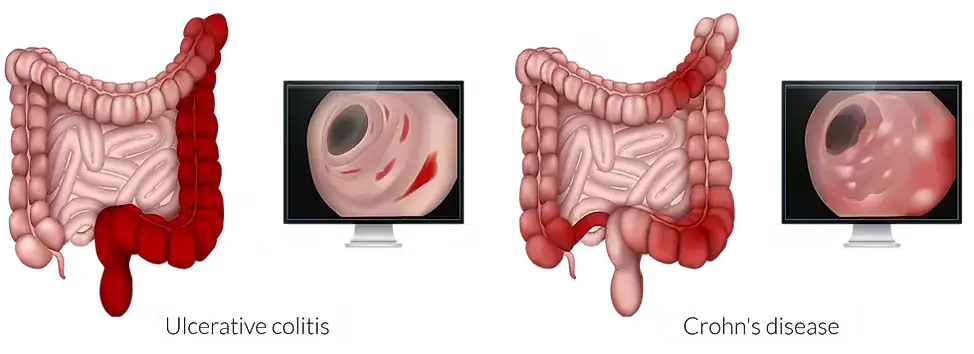
Chronic inflammatory bowel disease (CIBD) comprises two conditions that cause long-term inflammation of the intestinal wall and abdominal pain. These are:
- Ulcerative colitis, which causes long-term inflammation and ulceration of the lining of the colon and rectum.
- Crohn’s disease is another chronic inflammatory disorder of the gastrointestinal tract that can affect any part of it, involving all layers of the intestinal wall.
Signs that accompany chronic inflammatory bowel disease in addition to abdominal pain,
The signs of chronic inflammatory disease and the severity of abdominal pain depend on the degree of inflammation of the gastrointestinal wall. They may occur in periods followed by periods without problems. Signs of inflammatory bowel disease include:
- Diarrhoea
- Cramps and abdominal pain
- Blood in the stool
- Unintentional weight loss and reduced appetite
- Stunting in children and adolescents
Sometimes the disease is also accompanied by:
- Fever
- Joint pain and swelling
- Eye inflammation
What are the causes of chronic inflammatory bowel disease?
The cause of chronic inflammatory bowel disease is unknown.
- One possible cause is a malfunction of the immune system, which attacks the cells of the intestinal wall
- Genetic predispositions and family history of the disease also play an important role.
- Most people develop abdominal pain leading to a diagnosis of inflammatory bowel disease before the age of 30.
- It is more common in the developed world
- Smoking is a very important risk factor for developing the disease.
- Non-steroidal anti-inflammatory drugs (e.g. Ibuprofen, Voltaren, Aspirin) may contribute to the onset or worsening of the disease
The Smrekovit oral sprayworks almost miraculously for my 94-year-old mother. As for me, your capsules have calmed my stomach , and I no longer need to take stomach medication. The warts on my leg have almost disappeared and are still only slightly visible, and the age spots on my arms are less visible. My ankle, which was often injured, is less painful. The two crow's eyes have not yet been completely eliminated, but I have hope that they will be. Smrekovit is my first aid for all scars, bumps, pain...
User wished to remain anonymous
[129] handwritten feedback received on an unknown date, kept in the Smrekovit archive
I have been using Smrekovit capsules for three weeks. They help me with stomach acidand for stomach pains. I can use 100% instead of the medicines prescribed by my doctor, so so far so good.
Jolanda Lavrih, Vodice
[131] handwritten feedback, received 28.5.2018, stored in the Smrekovit archive
Irritable bowel syndrome
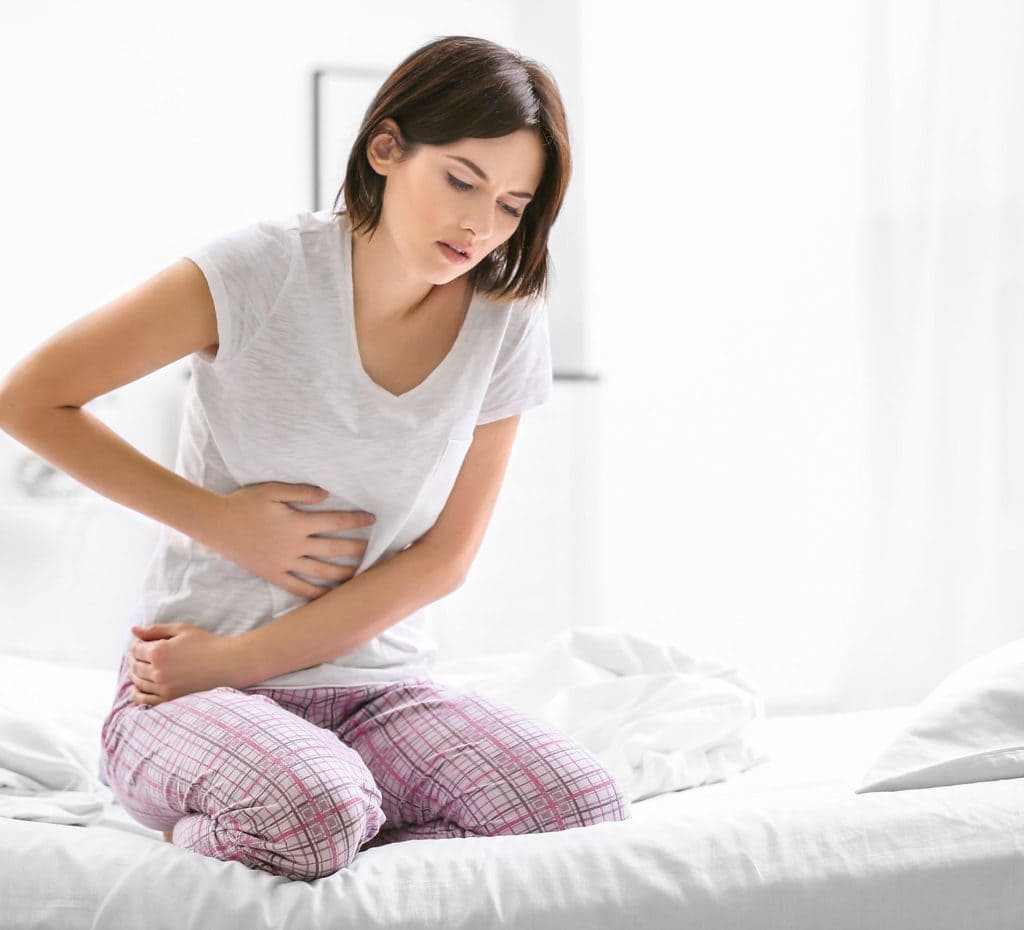
Irritable bowel syndrome (IBS) is a common cause of abdominal pain. It occurs at 10-15% People in the developed world. In addition to cramps and abdominal pain, it usually causes flatulence, wind, diarrhoea, constipation or both.
It is a problem that manifests itself only in symptoms, while changes and inflammation in the lining of the intestine are not present. Also unlike inflammatory bowel disease, it does not increase the chance of developing gastrointestinal cancer.
Risk factors for irritable bowel syndrome
- Gender: irritable bowel syndrome is twice as common in women as in men.
- Age: the syndrome most commonly occurs before the age of 50
- If abdominal pain and other signs of irritable bowel syndrome occur in family members, you are more likely to develop it.
- Serious infections of the digestive tract in the past
- Traumatic and stressful life events
Types of irritable bowel syndrome
- Irritable bowel syndrome with predominant constipation
This type is characterised by hard stools in more than three-quarters of discharges and soft stools in less than a quarter. There may also be abdominal pain, mucus in the stool and wind. - Irritable bowel syndrome with predominant diarrhoea
In this type, more than three-quarters of discharges are watery and soft, and less than a quarter are hard. Abdominal pain is crampy, with wind and mucus in the stool. - Mixed type of irritable bowel syndrome
In this type, more than a quarter of discharges are hard and more than a quarter are soft and watery. Abdominal pain is also present in this type, as is as are gas and mucus in the stool.
I used Smrekovit to treat a stomach ulcer, which I healed without medical assistance. At first, I took it twice a day, but now only every 10 to 15 days.
Poldka, Poljčane
[142] handwritten feedback, received 28.3.2019, stored in the Smrekovit archive
When consumed twice a day , I no longer have heartburn. It's also great for falls, bumps and wounds. I have been using Smrekovit for 15 years.
Silva Kralj, Rakek
[141] handwritten feedback received on an unknown date, kept in the Smrekovit archive

Other causes of abdominal pain
If the abdominal pain is very severe and accompanied by a high fever, seek urgent medical attention. Abdominal pain can also be caused by other causes not described in detail on this page, such as:
- Gallstones
- Kidney stones
- Endometriosis
- Appendicitis
If abdominal pain is accompanied by any of the following signs, seek medical help immediately:
- Vomiting blood
- Discharge of bloody, black or sticky stools
- Breathing problems
- Swelling in the abdomen
- Yellow discolouration of the skin
- Abdominal pain to the touch
- Extremely severe abdominal pain accompanied by high fever

I have gastritis and after I got over the rota virus, I had severe stomach pain. After taking Smrekovit capsules, it improved after seven days. First I took one capsule three times a day for a month, now I only take one capsule twice a day.
The user wished to remain anonymous
[146] handwritten feedback, received 11.2.2018, stored in the Smrekovit archive
I used Smrekovit capsules because of problems with inflammation of the stomach lining. After one treatment with the capsules, the problems were resolved. That was in the spring. At the beginning of the winter, the condition recurred in a milder form but I started taking the capsules immediately and the stomach pain went away.
My husband has leg pain after a stroke. Smrekovit helps him improve significantly.Marija, Otočec
[147] handwritten feedback received on an unknown date, kept in the Smrekovit archive
I have been using your Smrekovit products for some time. I have calcination and the ointment and cream have a beneficial effect on the pain that moves from one shoulder to the other. The cream is excellent because it absorbs quickly into the skin and you can apply it several times a day without any problems.
If someone has digestive problems, I recommend Smrekovit capsules. After taking 1-2 capsules, my stools are nice and soft and I no longer have any problems with bowel movements. Abdominal pain is also minimal. I recommend these products because they work.Igor, Bled
[145] handwritten feedback received on 9.1.2018, stored in the Smrekovit archive
We have been using Smrekovit in our family for a very long time. When burning sensations and stomach pain appear, I take Smrekovit before bedtime and again in the morning. I would also point out the creams in the tube, which absorb very well and quickly and leave almost no residue. Smrekovit oral spray is also an ideal solution for sore throats.
Gregor Zevnik, Kranj
[144] handwritten feedback, received 11.9.2017, stored in the Smrekovit archive
Frequently asked questions and answers
What are the most common causes of abdominal pain?
Abdominal pain can be caused by a variety of reasons, including infections, inflammation, digestive problems such as irritable bowel syndrome or lactose intolerance, and even stress. Other possible causes include appendicitis, gallstones or urinary infections.
When should I see a doctor for abdominal pain?
A visit to the doctor is recommended if the abdominal pain lasts for several days, is very intense, is accompanied by fever, vomiting, difficulty breathing or if you notice blood in the stool. It is also important to seek medical help if the pain is sudden and very severe.
How can we relieve mild abdominal pain ourselves?
For mild abdominal pain, warm compresses, rest, sufficient fluid intake and avoiding heavy food can help. Sometimes taking dietary supplements such as probiotics or dietary fibre to improve digestion can also help.
How do Smrekovit capsules help with abdominal pain?
Take three Smrekovit capsules in the morning and three in the evening. Noticeable improvement should occur after finishing one jar; if not, further results are unlikely even over a longer period.